
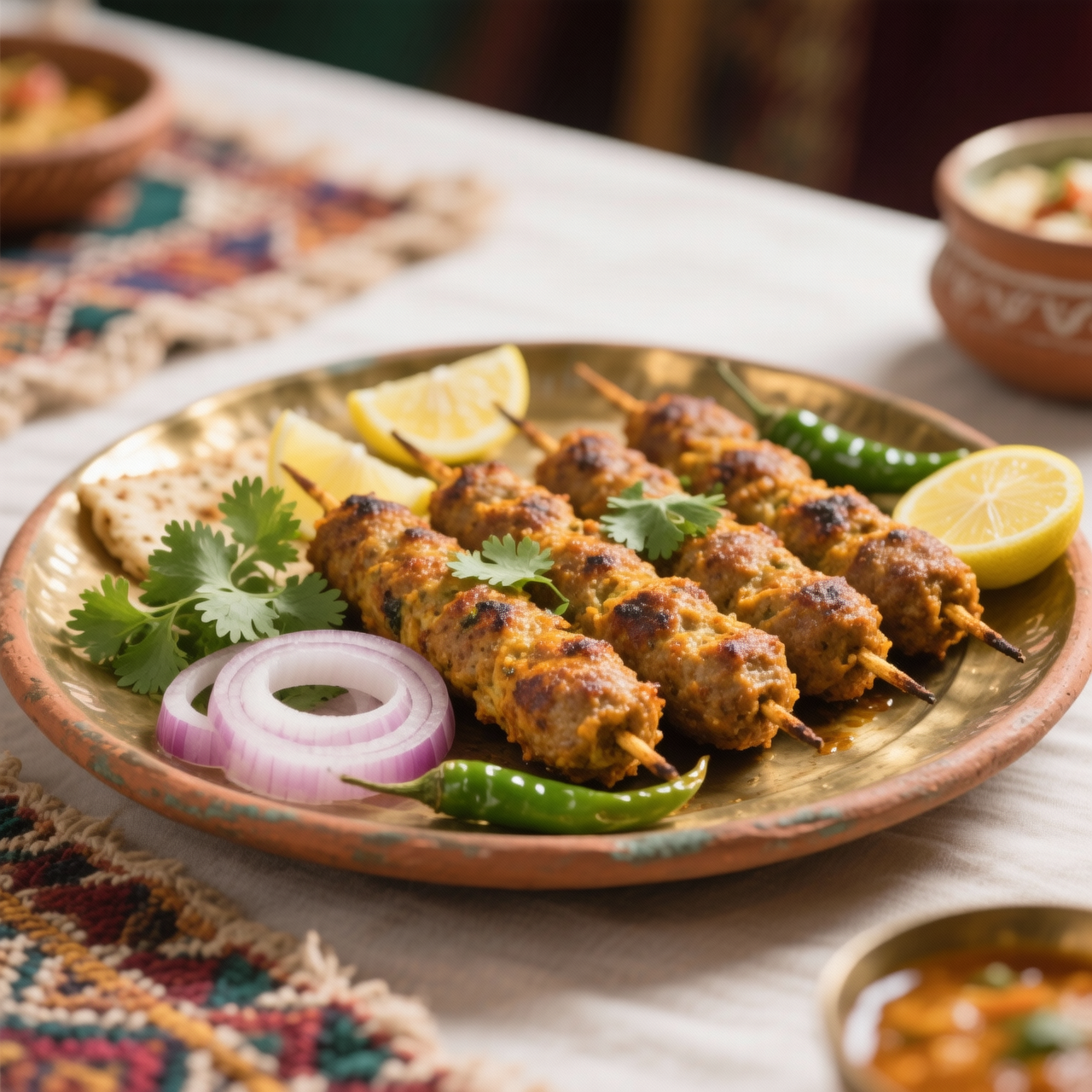
Shami Kebabs
I’ve spent years trying to replicate the exact snap of a street-corner shami kebab, and honestly, the quest taught me more about patience than any recipe book could. Born in the royal kitchens of the Mughal empire and later perfected across Pakistani households, these spiced lentil-and-meat patties are the quiet backbone of evening chai and Ramadan iftars. What makes them matter isn’t just their history, but their texture: a delicate, almost custard-like interior held together by a crisp, golden crust. Shop-bought frozen versions usually run about three to four pounds for six, but they’re packed with fillers, stabilisers, and a bland, cardboard-like texture that completely misses the point. The real magic lies in slow-simmering chickpeas and beef or mutton with whole spices until the meat practically dissolves into the dal, then pounding it by hand with fresh green chillies, coriander, and a touch of egg for binding. The most common pitfall? Rushing the simmer or skipping the hand-pounding step, which leaves you with a crumbly, dry disc instead of a cohesive, melt-in-your-mouth patty. Another mistake is overcrowding the pan during frying, which steams the exterior instead of crisping it. When you build them from scratch, you control every layer of flavour—the warmth of garam masala, the brightness of mint, the earthy depth of slow-cooked legumes—and you end up with a snack that actually nourishes. They scale effortlessly and freeze beautifully raw, which means you can keep a drawer full of homemade staples without ever compromising on quality.
Nutrition
| Per serving | Calories | Protein | Carbs | Fat | Sat fat | Fibre | Sugar | Sodium |
|---|---|---|---|---|---|---|---|---|
| beginner | 480kcal | 34g | 22g | 24g | 9g | 5g | 3g | 520mg |
| intermediate | 320kcal | 24g | 16g | 18g | 5g | 4g | 3g | 580mg |
| expert | 285kcal | 24g | 13g | 16g | 5g | 4g | 2g | 410mg |
Per serving · Ava-estimated — a guide, not a clinical figure.
- 400 gground beef— Lean cut preferred, trimmed of excess fat
- 100 gchana dal— Soaked in water for at least 2 hours before cooking
- 150 gonion— Finely diced
- 15 gginger— Peeled and finely grated
- 4 unitgarlic clove— Minced finely
- 2 unitgreen chili— Finely chopped, seeds removed for milder heat
- 20 gfresh cilantro— Leaves only, chopped
- 1 unitegg— Lightly beaten, used for binding
- 60 mlvegetable oil— For shallow frying
- 8 gsalt— Adjust to taste
- 3 gturmeric powder
- 5 gred chili powder
- 4 gcoriander powder
This beginner-friendly version strips away the intimidation of traditional shami kebabs while keeping the process entirely from scratch. Shop-bought patties often cost around three to five dollars per pack, yet they rely on heavy binders, excess sodium, and artificial flavourings that mask the true taste of slow-simmered meat and lentils. Here, you will achieve the same tender, melt-in-your-mouth texture using simple, recognisable kitchen methods. Instead of wrestling with a heavy mortar or industrial grinder, we rely on a standard food processor or even a sturdy potato masher to bring the cooked meat and chana dal together. The key to success at this level is patience during the boiling phase: allow the lentils and mince to fully break down before shaping, as undercooked dal will cause the patties to crack in the pan. Keep the mixture slightly moist but firm, and chill the formed kebabs for fifteen minutes before shallow frying. This resting step guarantees they hold their shape beautifully. Watch your oil temperature carefully; a medium flame is all you need to develop a crisp, golden crust without burning the spices inside.
Equipment
- Large heavy pot with lid— Dutch oven or standard stockpot works perfectly
- Food processor— Sturdy potato masher is a reliable backup
- Heavy skillet— Non-stick or cast iron, large enough for four patties
Method
- 1
Place minced lamb or beef in a large pot with soaked split chickpeas, quartered onion, grated ginger, minced garlic, and enough water to cover everything by two inches.
Bring to a gentle boil before reducing heat to maintain a steady simmer.
simmering~ 30 min - 2
Cook until the lentils are completely soft and the meat shreds easily when pressed with a fork, then drain thoroughly and transfer to a food processor.
Reserve a small ladle of cooking liquid in case the mixture becomes too dry.
pulsing~ 1 min - 3
Pulse the mixture until it forms a uniform, cohesive paste, scraping down the sides halfway through to ensure even blending.
Avoid over-processing into a gluey texture; stop once it holds together.
binding~ 2 min - 4
Mix in ground cumin, coriander, red chilli powder, salt, and a lightly beaten egg until fully incorporated, then cover and refrigerate for twenty minutes.
Chilling firms the natural proteins, making the patties much easier to shape without cracking.
resting~ 5 min - 5
Divide the cooled mixture into eight equal portions, roll each into a ball, and gently flatten into half-inch thick patties.
Keep your hands lightly oiled to prevent sticking.
shaping~ 4 min - 6
Shallow fry the patties in a lightly oiled skillet over medium heat until deeply golden and crisp on both sides, about three to four minutes per side.
Flip only once the crust releases naturally from the pan to avoid tearing.
shallow-frying~ 7 minTricky bit
Cooking from frozen
Fry from frozen over medium heat until deeply golden, or bake at 190°C for 15 minutes until piping hot.
Storage times are a guide — always use your judgement and store food safely.