
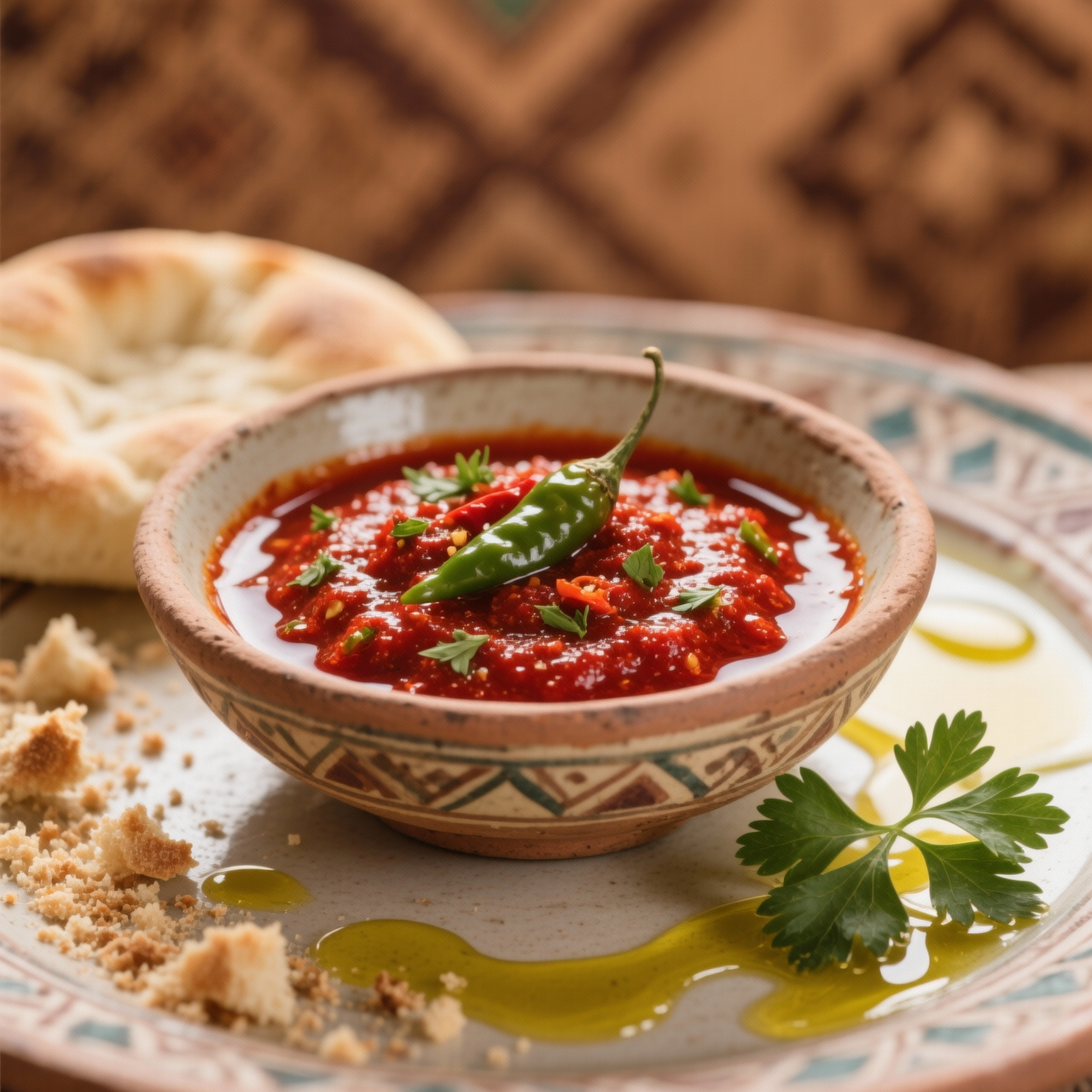
Shatta (chilli sauce)
When I first learned to make shatta in a sunlit Cairo kitchen, I quickly realized this isn’t just a condiment; it’s a living, breathing testament to patience. Born from the ancient Egyptian practice of preserving the summer’s fiery harvest, shatta bridges the gap between fresh chilies and the deep, tangy umami that only fermentation can coax out. For me, it matters because it transforms humble ingredients into a flavor anchor for koshari, ful medames, and grilled meats, adding a bright, complex heat that bottled hot sauces simply cannot replicate. The magic lies in the slow lacto-fermentation, where salt draws out moisture and natural bacteria convert sugars into lactic acid, creating that signature tang while keeping the vibrant red color intact. Yet, so many home cooks rush it. The most common pitfall I see is using iodized table salt or tap water, both of which introduce unwanted minerals and chlorine that stifle the good microbes and lead to murky, soft jars. Another frequent mistake is sealing the container too tightly from day one; shatta needs to breathe initially, or pressure will build and force the flavorful brine right out of the lid. I always recommend coarse kosher salt, filtered water, and a loose cover for the first few days until the vigorous bubbling subsides. Only then do I seal it properly and let it rest in a cool, dark spot. When you respect the biology and give it time, you aren’t just making a sauce; you’re capturing the sun and the soil in a jar, ready to elevate everything from a simple sandwich to a grand feast.
Nutrition
| Per serving | Calories | Protein | Carbs | Fat | Sat fat | Fibre | Sugar | Sodium |
|---|---|---|---|---|---|---|---|---|
| beginner | 45kcal | 1g | 4g | 5g | 1g | 1g | 1g | 320mg |
| intermediate | 12kcal | 0g | 3g | 0g | 0g | 1g | 2g | 390mg |
| expert | 15kcal | 1g | 3g | 1g | 0g | 1g | 1g | 320mg |
Per serving · Ava-estimated — a guide, not a clinical figure.
- 500 gRed chilli— Stemmed and roughly chopped
- 50 gGarlic— Cloves peeled
- 30 gSea salt— Coarse grain
- 100 mlOlive oil— For covering and preservation
- 30 mlLemon juice— Freshly squeezed
- 5 gCoriander seed(optional)— Lightly toasted and crushed
This beginner-friendly take on Egyptian shatta skips the traditional multi-week fermentation in favor of a quick, accessible simmer that delivers bold, tangy heat in under an hour. We rely on high-quality jarred chilli paste and pre-minced garlic to bypass tedious prep, while still capturing the essential garlic-cilantro-lemon backbone that defines the sauce. The key here is gentle heat management: you will slowly cook down the paste with olive oil and vinegar to bloom the spices and mellow the raw bite without scorching. Watch closely as the mixture thickens; it should coat the back of a spoon like a loose jam. Once cooled, blend in fresh coriander and a generous squeeze of lemon to preserve their bright, grassy notes. Sterilised jars are essential for storage, and a tight seal guarantees your homemade batch stays vibrant for months in the fridge. Do not rush the cooling step before jarring, as trapping heat creates condensation that can spoil the sauce. This streamlined method removes the guesswork of wild fermentation, giving you a reliably punchy, restaurant-quality condiment perfect for your first try.
Equipment
- Heavy-bottomed pan— non-stick is fine here
- Blender or food processor— immersion blender works too
- Sterilised glass jars— with tight-fitting lids
Method
- 1
Pour olive oil into a heavy-bottomed pan and warm it over medium-low heat.
The oil should shimmer but never smoke.
blooming~ 2 min - 2
Add the jarred chilli paste and white vinegar, stirring constantly until fragrant.
Lower the heat immediately if the oil starts splattering.
sweating~ 5 minTricky bit - 3
Remove the pan from the heat and allow the mixture to cool completely before stirring in chopped coriander and fresh lemon juice.
Adding fresh herbs to hot sauce will turn them muddy.
resting~ 10 min - 4
Transfer the cooled sauce into sterilised glass jars using a clean funnel and seal them tightly.
Leave a quarter-inch headspace to prevent overflow during storage.
jarring~ 5 minTricky bit
Cooking from frozen
Thaw overnight in the refrigerator, stir thoroughly to recombine separated liquids, and serve cold.
Storage times are a guide — always use your judgement and store food safely.