
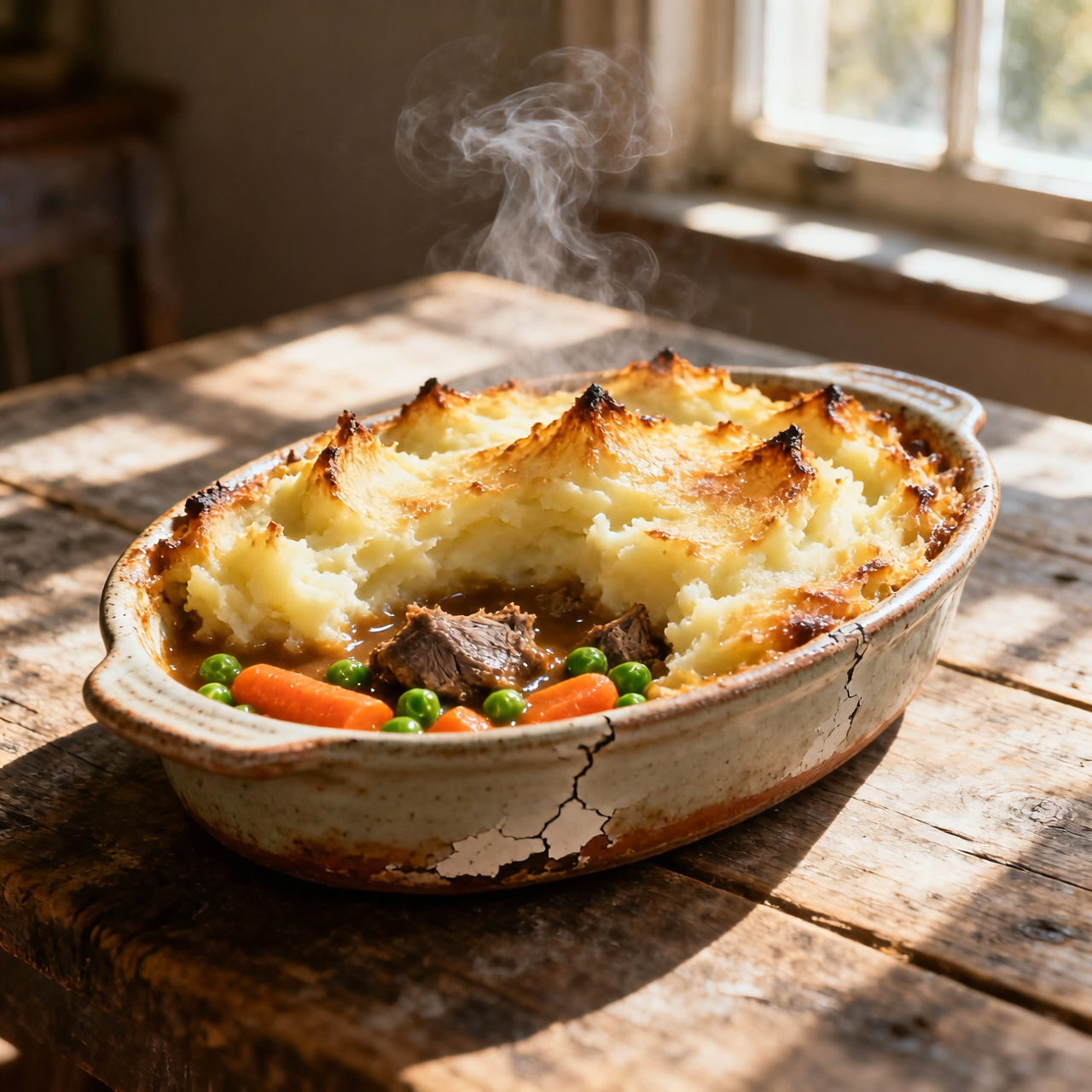
Shepherd's Pie
When I first learned to make shepherd’s pie, I quickly realized it was never meant to be a dish of extravagance, but rather a quiet triumph of British resourcefulness. Emerging in the late eighteenth century among rural households and Scottish shepherds, it began as a clever solution to stretching yesterday’s roasted lamb or mutton into tomorrow’s supper. That history is precisely why it still matters today. In an era obsessed with culinary novelty, shepherd’s pie remains a steadfast reminder that comfort food is born from necessity, patience, and respect for what is already in the pantry. Yet, despite its humble roots, it is astonishingly easy to get wrong. I have seen countless versions ruined by a rushed filling that swims in thin, flavorless gravy, or by mashed potatoes so heavy with milk and butter that they collapse into a dense, soggy crust the moment they hit the oven. The true magic lies in balance: a deeply reduced, savory lamb base with just enough Worcestershire and herbs to anchor it, topped with potatoes that are seasoned aggressively, kept slightly drier, and scored with a fork to catch the heat. Too many cooks treat the mash as an afterthought or skip the crucial resting period before serving, guaranteeing a structural failure. When approached with care, however, shepherd’s pie becomes something quietly profound, a layered testament to thrift, warmth, and the simple dignity of a meal that asks for little but gives back everything.
Nutrition
| Per serving | Calories | Protein | Carbs | Fat | Sat fat | Fibre | Sugar | Sodium |
|---|---|---|---|---|---|---|---|---|
| beginner | 920kcal | 40g | 53g | 60g | 28g | 8g | 9g | 1620mg |
| intermediate | 920kcal | 40g | 53g | 60g | 28g | 8g | 9g | 1620mg |
| expert | 920kcal | 40g | 53g | 60g | 28g | 8g | 9g | 1620mg |
Per serving · Ava-estimated — a guide, not a clinical figure.
- 750 gground lamb— preferably shoulder for higher fat content
- 800 grusset potato— high-starch variety
- 1 wholeyellow onion— medium size
- 2 wholecarrot— medium, peeled
- 100 gfrozen pea— thawed before use
- 30 gtomato paste— freshly opened
- 15 mlWorcestershire sauce— traditional fermented blend
- 500 mllamb stock— unsalted preferred
- 30 gall-purpose flour— sifted
- 100 gunsalted butter— cold, cubed
- 120 mlwhole milk— warmed to room temperature
- 3 sprigfresh thyme— leaves stripped
- 10 gkosher salt— for seasoning throughout
- 2 gblack pepper— freshly cracked
This version is designed for your very first attempt, prioritizing confidence over perfection. We lean on convenient shortcuts that save time without sacrificing the core experience. Instead of meticulously dicing and simmering vegetables from scratch, you will use pre-chopped frozen medleys and a reliable jarred gravy concentrate to build your base quickly. The potato topping relies on a streamlined mash method, using a ricer or even a sturdy fork to keep things simple. The key to success here is patience during the assembly phase. Do not rush to fill the baking dish while the meat mixture is still violently bubbling; a quick five-minute rest allows the sauce to thicken naturally, preventing a watery bottom. Watch closely when broiling the top, as the high sugar content in pre-made gravies can burn rapidly. This pathway strips away the intimidation factor, proving that a comforting, structurally sound pie is entirely achievable on a busy weeknight. Follow the timing cues closely, trust the visual signs of a properly browned crust, and enjoy the satisfaction of a homemade classic without the steep learning curve.
Equipment
- 9x13 inch baking dish— ceramic or glass preferred
- Large non-stick skillet— 12-inch diameter
- Potato masher— standard wire type
- Wooden spoon— for stirring
Method
- 1
Preheat your oven to 200°C and lightly grease the baking dish with a thin layer of butter.
Oven must reach temperature before baking begins.
preheating~ 5 min - 2
Cook the ground lamb in a hot skillet until completely browned and crumbled.
Drain excess fat if the pan looks overly slick.
browning~ 8 min - 3
Stir in the frozen vegetables, jarred gravy base, and Worcestershire sauce until thoroughly combined.
Do not add extra salt at this stage.
combining~ 2 min - 4
Simmer the meat mixture on low heat until the sauce thickens slightly.
Bubbles should be slow and steady.
simmering~ 10 min - 5
Boil the potatoes in salted water until a fork slides through with zero resistance.
Start potatoes in cold water for even cooking.
boiling~ 15 min - 6
Drain the potatoes thoroughly and mash them with butter and warm milk until smooth.
Overworking will make the topping gummy.
mashing~ 4 minTricky bit - 7
Spread the meat filling evenly in the dish, layer the potatoes on top, and bake until the edges bubble.
Use a fork to create ridges for maximum browning.
baking~ 20 min