
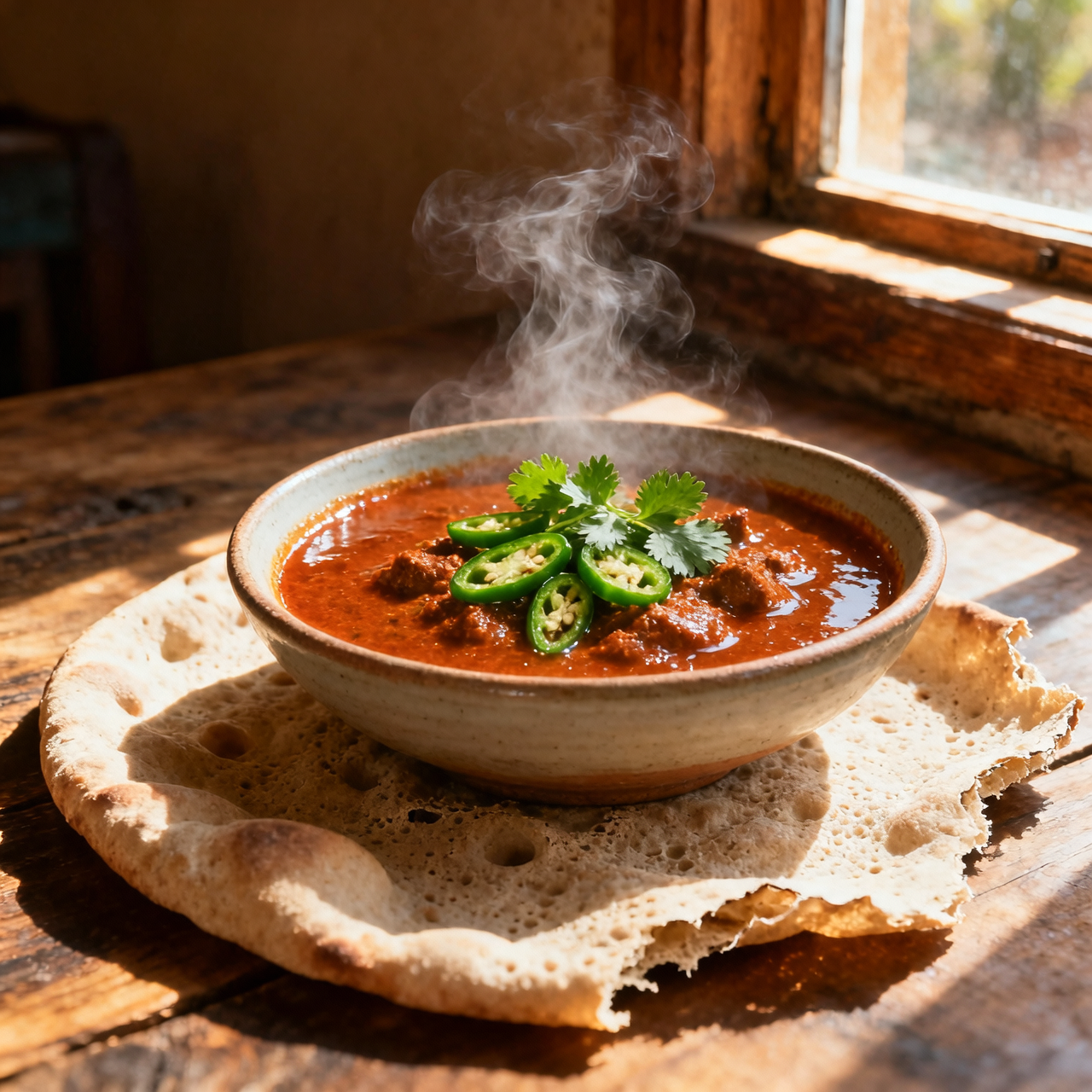
Shiro
I first encountered shiro not in a bustling Addis Ababa restaurant, but in a quiet diaspora kitchen where the scent of toasted chickpeas and berbere felt like a quiet anchor. At its core, shiro is a masterclass in Ethiopian culinary economy—a humble legume flour transformed through slow simmering into something profoundly comforting. Traditionally crafted from ground chickpeas or broad beans, this dish has sustained families through fasting seasons, proving that vegan cooking here isn’t a trend but a centuries-old rhythm tied to Orthodox fasting calendars and communal resilience. What makes shiro so vital to Ethiopian food culture is its adaptability; it serves as both canvas and centerpiece, absorbing the warmth of garlic, ginger, and oil while remaining entirely plant-based. Yet, it’s deceptively simple, and that simplicity is where most cooks stumble. The most common pitfall is rushing the roux-like base. Shiro powder burns easily if the heat is too high or if it isn’t whisked constantly into the oil. Another frequent mistake is under-seasoning the liquid or adding water too quickly, which creates a chalky, separated texture rather than a velvety stew. I’ve learned to treat shiro like a conversation: you must listen to the pan, let the spices bloom before the flour touches the heat, and simmer patiently until it thickens into that signature, spoon-coating consistency. When done right, it’s a quiet triumph of patience and precision.
Ingredients
- 200 gChickpea flour— finely sifted, traditionally labeled shiro powder
- 150 gYellow onion— finely minced
- 4 countGarlic clove— minced
- 15 gFresh ginger— peeled and finely grated
- 30 gTomato paste— concentrated
- 12 gBerbere spice blend— aromatic, not overly salty
- 60 mlNeutral cooking oil— sunflower or avocado oil
- 750 mlWater— room temperature, divided
- 5 gFine sea salt— to taste
- 15 mlLemon— freshly squeezed juice
Method
Pick a skill levelThis version removes the guesswork by leaning on reliable shortcuts without sacrificing the soul of the dish. You will use a pre-blended shiro powder that already contains balanced aromatics, paired with a ready-made tomato and berbere paste. The goal here is confidence. You will learn to control heat and hydration, which are the only two variables that truly matter when cooking legume-based stews. Watch the edges of the pan closely as the oil and spices combine; you want a fragrant sizzle, not a smoky burn. When adding the flour, whisk continuously until the mixture resembles wet sand before introducing liquid. Pour water in slow, steady streams, allowing each addition to fully absorb before adding more. If the surface develops a skin or the texture feels stiff, simply lower the heat and stir in a splash of warm water. Do not rush the simmer. A gentle, uncovered cook of twenty minutes will eliminate any raw flour taste and coax out a naturally creamy finish. This approach guarantees a smooth, cohesive stew on your first try. Once you master this rhythm, you will instinctively know when to graduate to whole spices and from-scratch blending.
Method
- 1
Heat oil in a saucepan over medium heat until it shimmers.
Do not let it smoke.
heating~ 1 min - 2
Sauté onion, garlic, and ginger until softened and fragrant.
Keep heat at medium to prevent browning.
sautéing~ 5 min - 3
Stir in tomato paste and berbere paste, blooming the spices for one minute.
The kitchen should smell intensely aromatic.
blooming~ 1 min - 4
Whisk in shiro powder gradually, then stream in water while stirring constantly to prevent lumps.
Add liquid slowly and keep the whisk moving.
hydrating~ 3 minTricky bit - 5
Simmer uncovered, stirring occasionally until thickened to a creamy, velvety consistency.
Lower heat to low once bubbles form.
simmering~ 20 min - 6
Remove from heat and stir in salt and lemon juice.
Taste and adjust seasoning before serving.
finishing~ 1 min
This version strikes the ideal balance between traditional preparation and accessible weeknight cooking. You will grind your own chickpea flour if you have a spice grinder, or source high-quality plain shiro powder and build the flavor base entirely from scratch. The focus shifts to layering aromatics properly and understanding how moisture interacts with toasted legumes. Begin by sweating the minced onion in oil until it turns translucent and sweet, avoiding any browning that could introduce bitterness. Add garlic and ginger only after the onions have softened, allowing their sharper compounds to mellow without burning. Toast the berbere and tomato paste together until the oil begins to separate from the solids, a crucial visual cue that the raw spice flavors have fully awakened. When incorporating the chickpea flour, lower the heat and use a firm wooden spoon to press out any dry pockets. Add water in thirds, resting between additions to let the starch granules swell evenly. Maintain a low, steady simmer and stir the bottom of the pot every few minutes. The stew should coat the back of a spoon like a rich custard, never boiling or scorching.
Method
- 1
Sweat minced onion in oil over medium-low heat until fully translucent.
Patience here builds the sweet foundation.
sweating~ 7 min - 2
Add minced garlic and grated ginger, cooking until aromatic and pale.
Do not let the garlic color turn brown.
aromatics extraction~ 2 min - 3
Stir in tomato paste and berbere blend, cooking until oil visibly separates from the spice mass.
Look for small oil droplets pooling at the edges.
toasting~ 5 minTricky bit - 4
Reduce heat to low, whisk in sifted chickpea flour until a uniform paste forms.
Press firmly to eliminate dry pockets.
roux-making~ 2 minTricky bit - 5
Gradually incorporate water in three stages, stirring vigorously until fully hydrated between additions.
Let the starch swell completely before adding more.
hydrating~ 5 minTricky bit - 6
Simmer gently, scraping the bottom frequently, until thickened and glossy.
Maintain a bare simmer, never a rolling boil.
simmering~ 25 min - 7
Finish by folding in salt and fresh lemon juice off the heat.
Acid should be added last to preserve brightness.
seasoning~ 1 min
This iteration honors the uncompromising standards of Addis Ababa’s finest traditional kitchens, demanding patience, precise heat management, and an intimate understanding of ingredient behavior. You will toast whole yellow split peas and chickpeas in a dry skillet until deeply fragrant, then mill them into an ultra-fine flour that carries a nutty, roasted backbone no commercial brand can replicate. The cooking process relies on a slow, low-temperature emulsion where oil and water are forced to bind through constant, rhythmic stirring. Begin by clarifying the oil with a pinch of salt to remove impurities, then introduce minced shallots instead of yellow onion for a sweeter, more delicate aromatic base. Allow the berbere to toast until its complex chili and fenugreek notes bloom fully before introducing the freshly milled flour. The hydration phase requires unwavering attention; add tepid water drop by drop initially, then in thin ribbons, never breaking the steady stirring motion. The stew must never reach a rolling boil. Cook until the surface develops a natural, glossy sheen and the texture holds a soft peak on the spoon. A resting period of ten minutes off the heat allows the starches to fully relax and the flavors to marry completely.
Method
- 1
Toast whole chickpeas and yellow split peas in a dry skillet until deeply golden and aromatic.
Shake pan constantly to ensure even roasting.
dry roasting~ 10 minTricky bit - 2
Mill the toasted legumes into an ultra-fine powder and sift twice to remove bran.
Store milled flour in an airtight container until use.
milling~ 5 min - 3
Clarify neutral oil over low heat with a pinch of salt until completely transparent.
Strain out any impurities before proceeding.
clarifying~ 3 min - 4
Sweat minced shallots until completely translucent, then add garlic and ginger to build the aromatic base.
Keep temperature low to preserve delicate sweetness.
sweating~ 8 min - 5
Bloom berbere and concentrated tomato paste until the oil separates and spices deepen in color.
The paste should turn a dark mahogany red.
blooming~ 4 minTricky bit - 6
Whisk in the freshly milled flour until it forms a thick, cohesive paste.
Scrape corners continuously to prevent scorching.
binding~ 2 minTricky bit - 7
Stream in tepid water in thin ribbons while stirring rhythmically to form a stable emulsion.
Never stop moving the paddle during this phase.
emulsifying~ 10 minTricky bit - 8
Cook at the barest simmer, never boiling, scraping constantly until glossy and thick.
Listen for a soft, wet plop as it thickens.
simmering~ 30 min - 9
Remove from heat, cover, and rest to allow starch relaxation before finishing with salt and acid.
Resting prevents a gummy mouthfeel.
resting~ 10 min