
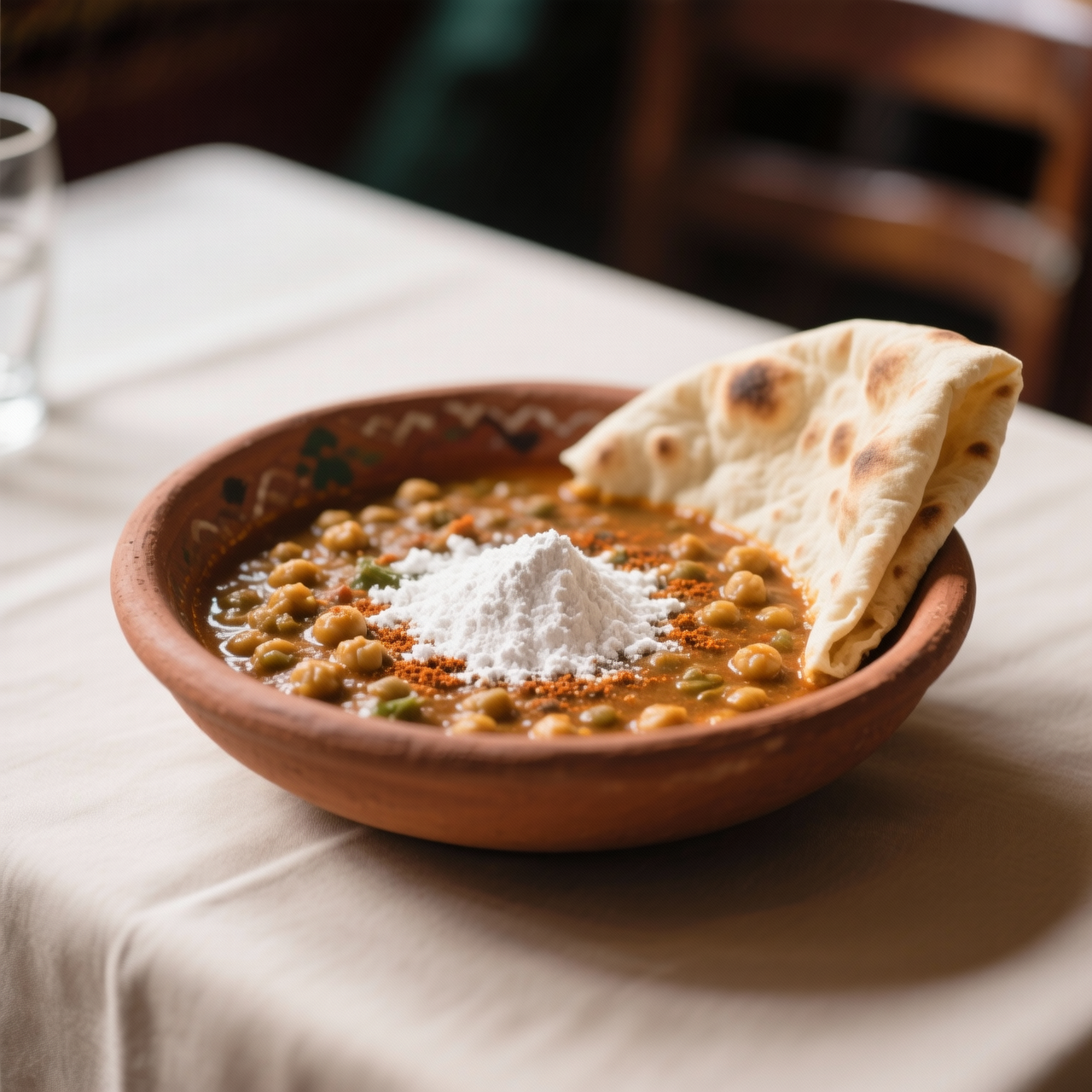
Shiro powder
When I first learned to balance the earthy pulse of roasted chickpeas with the bright heat of berbere, I realized shiro powder is far more than a pantry shortcut. It is the quiet heartbeat of Ethiopian home cooking, born in the highlands where legumes and spices have sustained communities through long fasts and lean harvests. This finely milled blend carries generations of intuition, transforming into a velvety stew with nothing but water, oil, and patience. I treat it as a living recipe because its quality dictates the soul of the final wat. If the powder is rushed, the dish turns bitter or chalky. The most common mistake I see is under-toasting the chickpea flour, which leaves a raw, grassy edge that no amount of simmering can fix. Conversely, chasing a deep mahogany hue often crosses the line into scorching, locking in a harsh, ashy bitterness that overpowers the delicate spice notes. Another frequent misstep is grinding everything into a single pass without sifting, which leaves coarse grit that refuses to dissolve properly. I always toast my chickpea flour in a heavy skillet until it smells like warm nuts, then let it cool completely before blending it with toasted coriander, fenugreek, and a careful hand of chilies. A fine sieve is my final checkpoint. When stored in an airtight jar away from light and humidity, this powder waits patiently for the moment you stir it into a pot. It is a testament to how simplicity, when handled with respect, becomes a profound comfort.
Nutrition
| Per serving | Calories | Protein | Carbs | Fat | Sat fat | Fibre | Sugar | Sodium |
|---|---|---|---|---|---|---|---|---|
| beginner | 115kcal | 7g | 20g | 2g | 0g | 6g | 2g | 480mg |
| intermediate | 165kcal | 9g | 26g | 2g | 0g | 6g | 2g | 5mg |
| expert | 138kcal | 7g | 22g | 3g | 0g | 6g | 2g | 11mg |
Per serving · Ava-estimated — a guide, not a clinical figure.
- 400 gDried split chickpea— Toast until golden and grind to a fine flour
- 35 gGarlic powder
- 35 gOnion powder
- 15 gGround ginger
- 10 gTurmeric
- 15 gFine sea salt
This beginner-friendly approach skips the time-consuming dry-roasting and fine-grinding of whole chickpeas and spices. Instead, you’ll combine high-quality, store-bought chickpea flour with a reliable jarred berbere blend and a few pantry staples. The key is thorough, gentle whisking to ensure the heavy spices distribute evenly without clumping. Keep the heat strictly on medium-low during the brief warming step, as chickpea flour scorches quickly and turns unpleasantly bitter. Stir constantly and trust your nose; the moment the kitchen smells warm and nutty, it’s ready. Once cooled completely to room temperature, transfer the powder to an airtight container away from direct light to preserve the volatile oils in the spice blend. This streamlined shortcut guarantees a deeply flavored base for shiro wat on busy weeknights without demanding specialized equipment or advanced technique. Store it in a cool pantry, and you’ll always have a confident, quick-start foundation for your Ethiopian cooking.
Equipment
- Large mixing bowl— wide enough for easy whisking
- Fine-mesh sieve(optional)— catches spice clumps before mixing
- Dry skillet— non-stick works best to prevent sticking
Method
- 1
Sift the chickpea flour, berbere blend, onion powder, garlic powder, and salt into a large mixing bowl.
Sifting prevents dense clumps of berbere from settling at the bottom.
sifting~ 2 min - 2
Whisk the dry ingredients vigorously for two minutes until the color is completely uniform.
Stop when no orange or brown specks of undispersed spice remain.
dry blending~ 2 min - 3
Spread the mixture evenly in a dry skillet over medium-low heat.
Do not add oil or water at this stage.
dry-toasting~ 3 minTricky bit - 4
Stir constantly with a silicone spatula for three to four minutes until fragrant.
Lower the heat immediately if you smell nuttiness turning to bitterness.
blooming~ 4 minTricky bit - 5
Transfer the warmed powder to a plate and let it cool completely before jarring.
Trapped heat creates condensation that causes the powder to mold.
cooling~ 15 min
Storage times are a guide — always use your judgement and store food safely.