
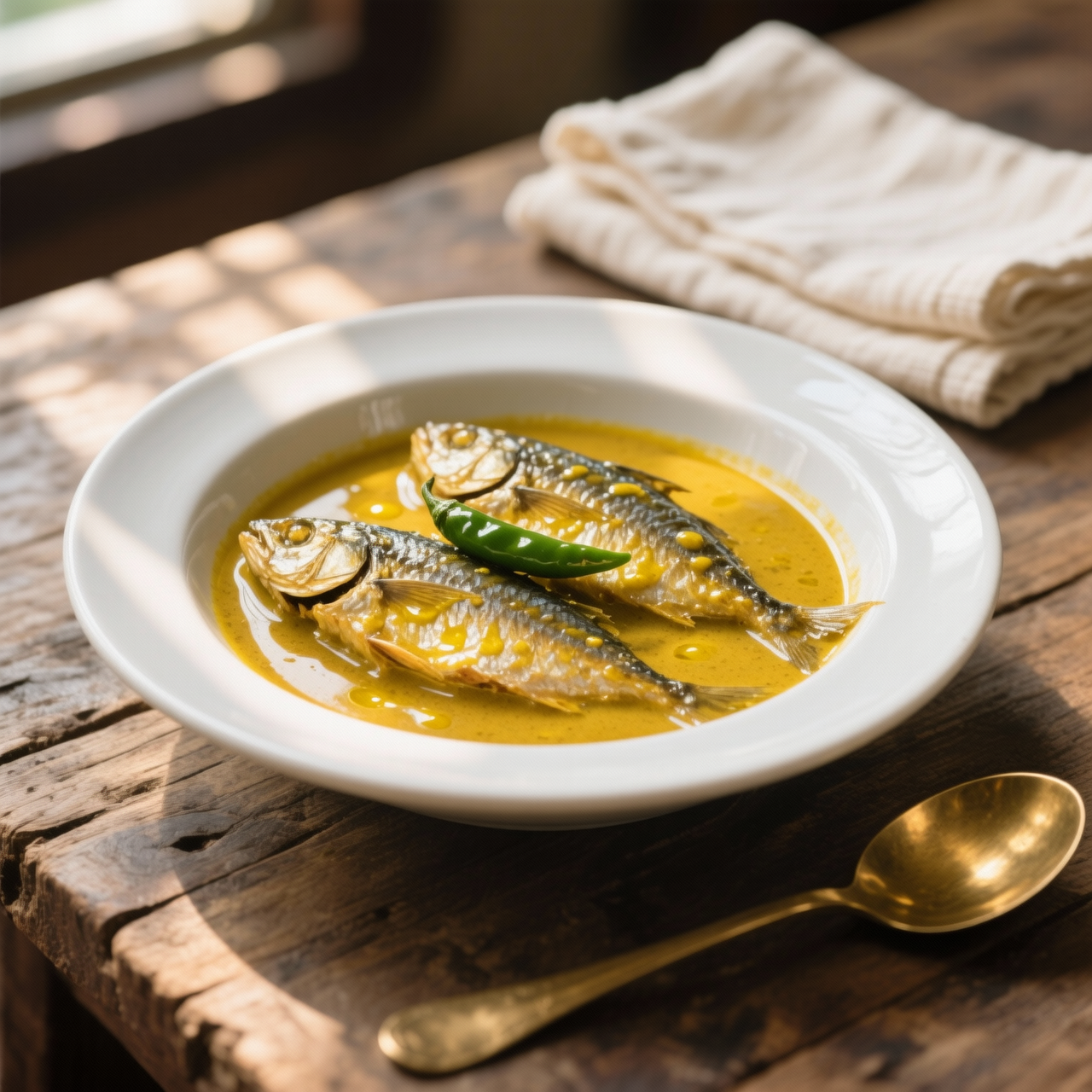
Shorshe Ilish
When I first encountered shorshe ilish, I wasn’t just tasting fish; I was stepping into a centuries-old Bengali love letter to the monsoon and the mighty Padma River. Hilsa, with its iridescent silver scales and impossibly delicate, oily flesh, has long been the crown jewel of our regional table, and pairing it with freshly ground mustard transforms it into something almost sacred. I’ve spent years perfecting this balance because getting it wrong means losing the very soul of the dish. The origins of this preparation lie in the riverine kitchens of Bengal, where resourceful cooks learned to harness the sharp, pungent bite of mustard to complement the rich, buttery texture of hilsa without masking it. What makes this dish so vital to our culinary identity is its insistence on restraint. A common pitfall I see time and again is drowning the fish in an overly thick, unbalanced mustard paste that turns bitter or using low-quality oil that fights rather than marries with the spice. Equally damaging is overcooking; hilsa flakes apart with the slightest provocation, so a gentle simmer is non-negotiable. Another mistake is skipping the traditional slit on the fish’s back, which prevents the paste from penetrating properly and leaves the seasoning trapped on the surface. When done right, however, the mustard yields to the fish’s natural sweetness, the green chilies provide a quiet heat, and the mustard oil lingers like a memory of the delta itself. This dish isn’t merely sustenance; it’s a quiet rebellion against haste, a reminder that the best flavors emerge when you listen closely to the ingredients and let them speak.
Nutrition
| Per serving | Calories | Protein | Carbs | Fat | Sat fat | Fibre | Sugar | Sodium |
|---|---|---|---|---|---|---|---|---|
| beginner | 440kcal | 27g | 3g | 36g | 7g | 1g | 1g | 980mg |
| intermediate | 440kcal | 27g | 3g | 36g | 7g | 1g | 1g | 980mg |
| expert | 440kcal | 27g | 3g | 36g | 7g | 1g | 1g | 980mg |
Per serving · Ava-estimated — a guide, not a clinical figure.
- 500 ghilsa fish— fresh, firm steaks about one-inch thick
- 30 gmustard seed— raw, whole yellow or brown variety
- 4 pcsgreen chili— fresh, slender, and vibrant
- 5 gturmeric powder— pure ground root, no fillers
- 60 mlmustard oil— cold-pressed, pungent grade
- 10 gfine sea salt— uniodized preferred
- 120 mlwater— filtered, warm
This version removes the friction of grinding and tempering by relying on a high-quality jarred mustard paste, which gives you immediate control over consistency and heat. You will learn the foundational rhythm of Bengali fish cooking without worrying about achieving a perfectly smooth emulsion from scratch. Watch the pan temperature closely; mustard paste turns acrid the moment it scorches, so we keep the flame low and steady. The goal here is to gently poach the hilsa in the diluted paste until it flakes effortlessly, allowing the jarred sauce to act as a reliable flavor anchor. Do not skip the final resting period, as it lets the gravy thicken naturally without aggressive stirring that would break the delicate steaks. By the end, you will have a deeply comforting, golden curry that honors the dish’s essence while fitting comfortably into a busy weeknight routine. Treat this as your confident first step into Bengali cuisine, building muscle memory for more advanced techniques later.
Equipment
- heavy-bottomed pan— non-stick is fine here
- whisk— stainless steel preferred
Method
- 1
Rinse the hilsa steaks and pat them completely dry with paper towels.
Keep them intact to prevent breaking during cooking.
prepping~ 2 min - 2
Warm the mustard oil in the pan over medium-low heat until it shimmers.
Oil should shimmer but not smoke.
heating~ 1 min - 3
Stir the jarred mustard paste into warm water until smooth, then pour it into the pan.
Whisk vigorously to avoid lumps.
diluting~ 2 minTricky bit - 4
Add turmeric, salt, and slit green chilies to the gravy.
Adjust salt gradually; jarred paste already contains it.
seasoning~ 1 min - 5
Gently lower the fish steaks into the simmering gravy without stirring.
Shake the pan instead of using a utensil.
poaching~ 8 minTricky bit - 6
Remove from heat and let the curry rest covered for ten minutes.
Gravy will thicken naturally as it cools.
resting~ 10 min