
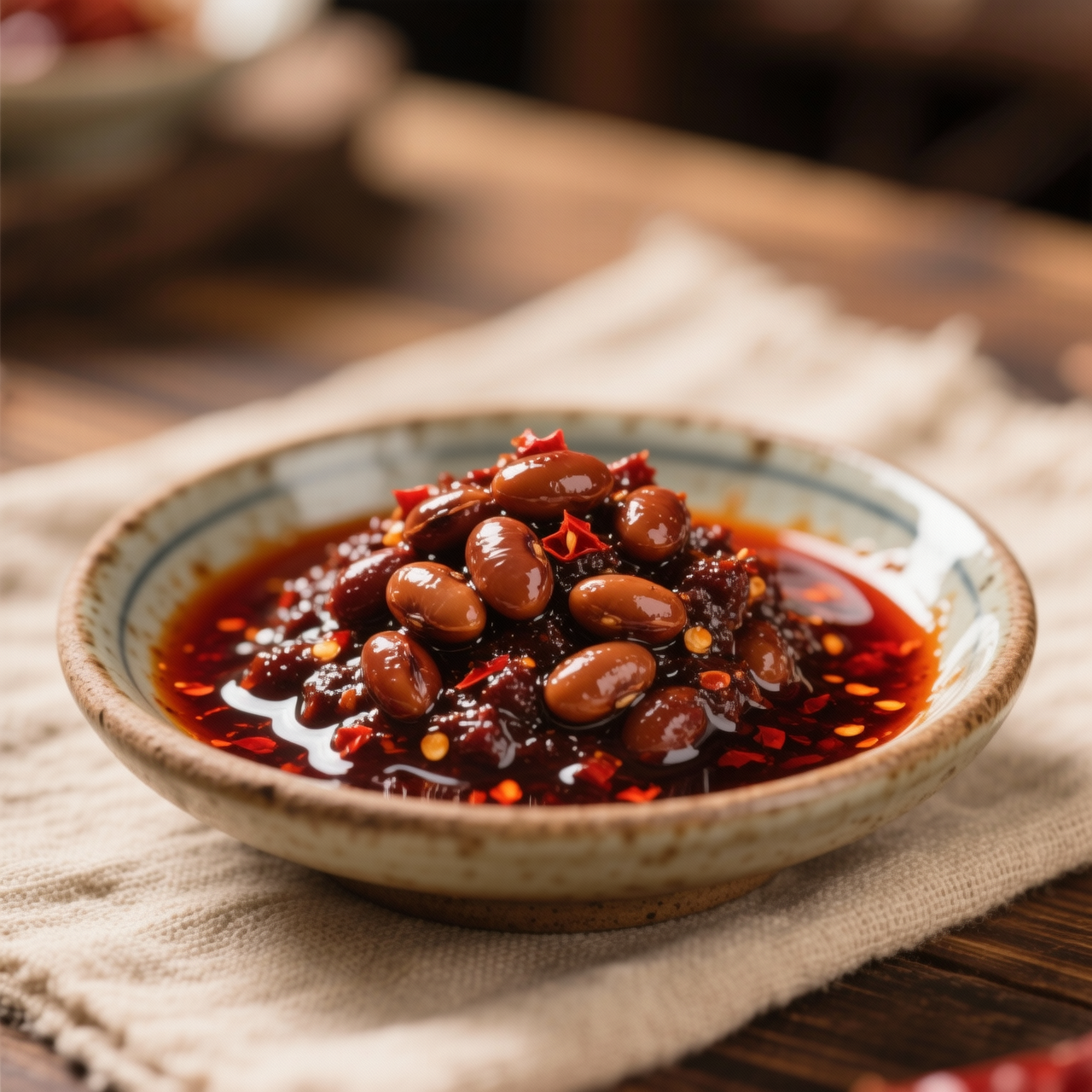
Sichuan Doubanjiang (Broad Bean Chili Paste)
When I first set out to recreate authentic Sichuan doubanjiang, I quickly learned that this paste is less of a condiment and more of a living archive of Sichuan’s culinary identity. Born in the humid river valleys of Sichuan province, where broad beans and chilies meet time, salt, and wild microbes, this fermented backbone transforms simple vegetables and proteins into deeply resonant dishes. I make it vegan by relying entirely on the natural enzymes in toasted broad beans, carefully layered with dried red chilies, sea salt, and a quiet patience that modern cooking rarely affords. Why does it matter so much to me? Because without properly aged doubanjiang, mapo tofu loses its soul, and fish-fragrant eggplant becomes merely a stir-fry. It delivers that irreplaceable savory depth, the kind that clings to the tongue and lingers long after the meal ends. But crafting it at home demands vigilance. The most common pitfall I see is rushing the fermentation or ignoring moisture control. Too much humidity invites spoilage; too little halts the enzymatic breakdown. I always emphasize sterilizing every jar, pressing the salt-to-bean ratio precisely, and resisting the urge to peek during the first critical weeks. Another mistake is using fresh chilies instead of sun-dried ones, which introduces unwanted water and destabilizes the culture. When you respect the rhythm of the seasons and the biology of fermentation, the paste rewards you with a complex, earthy heat that store-bought versions simply cannot replicate.
Nutrition
| Per serving | Calories | Protein | Carbs | Fat | Sat fat | Fibre | Sugar | Sodium |
|---|---|---|---|---|---|---|---|---|
| beginner | 58kcal | 2g | 5g | 4g | 0g | 2g | 1g | 1150mg |
| intermediate | 120kcal | 4g | 13g | 7g | 1g | 5g | 2g | 1320mg |
| expert | 35kcal | 2g | 6g | 1g | 0g | 2g | 1g | 950mg |
Per serving · Ava-estimated — a guide, not a clinical figure.
- 500 gbroad bean— Dried or fresh, soaked and split if using dried
- 250 gdried red chili— Preferably Erjingtiao variety, stems removed and lightly toasted
- 80 gsea salt— Non-iodized, coarse grain for fermentation control
- 30 grice flour— Provides substrate for beneficial koji mold growth
- 100 mldistilled water(optional)— Filtered or boiled and cooled, used only if moisture adjustment is needed
This beginner-friendly approach skips the months-long traditional fermentation by using high-quality jarred broad bean paste as a flavor foundation. You will quickly bloom the paste with toasted aromatics and a touch of chili oil to mimic the deep, umami-rich complexity of aged Sichuan doubanjiang. The goal is confidence and speed: by gently frying the base ingredients, you unlock their natural oils and develop a savory depth that is ready to stir into mapo tofu, dan dan noodles, or braises immediately. Watch your heat closely during the initial fry; too high and the chilies will scorch and turn bitter, while too low leaves the raw, grassy edge intact. Stir constantly until the oil separates and turns a glossy crimson, signaling the flavors have properly melded. This shortcut delivers authentic Sichuan richness without the waiting period or specialized equipment, making it an accessible gateway to regional cooking. Store leftovers in a clean jar topped with a thin oil layer.
Equipment
- Heavy-bottomed skillet— cast iron or stainless works best for even heat
- Silicone spatula— for constant stirring without scratching the pan
- Sterilized glass jar— must be completely dry before filling
Method
- 1
Finely mince the garlic and ginger to ensure they melt evenly into the oil base.
A microplane or fine grater yields the best texture.
mincing~ 2 min - 2
Heat the neutral oil in your skillet over medium-low heat until it shimmers.
Test with a single garlic slice; it should bubble gently.
tempering~ 1 min - 3
Add the minced aromatics and cook until fragrant and pale gold.
Do not let them brown or burn.
sweating~ 2 min - 4
Stir in the jarred broad bean paste and crushed chilies, breaking up any clumps.
The mixture will sputter initially; keep stirring to prevent sticking.
blooming~ 3 minTricky bit - 5
Continue frying until the oil separates and pools a glossy crimson around the edges.
This signals raw moisture has cooked off and flavors have concentrated.
reducing~ 5 min - 6
Remove from heat and let the paste cool completely before transferring to a sterilized jar.
Top with a thin oil layer to prevent mold during storage.
preserving~ 30 min
Cooking from frozen
Thaw completely in the refrigerator; no reheating required, just stir well before adding directly to hot oil or simmering into sauces.
Storage times are a guide — always use your judgement and store food safely.