
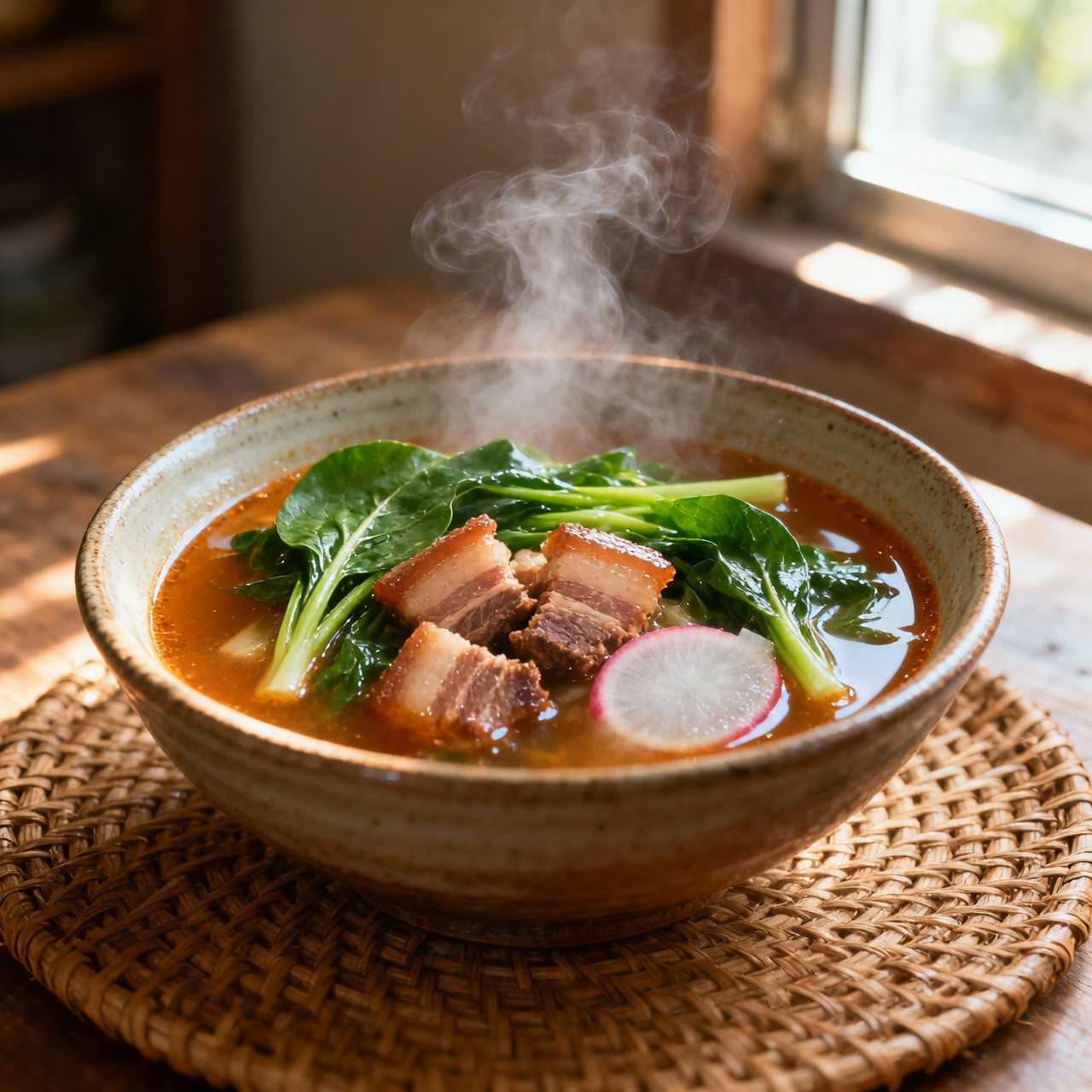
Sinigang na Baboy
I first encountered Sinigang na Baboy in a cramped kitchen in Manila, where the air hung heavy with the sharp, tangy promise of tamarind and slow-simmered pork. This dish isn’t just a meal; it’s a cultural anchor, a testament to the Filipino love affair with balancing sour, salty, and savory notes. Historically, sinigang traces back to indigenous souring techniques long before Spanish colonization, when early Filipinos used native fruits like batwan, calamansi, and green mango to cut through rich proteins and preserve food in tropical heat. Today, it remains a comforting staple, often served as a starter to awaken the palate before heavier courses. I’ve come to see it as a masterclass in restraint and patience. The magic lies not in complexity but in harmony. Yet, so many stumble at the start. The most common pitfall? Rushing the broth. Sinigang demands time for the collagen in the pork belly to break down, yielding that velvety mouthfeel that coats the spoon. Another frequent misstep is overcompensating with synthetic sinigang mixes, which flatten the nuanced sourness and mask the natural sweetness of the vegetables. I always insist on simmering fresh tamarind pulp or using high-quality natural bases, and I never skip the final adjustment of salt and sourness right at the end. When done right, the first spoonful should make your eyes widen and your shoulders drop. It’s a reminder that Filipino cooking, at its heart, is about nurturing, adapting, and honoring the land’s simplest ingredients.
Nutrition
| Per serving | Calories | Protein | Carbs | Fat | Sat fat | Fibre | Sugar | Sodium |
|---|---|---|---|---|---|---|---|---|
| beginner | 950kcal | 23g | 17g | 78g | 27g | 5g | 8g | 620mg |
| intermediate | 950kcal | 23g | 17g | 78g | 27g | 5g | 8g | 620mg |
| expert | 950kcal | 23g | 17g | 78g | 27g | 5g | 8g | 620mg |
Per serving · Ava-estimated — a guide, not a clinical figure.
- 800 gpork belly— cut into 2-inch cubes
- 150 gtamarind— whole pods, fresh pulp, or commercial concentrate
- 1500 mlwater
- 200 gwhite radish— peeled and sliced into half-moons
- 150 gstring bean— trimmed and cut into 2-inch pieces
- 200 gwater spinach— separated into tender stems and leaves
- 150 groma tomato— quartered
- 1 unityellow onion— halved and thinly sliced
- 15 ggarlic— minced
- 30 mlfish sauce— traditional patis
This beginner pathway embraces accessible shortcuts without sacrificing the soul of the dish. You will rely on a pre-mixed tamarind soup base, which eliminates the tedious soaking and straining required for raw fruit while delivering a consistent, reliable tang. The focus here is on mastering timing and temperature control. Watch your heat carefully; a rolling boil will toughen the pork and turn the delicate greens into mush. Instead, maintain a gentle, steady simmer that allows the meat to soften and the flavors to marry without aggressive agitation. I strongly recommend tasting the broth before adding the commercial mix, as many brands already contain salt and fish sauce. Adjust gradually, letting each addition dissolve completely before sampling again. The vegetables are added in strict sequence based on their cooking density, ensuring the radish remains slightly crisp while the greens just wilt. This structured approach removes the guesswork and guarantees a clean, balanced broth on your very first attempt. Treat the recipe as a reliable framework, not a rigid cage, and you will quickly build the intuition needed to elevate your technique later.
Equipment
- medium stockpot— stainless steel or non-stick
- wooden spoon— for gentle stirring
- measuring cups— for accurate liquid and paste ratios
Method
- 1
Place the pork cubes in a large pot and cover with the measured water.
Start with cold water for clearer broth.
cold-start boiling~ 5 min - 2
Bring the liquid to a gentle boil and skim the gray foam from the surface with a fine mesh spoon.
Remove impurities until the broth runs clear.
skimming~ 3 min - 3
Add the sliced onion, minced garlic, and quartered tomatoes to the pot.
Let the aromatics soften without browning.
infusing~ 5 min - 4
Stir in the pre-mixed tamarind soup base until fully dissolved and season with fish sauce.
Taste before adding extra salt; the base is often seasoned.
dissolving~ 2 min - 5
Drop in the radish slices and simmer until slightly tender, then add the string beans.
Maintain a low simmer to preserve vegetable structure.
simmering~ 5 minTricky bit - 6
Fold in the water spinach stems and leaves, then cover and remove from heat.
Let residual heat wilt the greens without overcooking.
carryover cooking~ 3 min