
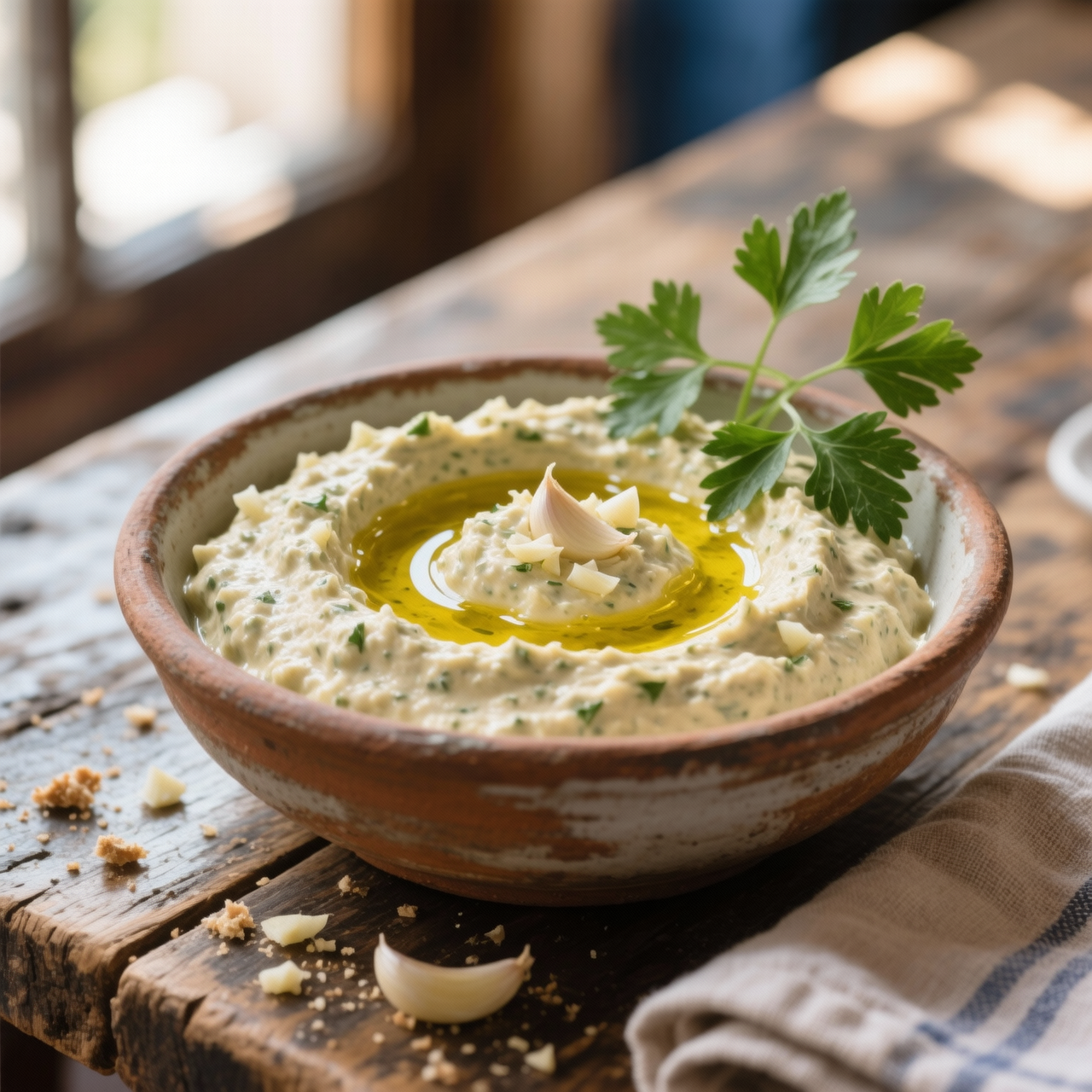
Skordalia (garlic potato dip)
When I first encountered skordalia in a sun-drenched taverna on the Peloponnese, I was struck by how something so brutally simple could command such fierce loyalty. It is, at its heart, a humble alchemy of boiled potatoes, crushed garlic, olive oil, and vinegar or lemon juice, pounded until it becomes something entirely greater than its parts. This isn’t merely a dip; it’s a cornerstone of the Greek table, traditionally served alongside fried salt cod, grilled octopus, or roasted vegetables, acting as both a condiment and a palate cleanser. What fascinates me is how it bridges the gap between rustic peasant fare and refined culinary tradition. The key to mastering it lies in patience and precision, which is exactly where most cooks stumble. The most common pitfall I see is adding the oil too quickly, which breaks the emulsion and leaves you with a greasy, separated mess rather than a luxuriously smooth, pillowy sauce. Another frequent error is using waxy potatoes or failing to dry them thoroughly after boiling; excess moisture ruins the texture and dilutes that signature pungency. Garlic, too, must be handled with respect—crush it finely with a pinch of salt before it meets the potato, allowing its sharp, aromatic oils to bloom. I always recommend working the ingredients by hand with a mortar and pestle if possible, but a food processor will suffice if you pulse gently and drizzle the oil like a slow rain. When done right, skordalia is bold, creamy, and unapologetically intense, a testament to the power of restraint and quality ingredients. It reminds me that true flavor doesn’t need complexity, just honesty and time.
Nutrition
| Per serving | Calories | Protein | Carbs | Fat | Sat fat | Fibre | Sugar | Sodium |
|---|---|---|---|---|---|---|---|---|
| beginner | 145kcal | 2g | 21g | 6g | 1g | 2g | 1g | 310mg |
| intermediate | — | — | — | — | — | — | — | — |
| expert | — | — | — | — | — | — | — | — |
Per serving · Ava-estimated — a guide, not a clinical figure.
- 500 gpotato— peeled and cut into even chunks before boiling
- 6 clovegarlic— freshly peeled
- 120 mlextra virgin olive oil— high-quality for authentic flavor
- 30 mllemon juice— freshly squeezed
- 8 gsalt— fine sea salt
- 60 mlcold water— for adjusting emulsion and consistency
This beginner-friendly approach streamlines traditional Skordalia by removing the labor-intensive mortar-and-pestle method and substituting fresh garlic prep with convenient jarred paste. You will use a standard food processor to achieve the signature creamy texture in a fraction of the time. The key to success is temperature control and emulsion pacing. Always blend your potatoes while still warm, as the starches are most receptive to absorbing olive oil and lemon juice at this stage. Add the oil in a slow, steady stream rather than dumping it all at once; this prevents the dip from splitting into a greasy mess. Because commercial pastes vary widely in salt, taste as you go before final seasoning. If the mixture becomes too stiff, simply blend in a tablespoon of warm water until it reaches a spreadable consistency. This version guarantees a reliable result without demanding specialized techniques, making it an ideal first attempt for cooks seeking authentic flavor with minimal fuss.
Equipment
- Food processor or high-speed blender— Essential for quick emulsification without manual pounding
- Large saucepan— For boiling potatoes until fork-tender
Method
- 1
Place peeled, cubed potatoes in a large saucepan, cover with cold water, and add a generous pinch of salt.
Starting with cold water ensures even cooking throughout the potato chunks.
cold_start~ 5 min - 2
Bring the water to a rolling boil over high heat, then reduce to a simmer and cook until the potatoes yield easily to a fork.
Do not overcook into mush, or the final dip will become gluey.
simmering~ 15 min - 3
Drain the potatoes thoroughly and return them to the warm pot to evaporate excess moisture for one minute.
Removing surface water is critical for proper oil absorption and flavor concentration.
reducing_moisture~ 1 minTricky bit - 4
Transfer the hot potatoes to your food processor, add the garlic paste, lemon juice, and salt, and pulse until completely smooth.
Processing while hot activates the starches, creating a naturally creamy base without dairy.
thermal_activation~ 1 min - 5
With the processor running, slowly drizzle in the olive oil in a thin, continuous stream until the mixture thickens and emulsifies.
Patience here prevents the dip from breaking into a separated, oily mess.
slow_emulsification~ 1 minTricky bit - 6
Taste and adjust seasoning, adding a splash of warm water if the texture is too dense before transferring to a serving bowl.
Let the dip rest for ten minutes so the pungent garlic mellows and flavors integrate fully.
resting~ 10 min
Storage times are a guide — always use your judgement and store food safely.