
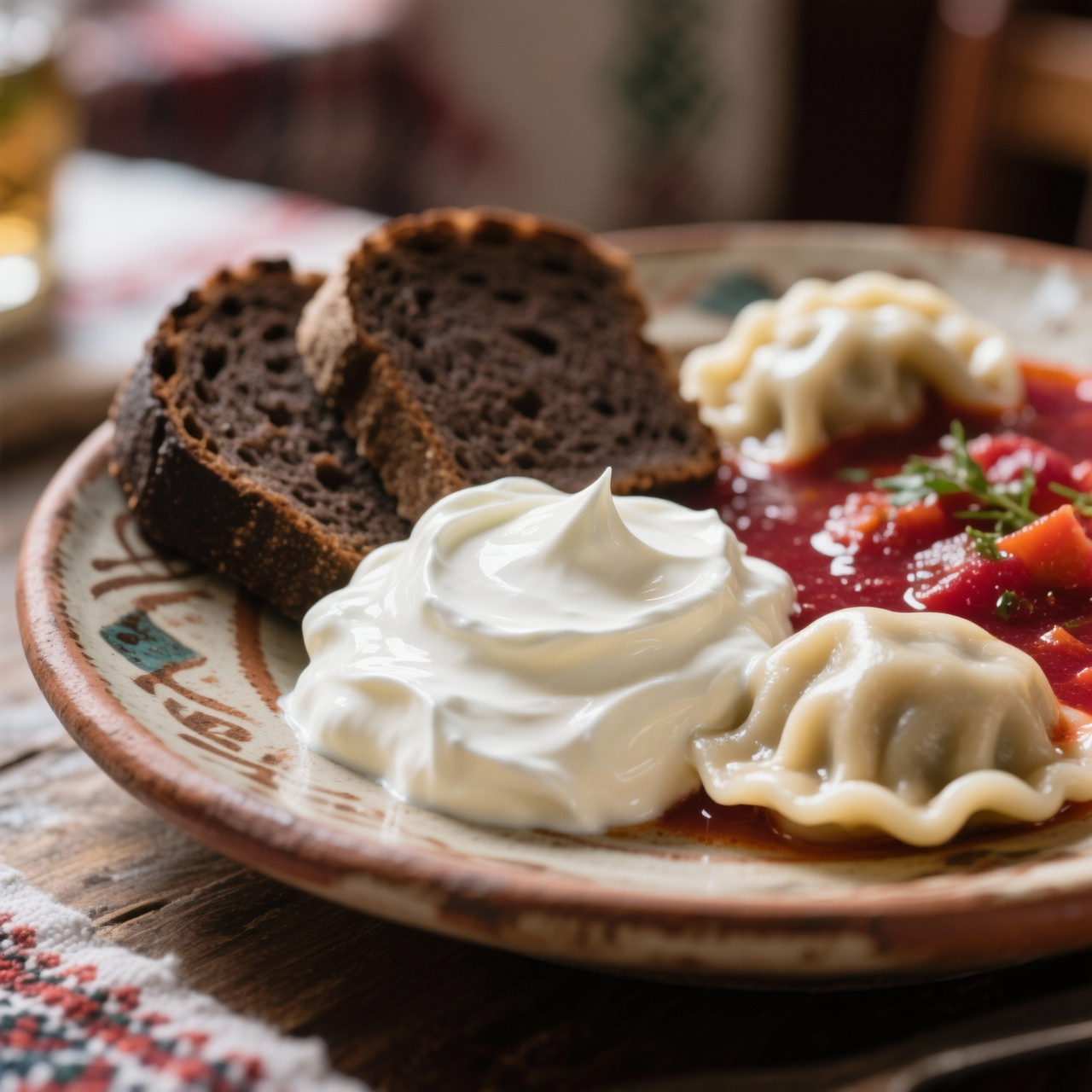
Smetana (soured cream)
As Ava, I often find that the true soul of Ukrainian cuisine doesn't just live in the hearty borscht or the delicate varenyky, but in the generous dollop of smetana that crowns them. Smetana, or soured cream, is far more than a mere condiment; it is a culinary cornerstone with deep roots in Eastern European tradition. Historically, before refrigeration, leaving fresh cream at room temperature to naturally ferment was a practical way to preserve it, yielding a thick, tangy, and incredibly versatile staple. What makes authentic smetana so vital is its unique ability to balance the rich, earthy flavors of our dishes with its bright, lactic acidity, while adding a luxurious, velvety texture that melts seamlessly into hot soups without curdling. However, achieving this perfection at home requires patience and precision. The most common pitfall I see is using ultra-pasteurized cream. The high heat treatment destroys the natural proteins and bacteria needed for proper culturing, resulting in a thin, bitter, or entirely failed batch. You must seek out high-quality, pasteurized but not ultra-pasteurized heavy cream, and introduce a reliable starter culture, whether from a previous batch or a commercial probiotic. Another mistake is rushing the fermentation. Smetana needs a steady, warm environment for a full twenty-four to forty-eight hours to develop its signature depth and thickness. When you finally stir that thick, tangy cream, you aren't just making a topping; you are participating in a centuries-old ritual that brings warmth and comfort to every Ukrainian table.
Nutrition
| Per serving | Calories | Protein | Carbs | Fat | Sat fat | Fibre | Sugar | Sodium |
|---|---|---|---|---|---|---|---|---|
| beginner | 100kcal | 1g | 1g | 11g | 7g | 0g | 1g | 10mg |
| intermediate | 100kcal | 1g | 1g | 11g | 7g | 0g | 1g | 10mg |
| expert | 120kcal | 2g | 2g | 12g | 8g | 0g | 2g | 15mg |
Per serving · Ava-estimated — a guide, not a clinical figure.
- 500 mlheavy cream— Avoid ultra-pasteurized to ensure proper culturing
- 30 gsour cream— Must contain live active cultures to act as a starter
This beginner-friendly approach to traditional Ukrainian smetana bypasses the need for raw, unpasteurized farm cream or specialized laboratory cultures, relying instead on accessible grocery store ingredients to guarantee a thick, tangy result. By using high-quality pasteurized heavy whipping cream and a simple active-culture starter—such as plain, full-fat yogurt or cultured buttermilk—you can achieve an authentic, rich sour cream perfect for dolloping onto borscht or filling varenyky. The key to success at this level is meticulous cleanliness and gentle temperature control. Ensure all your equipment is thoroughly sanitized with boiling water to prevent unwanted bacteria from competing with your starter. When warming the cream, use a thermometer to avoid overheating, which can kill the beneficial cultures in your starter. While the active preparation takes only minutes, the passive fermentation requires patience; let it sit in a warm, draft-free spot until it thickens to your desired consistency. This foolproof method builds confidence, proving that authentic cultured dairy is well within reach for the home cook without requiring advanced cheesemaking equipment.
Equipment
- Glass mason jar with lid— Must be thoroughly sanitized with boiling water
- Instant-read thermometer— Crucial for not killing the starter cultures
Method
- 1
Pour the heavy cream into a saucepan and warm it over medium-low heat until it reaches exactly 110°F (43°C).
Do not exceed 115°F, or you will kill the starter cultures.
tempering~ 5 minTricky bit - 2
Remove the cream from the heat and whisk in the plain yogurt or buttermilk starter until completely smooth and fully incorporated.
Ensure your starter contains live active cultures.
whisking~ 1 min - 3
Transfer the mixture to the sanitized glass jar, seal it tightly, and let it sit at room temperature in a dark, draft-free spot for 12 to 24 hours.
The longer it sits, the thicker and more tart it will become.
fermenting~ 720 min - 4
Refrigerate the jar for at least 6 hours to halt the fermentation process and allow the smetana to fully set and chill.
It will continue to thicken significantly as it cools.
chilling~ 360 min
Storage times are a guide — always use your judgement and store food safely.