
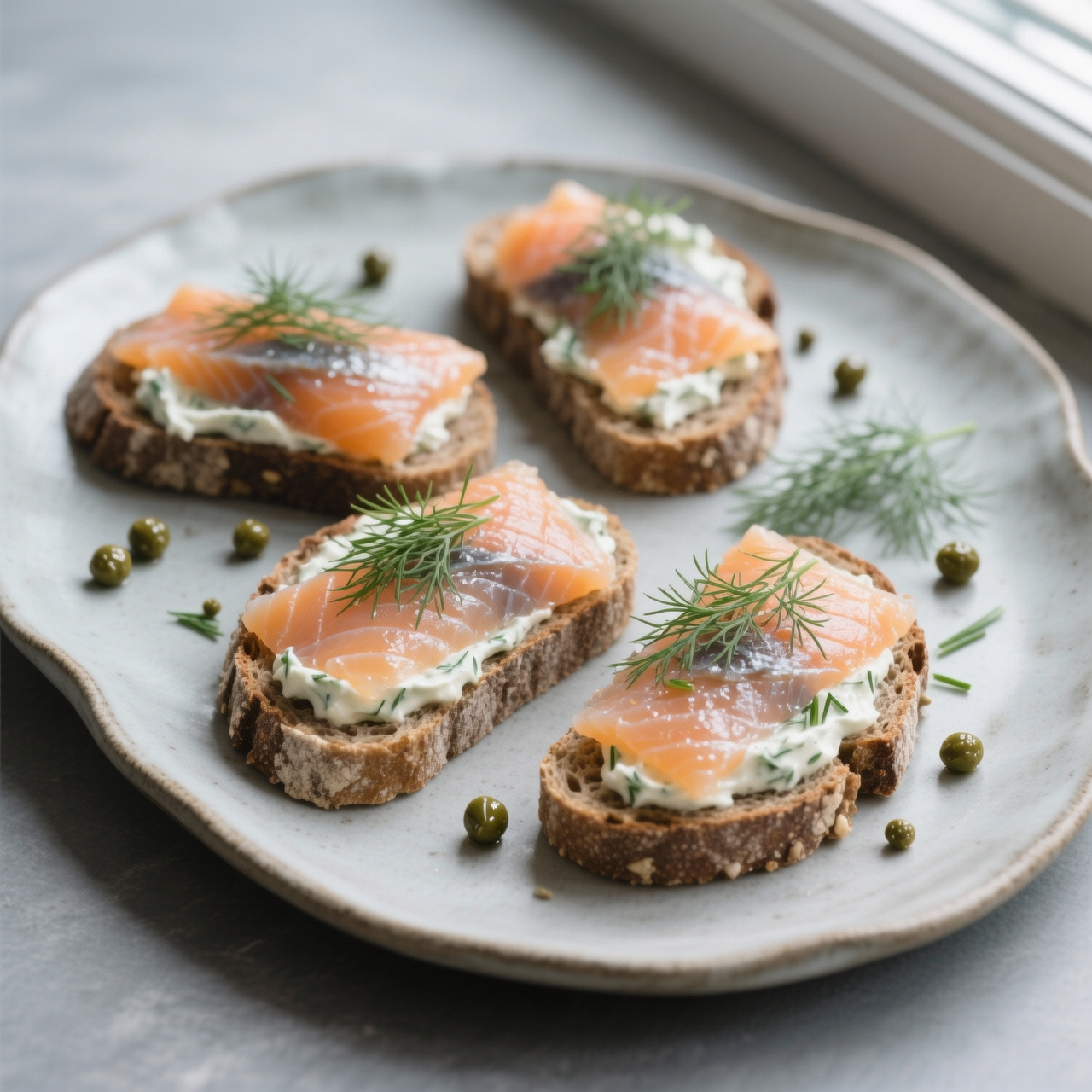
Smoked Salmon on Rye
When I think of the quiet rhythm of Scandinavian kitchens, my mind always drifts to this simple yet profound pairing. The marriage of cold-smoked salmon and dense, dark rye bread is not merely a starter; it is a testament to centuries of coastal survival and culinary ingenuity. In the Nordic regions, preserving fish through smoking and curing was once a necessity born of long winters and short summers. Over generations, that necessity evolved into an art form, eventually finding its rightful place atop the sturdy, earthy foundation of freshly baked rye. I love this dish because it demands restraint. The magic lies in the delicate balance between the briny, silky fish and the robust, slightly tangy bread. Yet, I have watched countless well-meaning cooks ruin it by overcomplicating what should remain elegantly sparse. The most common pitfall is treating it like a blank canvas rather than a curated experience. Piling on excessive garnishes, drowning the salmon in heavy sauces, or using a bread that lacks that essential dense crumb completely masks the natural sweetness of the fish. Another frequent misstep is serving the rye straight from the refrigerator, which dulls the toasted caraway notes and makes the slice unpleasantly chewy. When you approach this dish with respect for its origins—letting the quality of the salmon speak, toasting the bread just enough to release its aroma, and finishing with nothing more than a whisper of butter and fresh dill—you honor the quiet sophistication that has sustained Nordic tables for generations.
Nutrition
| Per serving | Calories | Protein | Carbs | Fat | Sat fat | Fibre | Sugar | Sodium |
|---|---|---|---|---|---|---|---|---|
| beginner | 310kcal | 13g | 17g | 20g | 10g | 3g | 3g | 1050mg |
| intermediate | 310kcal | 13g | 17g | 20g | 10g | 3g | 3g | 1050mg |
| expert | 310kcal | 13g | 17g | 20g | 10g | 3g | 3g | 1050mg |
Per serving · Ava-estimated — a guide, not a clinical figure.
- 4 slicesrye bread— dense, traditional Scandinavian style
- 200 gcold-smoked salmon— high-quality, thinly sliced
- 150 gcrème fraîche— full-fat, cultured
- 20 gfresh dill— stems removed, fronds only
- 1 wholelemon— organic, for zest and juice
- 30 gcapers— packed in brine, drained
- 40 ghorseradish— fresh root, firm and unblemished
- 15 gunsalted butter— European-style preferred
- 5 gblack peppercorns— whole, freshly cracked
- 3 gsea salt flakes— finishing grade
This version prioritizes confidence and consistency over traditional labor. You will lean on reliable kitchen staples and streamlined assembly, making it ideal for your first attempt. The key difference here is how we handle the horseradish component; instead of processing a raw root, you will incorporate a measured amount of prepared jarred paste to guarantee a predictable heat level. Watch your toast closely, as rye bread can shift from perfectly crisp to bitter in seconds. Keep the spread cool and the salmon at room temperature for exactly five minutes before assembly to allow the fats to soften naturally. Avoid the temptation to drown the fish in sauce; a light hand preserves the delicate balance. The goal is to build muscle memory with temperature control and gentle layering. You will learn to read the visual cues of properly toasted grain, recognize the ideal consistency for the cream base, and develop an intuitive sense for portioning. Trust the process, move deliberately, and focus on clean plating. This foundation will serve you well as you graduate to more hands-on techniques later.
Equipment
- Toaster— or dry skillet
- Mixing bowl— medium size
- Butter knife— flat edge for spreading
Method
- 1
Toast the rye bread slices until golden and firm.
Watch closely to avoid burning.
toasting~ 2 min - 2
Zest the lemon over the crème fraîche and add the chopped dill.
Only use the yellow outer peel.
zesting~ 1 min - 3
Mix the horseradish into the cream base until smooth.
If using a jarred paste, simply fold two tablespoons in.
folding~ 2 min - 4
Spread a thin layer of butter on the warm toast.
The butter will melt slightly into the crumb.
spreading~ 1 min - 5
Drape the smoked salmon evenly over each slice.
Do not overlap heavily.
draping~ 2 min - 6
Garnish with capers, cracked pepper, and a pinch of sea salt.
Let the fish provide most of the salinity.
seasoning~ 1 min