
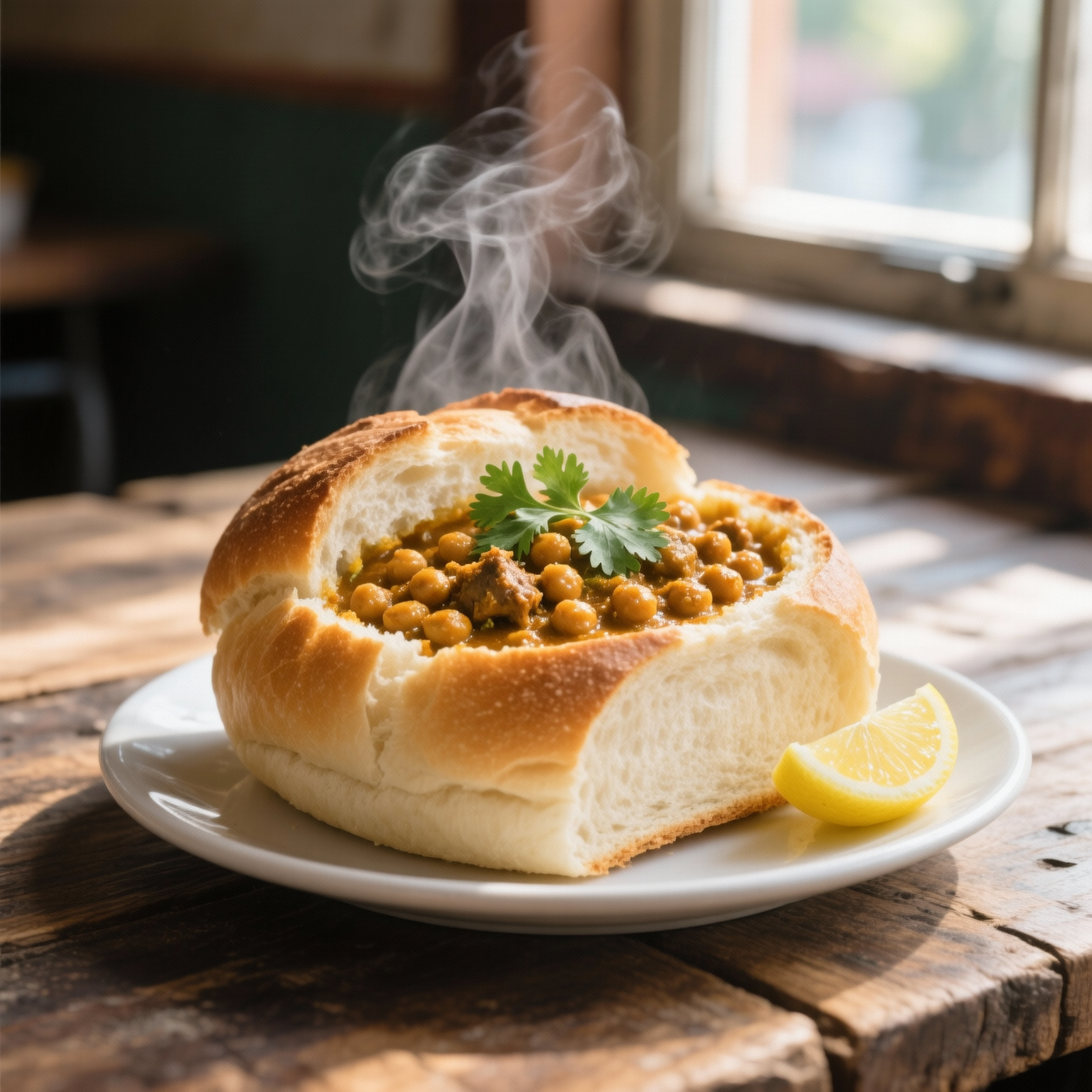
Bunny chow
When I first stepped into a Durban takeaway, I was handed a hollowed-out quarter loaf overflowing with rich, spiced beef curry. That moment changed how I understood street food. Bunny chow was born in the mid-twentieth century among Indian laborers in KwaZulu-Natal, who needed a portable, utensil-free meal that could sustain them through long shifts. The name has nothing to do with rabbits; it likely stems from the word bania, referring to the merchant traders who first popularized it. Making it at home matters because it transforms a quick street snack into a deeply comforting ritual. Too many cooks rush the spice base or drown the filling in thin gravy, which instantly ruins the structural integrity of the bread. The common pitfall is neglecting the slow caramelization of onions and whole spices before introducing the beef. If the curry is not thick enough to cling to the crust, you end up with a soggy, collapsing mess. I often see supermarket or takeaway versions priced around sixty to eighty rand, yet they rely on cheap thickeners, artificial curry pastes, and day-old loaves that taste like cardboard. They prioritize volume over depth. By building the masala from scratch with toasted cumin, coriander, and fresh ginger, you reclaim the dish's soul. The bread becomes a buttery, toasted vessel rather than a disposable wrapper, and the beef melts into a glossy, deeply spiced ragù that actually honors the recipe's working-class roots.
Nutrition
| Per serving | Calories | Protein | Carbs | Fat | Sat fat | Fibre | Sugar | Sodium |
|---|---|---|---|---|---|---|---|---|
| beginner | 620kcal | 33g | 54g | 26g | 8g | 4g | 7g | 710mg |
| intermediate | 680kcal | 34g | 72g | 24g | 9g | 5g | 7g | 820mg |
| expert | 980kcal | 46g | 108g | 30g | 9g | 7g | 11g | 820mg |
Per serving · Ava-estimated — a guide, not a clinical figure.
- 1 loafwhite bread loaf— preferably a large, unsliced, firm loaf
- 600 gbeef chuck— trimmed and cut into 2cm cubes
- 2 wholebrown onion— finely diced
- 2 wholepotato— peeled and diced
- 400 gcanned tomato— crushed
- 4 clovegarlic clove— minced
- 15 gfresh ginger— finely grated
- 45 gcurry powder— Durban-style hot blend preferred
- 500 mlbeef stock
- 30 mlvegetable oil
- 10 gsalt(optional)— adjust to taste
- 20 gfresh coriander(optional)— roughly chopped, for garnish
This beginner-friendly version strips away the intimidation of traditional Durban curry while keeping every element entirely from-scratch. Forget the £6 plastic-tray supermarket curries packed with hidden salt, palm oil, and artificial thickeners that turn your bread soggy. Here, you’ll build a rich, aromatic beef curry using fresh aromatics and pantry staples, simplified into fewer, more forgiving steps. Instead of mastering complex tempering or grinding masala pastes, you’ll gently toast ground spices directly in oil and simmer them into the pot for reliable flavour. The key to success is patience with the onions: let them soften fully until translucent before adding the beef, otherwise the curry will taste harsh. Watch your liquid level as it simmers; you want a thick, gravy-like consistency that soaks into the bread without making it collapse. Hollowing the loaf is easier than it looks—just use a serrated knife and pull out the soft centre in large chunks. Serve immediately while hot, using the scooped-out bread as edible spoons. This straightforward approach guarantees a deeply savoury, comforting meal that costs less than half the takeaway price and tastes genuinely authentic.
Equipment
- Heavy-bottomed pan— essential for even heat distribution and preventing burning
- Serrated bread knife— for cleanly slicing the loaf lid without crushing it
- Wooden spoon— for scraping up browned meat bits from the pan base
Method
- 1
Heat the cooking oil in a heavy-bottomed pan over medium heat and add the curry powder to bloom the spices.
Keep the pan moving so the spices toast evenly without scorching.
blooming~ 1 min - 2
Add the chopped onion, garlic, and ginger, and cook until completely soft and translucent.
Do not rush this step; pale onions will leave a harsh, raw flavour in the final dish.
sweating~ 5 minTricky bit - 3
Add the cubed beef to the pan and cook until browned on every side.
Avoid crowding the pan so the meat sears instead of steaming.
searing~ 3 min - 4
Stir in the chopped tomatoes, water, salt, and a pinch of sugar, then cover and cook gently.
Stir occasionally to prevent sticking and aim for a thick, spoon-coating gravy.
simmering~ 15 min - 5
Cut a rectangular lid from each loaf, hollow out the soft centre, and ladle the hot curry inside.
Use steady strokes with a serrated knife to avoid tearing the crust.
scooping~ 2 min
Cooking from frozen
Thaw overnight in the fridge, then gently reheat the curry separately while lightly toasting the bread to restore its crust.
Storage times are a guide — always use your judgement and store food safely.