
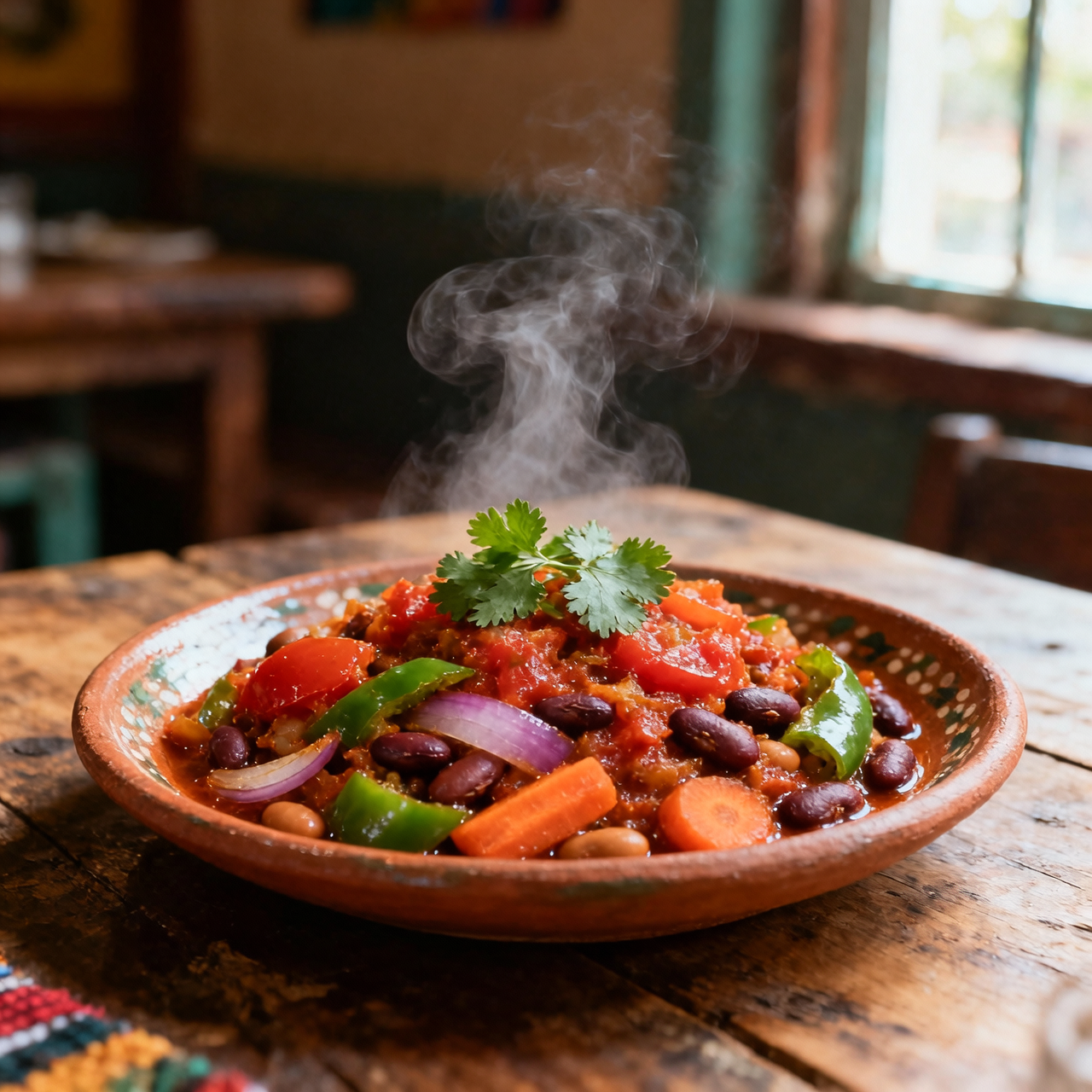
Chakalaka
I first encountered chakalaka as a vibrant, simmering pot at a township braai, where it sat unapologetically beside grilled meats, serving as both a condiment and a celebration of resourcefulness. Born in the mine hostels of Johannesburg, this South African staple was forged from necessity, transforming humble tinned beans, onions, carrots, and tomatoes into a deeply spiced, aromatic relish that speaks volumes about resilience and community. What makes chakalaka so essential isn’t just its bold, tangy heat, but its remarkable ability to adapt to whatever is in season or in the pantry. When I recreate it today, I treat it as a living archive of South African home cooking, balancing earthy curry powder with the sharp bite of fresh chili and the subtle sweetness of caramelized vegetables. The most common pitfall I see home cooks fall into is rushing the sauté stage. If you don’t allow the onions, garlic, and grated carrots to soften and brown properly before adding the liquids and spices, you’ll miss the foundational sweetness that tames the curry’s intensity. Another frequent mistake is overcrowding the pan or skipping the simmer, which leaves the relish watery rather than thick and jam-like. True chakalaka demands patience; let the tomatoes break down and the spices bloom until the oil just barely separates at the edges. Once you master that slow reduction, you’ll understand why this dish transcends its humble origins to become a jarred staple, a freezer treasure, and a vibrant companion to everything from pap and braai meats to crusty bread.
Nutrition
| Per serving | Calories | Protein | Carbs | Fat | Sat fat | Fibre | Sugar | Sodium |
|---|---|---|---|---|---|---|---|---|
| beginner | 285kcal | 9g | 38g | 10g | 2g | 11g | 14g | 650mg |
| intermediate | 195kcal | 7g | 28g | 7g | 1g | 8g | 9g | 360mg |
| expert | 185kcal | 8g | 28g | 6g | 1g | 9g | 11g | 420mg |
Per serving · Ava-estimated — a guide, not a clinical figure.
- 30 mlsunflower oil— neutral cooking oil
- 200 gonion— finely diced
- 15 ggarlic— minced
- 10 gfresh ginger— grated
- 15 gcurry powder— mild to medium heat blend
- 3 gground turmeric— adds vibrant color
- 1 piecechili— finely chopped, adjust heat to preference
- 150 gcarrot— peeled and finely diced
- 150 gbell pepper— diced, any color
- 400 gcanned chopped tomato— drained of excess liquid
- 410 gbaked bean— drained and rinsed
- 100 ggreen cabbage— finely shredded
- 5 gsalt— adjust to taste after cooking
- 2 gblack pepper— freshly ground
This beginner-friendly version of chakalaka strips away the traditional labor while keeping the bold, smoky-spicy soul of the South African classic intact. Instead of toasting and grinding whole spices from scratch, we rely on a high-quality jarred curry paste and pre-canned baked beans to build instant depth and reliable heat. The goal here is a stress-free, confident first attempt that still tastes authentically vibrant. You will sauté chopped onions, peppers, and carrots until they soften, then stir in the curry paste, letting the oil bloom its flavor before adding tomatoes and beans. Watch closely during the blooming stage; if the pan gets too hot, the paste can scorch and turn bitter, so keep the heat at a gentle medium and stir constantly. Simmer everything uncovered until the vegetables break down into a thick, spoonable relish. Taste and adjust the spice with a pinch of sugar or a splash of vinegar to balance the acidity. This forgiving method guarantees a crowd-pleasing result in under an hour, and it scales effortlessly for batch cooking, freezing beautifully in jars for quick weeknight meals.
Equipment
- Heavy-bottomed pan— non-stick is fine here
- Wooden spoon— essential for scraping the pan bottom
- Can opener— if using canned beans and tomatoes
Method
- 1
Heat oil in a heavy-bottomed pan over medium heat and sauté the diced onions, carrots, and bell peppers until softened.
Stir occasionally to prevent browning.
sweating~ 5 min - 2
Clear a small well in the center of the pan, drop in the jarred curry paste, and stir it vigorously with the oil.
This releases the essential oils without burning.
blooming~ 2 minTricky bit - 3
Pour in the crushed tomatoes and drained canned beans, then stir thoroughly to coat every piece.
Use a wooden spoon to scrape the flavorful browned bits from the bottom.
deglazing~ 2 min - 4
Reduce the heat to low and let the mixture simmer uncovered until it thickens into a rich relish.
Stir every few minutes to prevent sticking.
reduction~ 10 min - 5
Taste the chakalaka and stir in vinegar or a pinch of sugar to balance the flavors before serving.
Adjust salt and chili to your preference.
balancing~ 1 min
Cooking from frozen
Thaw overnight in the fridge, then reheat gently in a saucepan while stirring to restore the thick, glossy texture.
Storage times are a guide — always use your judgement and store food safely.