
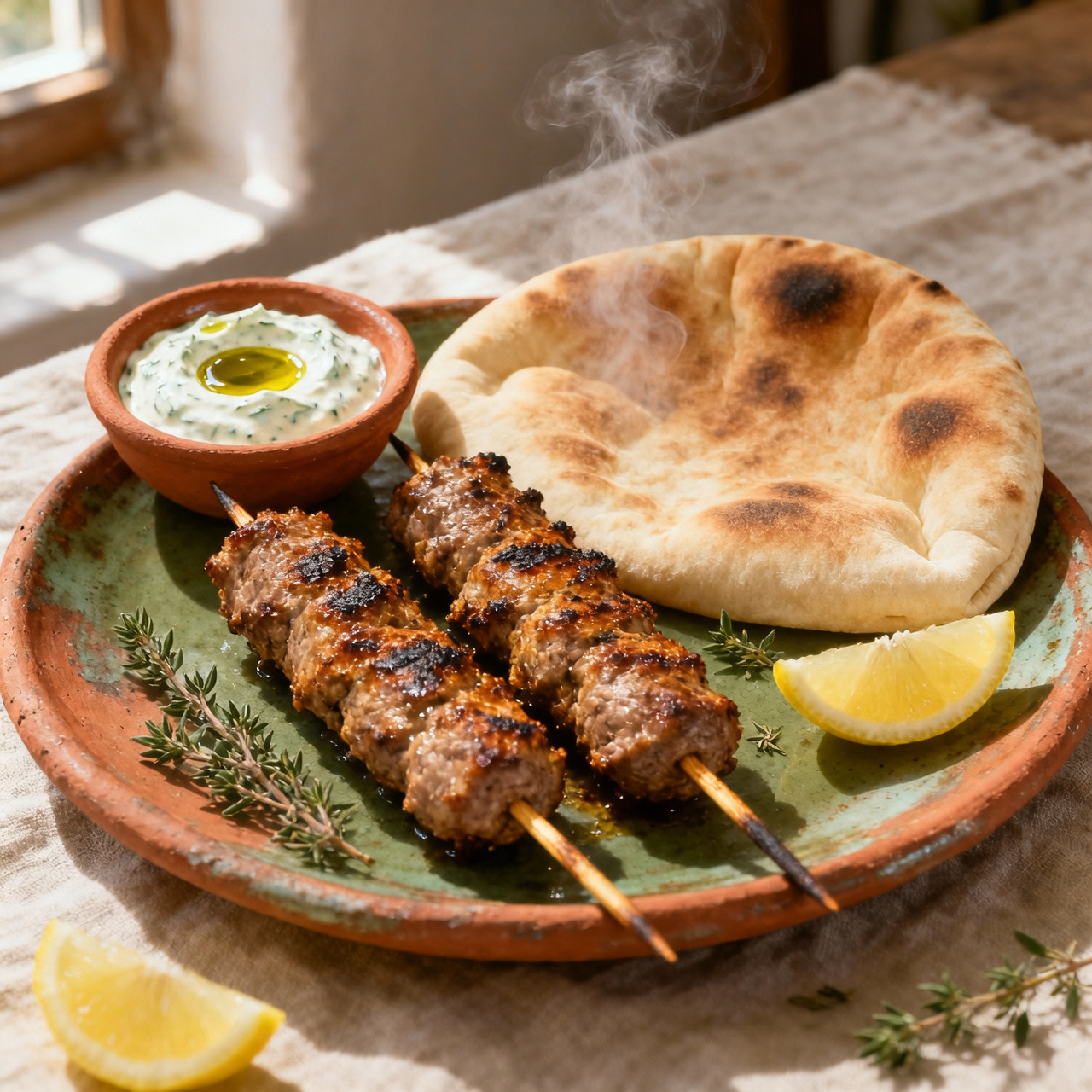
Souvlaki
I’ve always believed that souvlaki is less about the meat and more about the memory it stirs. Originating from the ancient Greek practice of skewering small cuts of pork over open coals, it began as a humble street food, a quick bite for travelers and laborers who needed warmth and sustenance on the go. Today, it carries the soul of Greece in every charred edge and lemony bite, bridging centuries of culinary tradition with modern tables worldwide. When I prepare it, I’m reminded that simplicity is a discipline, not a shortcut. The true magic lies in the balance: tender cubes of pork, a bright marinade of olive oil, oregano, garlic, and a touch of acid to cut through the richness, all kissed by fire. Yet, so many home cooks miss the mark by overcrowding the skewers, turning the meat into a steamed mess instead of letting it sear properly. Others overwork the marinade with heavy spices or skip the resting time, resulting in dry, tough bites that betray the dish’s effortless elegance. I’ve learned to treat each skewer as its own small ecosystem, spacing the pieces just enough for the heat to circulate, and flipping only when a proper crust forms. Souvlaki matters because it teaches us patience, respect for ingredients, and the quiet joy of sharing something unpretentious. When done right, it’s a celebration of fire, time, and the Greek insistence that food should nourish both body and spirit.
Nutrition
| Per serving | Calories | Protein | Carbs | Fat | Sat fat | Fibre | Sugar | Sodium |
|---|---|---|---|---|---|---|---|---|
| beginner | 720kcal | 38g | 42g | 44g | 12g | 4g | 5g | 950mg |
| intermediate | 720kcal | 38g | 42g | 44g | 12g | 4g | 5g | 950mg |
| expert | 720kcal | 38g | 42g | 44g | 12g | 4g | 5g | 950mg |
Per serving · Ava-estimated — a guide, not a clinical figure.
- 800 gpork shoulder— trimmed of excess fat and cut into 2.5 cm cubes
- 60 mlextra virgin olive oil— high quality, cold-pressed
- 2 wholefresh lemon— juice and zest separated
- 4 clovegarlic— peeled
- 15 gdried oregano— preferably Greek rigani
- 10 gsea salt— coarse grind
- 5 gblack pepper— freshly cracked
- 200 gplain Greek yogurt— full fat
- 150 gcucumber— seeded and finely grated
- 10 gfresh dill— finely chopped
- 15 mlwhite wine vinegar— sharp and clean
- 10 piecewooden skewer— 25 cm length, soaked in water
- 4 piecepita bread— round, traditional thickness
- 1 mediumred onion— thinly sliced
- 2 mediumripe tomato— sliced into wedges
This path prioritizes reliability and speed without sacrificing the dish’s core character. You will assemble the marinade by combining your ingredients into a single, forgiving blend that coats quickly, skipping the traditional overnight rest in favor of a brisk twenty-minute infusion. Cooking relies on a standard stovetop pan, which eliminates outdoor temperature guesswork while still delivering essential browning. Watch closely for the moment the meat releases naturally from the surface; premature flipping tears the crust and traps steam. The accompanying yogurt mixture is whisked to a smooth consistency rather than strained, ensuring it complements the pork. Focus on uniform skewering so every cube cooks evenly, and maintain medium-high heat to avoid scorching the dried herbs. This approach removes intimidation by breaking the process into clear, sequential checkpoints. You will learn to read the visual cues of properly rendered fat and the distinct aroma of toasted oregano. By the time the pitas warm, you will have built a foundational technique that translates directly to any weeknight protein. Trust your timing, keep the workspace organized, and let the straightforward assembly guide you to a deeply satisfying result.
Equipment
- non-stick grill pan— heavy base retains heat evenly
- large mixing bowl— for combining marinade and meat
- metal tongs— for safe flipping
Method
- 1
Combine pork, olive oil, lemon juice, minced garlic, oregano, salt, and pepper in a large bowl and toss until evenly coated.
Ensure every cube is glossy.
marinating~ 5 min - 2
Thread the marinated pork cubes onto soaked wooden skewers, leaving small gaps between each piece.
Do not pack tightly.
threading~ 10 min - 3
Heat a non-stick skillet over medium-high heat until lightly smoking.
A drop of water should sizzle instantly.
preheating~ 2 minTricky bit - 4
Place skewers in the pan and cook undisturbed until they release easily from the surface.
Resist moving them early.
searing~ 4 minTricky bit - 5
Flip the skewers carefully and cook until all sides show uniform browning and the meat reaches safe internal temperature.
Use tongs for stability.
finishing~ 4 min - 6
Whisk yogurt, grated cucumber, dill, salt, and vinegar in a small bowl until smooth and serve alongside warmed pita and sliced vegetables.
Taste for balance before plating.
emulsifying~ 3 min