
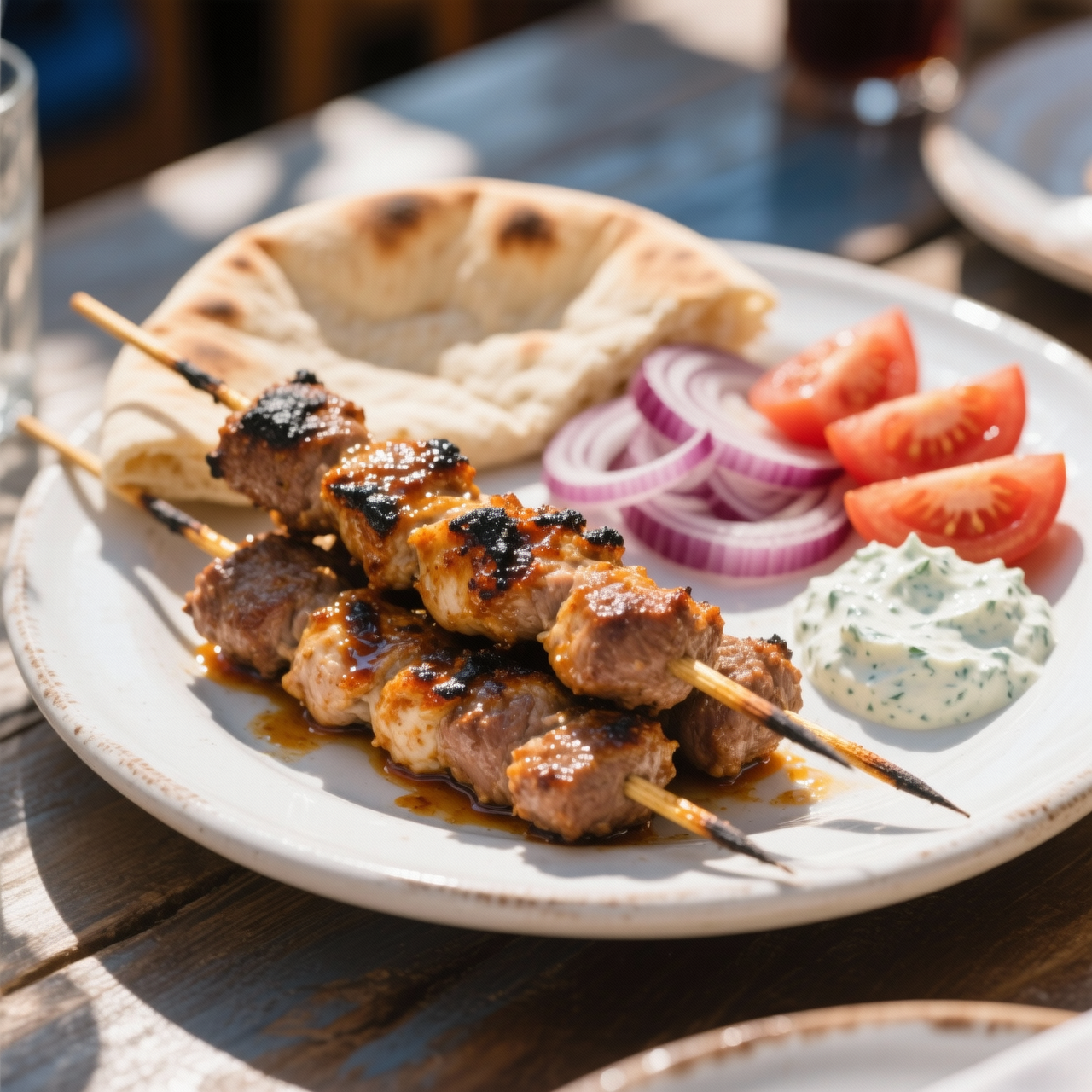
Souvlaki (marinated skewers)
When I first encountered Greek souvlaki on the streets of Athens, it was not wrapped in plastic or resting on a polystyrene tray. It was born over open flames, threaded through wooden skewers, and kissed by a bright, herbaceous marinade that transformed humble cuts of pork into something extraordinary. That street-food soul is exactly what I am trying to rescue from the supermarket aisle. Those pre-marinated packs you see in the chilled section usually run around five or six pounds for a handful of meat, but the trade-off is steep. They are drowning in hidden sugars, artificial stabilisers, and generic spice pastes that mask the natural sweetness of the pork while turning the meat mushy. The real magic of souvlaki lies in balance: sharp lemon, earthy oregano, crushed garlic, and good olive oil working together to tenderise without breaking down the protein. The most common pitfall I see cooks fall into is over-marinating in acidic citrus, which actually denatures the outer layer and leaves the centre tough, or crowding the pan so the meat steams instead of charring. Another mistake is skipping the resting period after cooking, which guarantees a dry bite. Making this from scratch takes barely twenty minutes of active prep, but it completely changes the texture and flavour profile. You get absolute control over every ingredient, a deeper caramelisation, and the quiet satisfaction of knowing exactly what is on your plate. It is a small shift in habit that brings you right back to the Mediterranean coast, where food is meant to be honest, vibrant, and deeply personal.
Nutrition
| Per serving | Calories | Protein | Carbs | Fat | Sat fat | Fibre | Sugar | Sodium |
|---|---|---|---|---|---|---|---|---|
| beginner | 390kcal | 30g | 4g | 28g | 7g | 0g | 1g | 420mg |
| intermediate | 385kcal | 31g | 3g | 28g | 7g | 0g | 1g | 580mg |
| expert | 395kcal | 31g | 2g | 29g | 9g | 0g | 1g | 310mg |
Per serving · Ava-estimated — a guide, not a clinical figure.
- 600 gpork shoulder— trimmed and cut into 2.5 cm cubes
- 45 mlolive oil— extra virgin
- 30 mllemon juice— freshly squeezed
- 3 clovesgarlic— finely minced
- 2 gdried oregano
- 5 gfine sea salt
- 1 gblack pepper— freshly ground
- 8 piecesskewer— wood or metal; soak wooden ones in water for 30 minutes before use
Skip the supermarket aisle where pre-marinated pork skewers sit wrapped in plastic for nearly double the price of raw meat. Those factory versions rely on heavy sodium, artificial smoke flavor, and tenderizing phosphates to mask low-grade cuts, leaving you with mushy, one-note bites. This beginner approach strips away the industrial shortcuts while keeping the technique entirely approachable. You will hand-whisk a bright, traditional marinade using pantry staples and real dried oregano, letting the acid and oil naturally tenderize the meat without chemical intervention. The key here is uniformity: cutting your pork shoulder into consistently sized cubes ensures everything cooks at the same rate, eliminating the guesswork that usually ruins first attempts. Watch your heat carefully; lean pork dries out fast if the flame runs too high, so aim for a steady medium glow that builds a golden crust without charring the exterior. Wooden skewers must be soaked beforehand to prevent splintering, and turning the skewers every few minutes guarantees even browning. A quick five-minute rest off the heat locks in juices, delivering a genuinely fresh, restaurant-quality meal with zero hidden ingredients.
Equipment
- Wooden or metal skewers— soak wood for 15 mins
- Large mixing bowl— for tossing meat
- Grill pan or outdoor grill— medium heat works best
- Instant-read thermometer(optional)— ensures safe internal temp
Method
- 1
Soak wooden skewers in a shallow dish of cold water for fifteen minutes to prevent burning, then drain them completely.
Metal skewers skip this step entirely.
soaking~ 15 min - 2
Whisk together extra virgin olive oil, fresh lemon juice, finely minced garlic, dried oregano, salt, and black pepper in a large bowl until fully combined.
A simple fork works perfectly here.
emulsifying~ 2 min - 3
Trim visible excess fat from pork shoulder and cut into uniform two-centimeter cubes, then toss thoroughly in the marinade until completely coated.
Uniform size prevents uneven cooking.
coating~ 3 min - 4
Thread the marinated pork onto the prepared skewers, leaving a small gap between each piece to allow hot air to circulate evenly.
Do not pack the meat tightly.
skewering~ 5 minTricky bit - 5
Grill or pan-sear the skewers over medium heat, turning them every three to four minutes until all sides are deeply browned and the internal temperature safely reaches sixty-three degrees Celsius.
Lower heat if the garlic starts to blacken.
searing~ 10 minTricky bit - 6
Transfer the cooked skewers to a clean plate and let them rest undisturbed for five minutes before serving.
Resting redistributes internal juices.
resting~ 5 min
Cooking from frozen
Thaw overnight in the fridge and warm gently in a covered skillet with a splash of broth to restore moisture.
Storage times are a guide — always use your judgement and store food safely.