
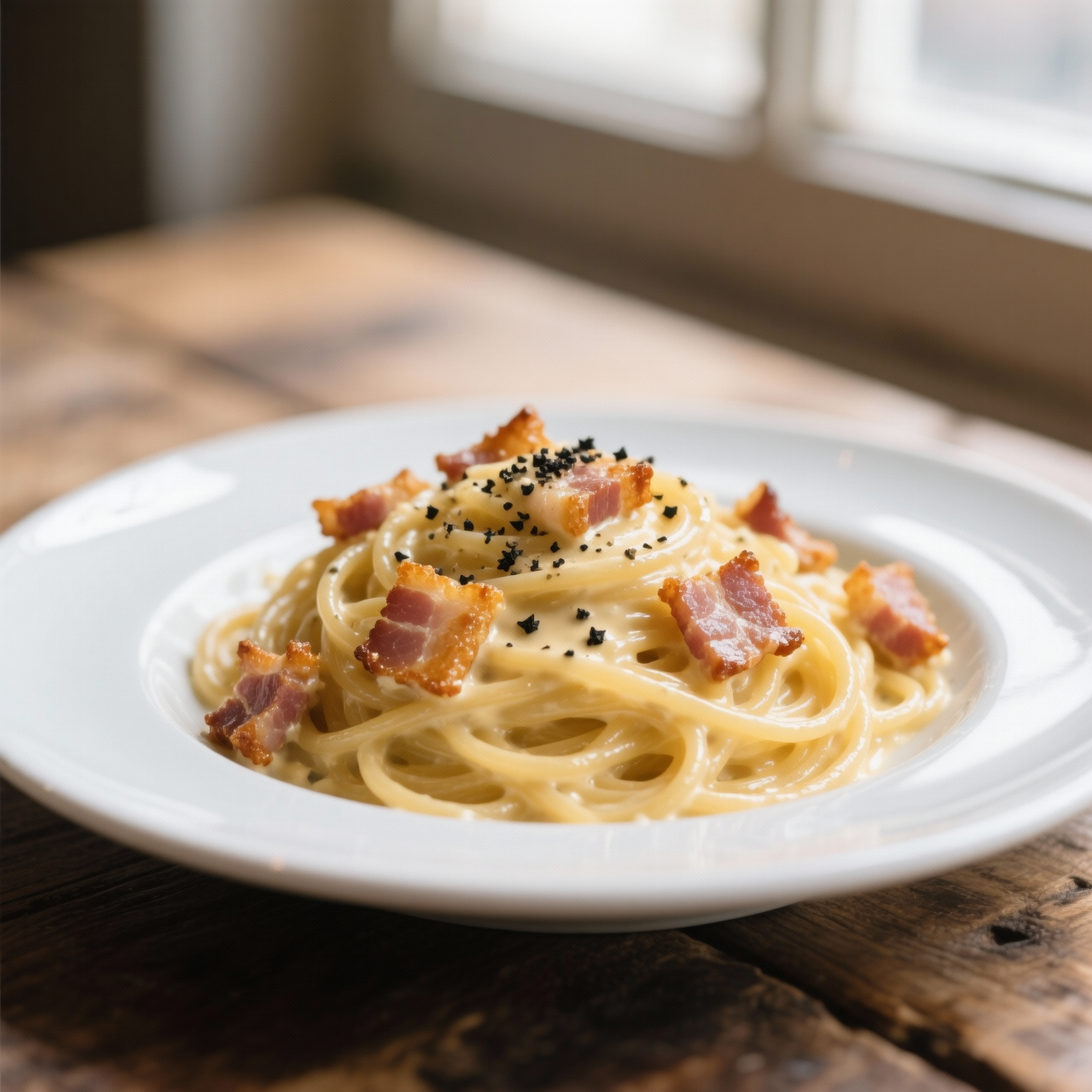
Spaghetti alla Carbonara
When I first learned to make carbonara, I thought it was just pasta with eggs and bacon, but that simplification misses the soul of the dish entirely. True Spaghetti alla Carbonara emerged in post-war Rome, born from necessity and ingenuity when Allied troops and locals blended rationed eggs and pork with local pecorino and black pepper. It is a testament to how Italian cuisine thrives on restraint and precision rather than excess. To me, this dish matters because it demands absolute respect for its ingredients and technique. You cannot hide behind heavy cream, garlic, or herbs; the sauce is entirely an emulsion of starchy pasta water, rendered guanciale fat, raw eggs, and finely grated Pecorino Romano. That is where most home cooks stumble. The greatest pitfall is scrambling the eggs, turning a silky, luxurious coating into a dry, curdled mess. Temperature control is everything. You must temper the mixture away from direct heat, tossing the hot strands vigorously to coax the fat and dairy into a glossy ribbon. Another frequent mistake is substituting pancetta for guanciale. While acceptable in a pinch, the cured pork jowl carries a distinct, deeply savory richness that defines the authentic flavor. I have spent years chasing that perfect balance, learning that carbonara is less a rigid formula and more a tactile rhythm. When executed correctly, it becomes almost alchemical, transforming four humble elements into something profoundly comforting. That is exactly why I keep returning to it, treating each bowl as a quiet lesson in patience and tradition.
Nutrition
| Per serving | Calories | Protein | Carbs | Fat | Sat fat | Fibre | Sugar | Sodium |
|---|---|---|---|---|---|---|---|---|
| beginner | 827kcal | 31g | 74g | 44g | 18g | 3g | 3g | 1180mg |
| intermediate | 827kcal | 31g | 74g | 44g | 18g | 3g | 3g | 1180mg |
| expert | 827kcal | 31g | 74g | 44g | 18g | 3g | 3g | 1180mg |
Per serving · Ava-estimated — a guide, not a clinical figure.
- 400 gspaghetti— high-quality dried semolina pasta
- 200 gguanciale— cured pork jowl, skin removed
- 4 wholeegg— room temperature, preferably pasture-raised
- 80 gpecorino romano— finely grated, aged at least 8 months
- 5 gblack pepper— coarse grind
This version is engineered for confidence and consistency, prioritizing foolproof execution over rigid tradition. Instead of wrestling with live heat and raw eggs simultaneously, you will prepare the egg and cheese mixture well in advance, creating a stable paste that emulsifies effortlessly. The recipe welcomes practical shortcuts, such as using a pre-ground pepper jar or a high-quality commercial carbonara base to streamline seasoning, though the core ingredients remain unchanged. The critical focus here is temperature management: pasta must be drained hot, but the pan must be completely removed from the heat source before incorporating the egg mixture. This eliminates the most common beginner failure point—scrambled eggs—and guarantees a silky, cohesive sauce every time. Watch the consistency closely; if the sauce appears too thick, reserve extra pasta water to loosen it gradually. Stir continuously with tongs to coat every strand evenly. This approach builds muscle memory for the emulsion process without demanding advanced timing. You will learn to recognize the exact moment the fat and cheese melt into a glossy ribbon, setting a reliable foundation for future attempts. The goal is not to replicate a Michelin-starred kitchen, but to deliver a deeply satisfying, restaurant-quality plate on your busiest weeknights, proving that precision beats complexity.
Equipment
- Large stockpot— for boiling pasta
- Heavy skillet— non-stick is acceptable for heat control
- Tongs— essential for tossing
Method
- 1
Bring a large pot of generously salted water to a rolling boil.
Use one liter per one hundred grams of pasta.
boiling~ 10 min - 2
Cook the spaghetti until al dente according to package directions.
Reserve one full cup of starchy water before draining.
pasta cooking~ 10 min - 3
Render the guanciale in a cold skillet over medium heat until lightly crisp.
Low and slow prevents burning and preserves fat.
rendering~ 8 min - 4
Whisk the eggs, grated pecorino, and black pepper into a thick paste.
A pre-whisked blend prevents lumps and speeds emulsification.
whisking~ 2 min - 5
Remove the skillet from heat completely before adding the drained pasta.
Off-heat mixing guarantees a silky sauce without scrambling.
tempering~ 1 minTricky bit - 6
Pour the egg mixture over the hot pasta and toss vigorously until glossy.
Add reserved pasta water one tablespoon at a time if needed.
mantecatura~ 2 minTricky bit