
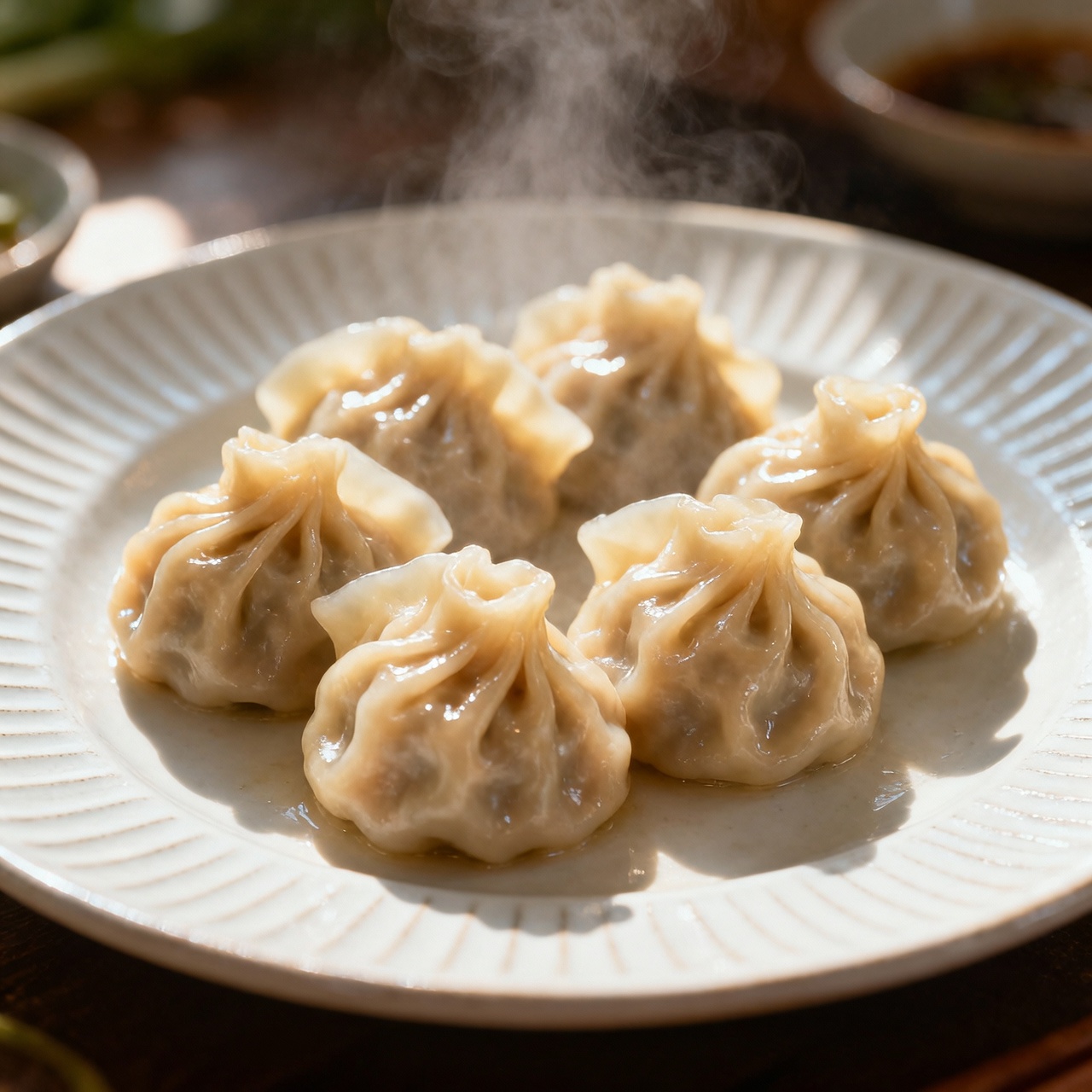
Steamed Pork Dumplings (Khanom Jeeb)
When I first tasted properly made khanom jeeb at a Bangkok street stall, I understood why so many of us settle for those sad, freezer-burned packets of frozen dumplings from the supermarket. Those shop-bought versions usually run about three pounds for twelve, but they come packed with sodium-laden binders, artificial flavor enhancers, and dough that turns to gummy paste the moment you steam it. Making them from scratch is my quiet rebellion against that compromise. The dish traces its roots to Chinese immigrants who brought the art of pleated dough to Thailand, where local cooks adapted the filling with lemongrass, white pepper, and garlic to create something distinctly Siamese. It matters because the texture of a fresh wrapper—thin, translucent, and yielding—can only come from flour, water, and a rested dough. The real magic, though, is in the batch process. I always make a triple batch, pleating each little purse by hand before laying them on parchment-lined trays to freeze raw. This way, you get restaurant-quality snacks on demand without the weekend marathon. The most common pitfalls? Overworking the filling so it turns rubbery instead of tender, sealing the pleats too tightly so they burst during steaming, and skipping the resting time for the dough, which makes rolling an exercise in frustration. When you take your time with the pinch-and-fold rhythm, the dumplings hold their shape beautifully. Steam them straight from the freezer, or enjoy them fresh with a quick soy-vinegar dip, and you’ll taste the difference immediately.
Nutrition
| Per serving | Calories | Protein | Carbs | Fat | Sat fat | Fibre | Sugar | Sodium |
|---|---|---|---|---|---|---|---|---|
| beginner | 485kcal | 28g | 44g | 17g | 5g | 2g | 3g | 610mg |
| intermediate | 320kcal | 16g | 38g | 11g | 3g | 1g | 5g | 580mg |
| expert | 390kcal | 17g | 38g | 15g | 5g | 2g | 5g | 590mg |
Per serving · Ava-estimated — a guide, not a clinical figure.
- 300 gground pork— preferably with 20 percent fat for moisture
- 100 gwheat starch— sifted
- 50 gtapioca starch— adds translucency and chew
- 15 ggarlic— finely minced or pounded
- 2 gwhite pepper— freshly ground
- 15 mllight soy sauce
- 10 mloyster sauce
- 5 mlsesame oil— toasted
- 5 gsugar
- 2 gsalt
- 120 mlboiling water— for hydrating the starch dough
- 30 gcarrot(optional)— finely diced for color
Store-bought frozen dumplings typically run $6 to $9 per pack but rely on industrial fillers, excessive sodium, and chemically treated wrappers that turn gummy when reheated. This beginner-friendly version strips the process down to its essential, from-scratch steps without sacrificing authenticity. You will mix a simple, highly forgiving pork filling using pantry staples like garlic, white pepper, cilantro roots, and fish sauce, focusing on the crucial technique of whipping the meat until it becomes sticky and emulsified. The wrapper dough is made with just flour, water, and tapioca starch, kneaded until smooth and rested to relax the gluten. Instead of intricate restaurant pleating, you will learn a reliable pinch-and-fold seal that guarantees a tight closure. Watch the dough hydration closely; it should feel like a soft earlobe. Steam over gently simmering water rather than a rolling boil to prevent the delicate skins from tearing. This batch-friendly method teaches you the foundational mechanics of Thai dumpling making, yielding a tender, translucent bite that completely outshines any freezer aisle alternative.
Equipment
- Bamboo or metal steamer— ensure lid fits tightly to trap steam
- Rolling pin— small or standard works equally well
- Large mixing bowl— stainless steel preferred for whipping
Method
- 1
Combine all-purpose flour, tapioca starch, and a pinch of salt in a large bowl, then gradually whisk in warm water until a shaggy dough forms.
Add water slowly to avoid a sticky mess.
dough hydration~ 3 min - 2
Knead the dough on a lightly floured surface for five minutes until smooth, then cover with a damp towel and rest for twenty minutes.
Resting relaxes the gluten for easier rolling.
gluten relaxation~ 10 min - 3
Vigorously mix ground pork with minced garlic, white pepper, chopped cilantro roots, fish sauce, sesame oil, and a tablespoon of tapioca starch until the meat becomes pale and sticky.
This emulsification step locks in moisture during steaming.
meat whipping~ 5 minTricky bit - 4
Roll the rested dough into a thick log, cut into twenty-four equal pieces, and flatten each into a three-inch circle.
Keep unused dough covered to prevent drying.
portioning~ 8 min - 5
Place one heaping tablespoon of filling in the center of each wrapper, fold in half, and firmly pinch the edges together to seal.
Avoid overfilling to prevent bursting during cooking.
pinch sealing~ 10 minTricky bit - 6
Line a steamer basket with parchment paper, arrange the dumplings one inch apart, and steam over gently simmering water for twelve minutes.
Use medium-low heat to keep the wrappers from tearing.
gentle steaming~ 12 min
Cooking from frozen
Reheat directly from frozen in a covered bamboo steamer over vigorously boiling water for twelve to fourteen minutes.
Storage times are a guide — always use your judgement and store food safely.