
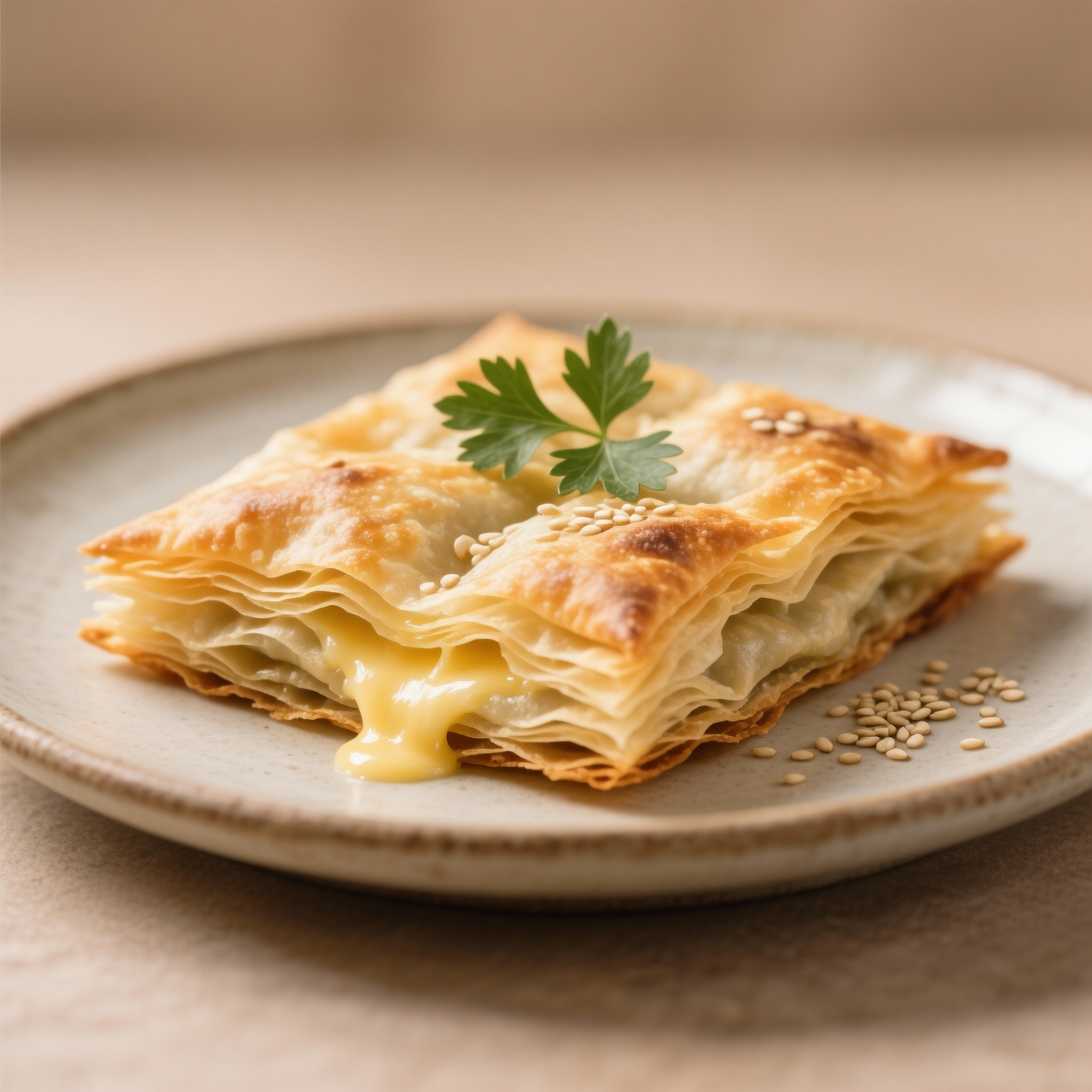
Su böreği (layered cheese börek)
I first encountered su böreği in a bustling Istanbul kitchen, where the name itself translates to water pastry, a poetic nod to the parboiled dough sheets that give it its signature silkiness. Store-bought frozen börek packs run about seven dollars each, relying on industrial shortening and stabilizers that leave the crust shattering into greasy dust while the filling tastes suspiciously uniform and overly salty. When you build it from scratch, rolling the dough by hand and boiling it gently in salted water, you unlock a tender, cloud-like interior that holds a bright, herbaceous cheese mixture without turning soggy or dry. The biggest pitfall is rushing the dough hydration; skipping the resting period guarantees a stubborn, tear-prone sheet that ruins the layering. Another common misstep is overstuffing with wet cheese, which turns the delicate layers into a dense paste during baking. I always drain my ricotta or lor thoroughly, fold in fresh parsley and a pinch of black pepper, and let the dough relax until it sighs under the rolling pin. This method takes longer than tearing open a box, but the result is a deeply savory, structurally sound bake that actually improves when portioned and frozen. It matters because it keeps a centuries-old technique alive in modern kitchens, proving that true comfort food never needs a factory to shine.
Nutrition
| Per serving | Calories | Protein | Carbs | Fat | Sat fat | Fibre | Sugar | Sodium |
|---|---|---|---|---|---|---|---|---|
| beginner | 495kcal | 19g | 46g | 24g | 13g | 2g | 2g | 720mg |
| intermediate | 510kcal | 22g | 45g | 26g | 10g | 3g | 2g | 890mg |
| expert | 580kcal | 20g | 46g | 34g | 16g | 2g | 3g | 950mg |
Per serving · Ava-estimated — a guide, not a clinical figure.
- 8 sheetsYufka pastry sheet— Thawed completely if frozen, kept covered with a damp cloth to prevent drying
- 400 gTurkish white cheese— Crumbled and drained of excess brine
- 150 gUnsalted butter— Melted and slightly cooled before use
- 500 mlWhole milk— Combined with water for parboiling the dough layers
- 3 piecesLarge egg— Lightly beaten to create the soaking liquid
- 5 gFine sea salt— Dissolved in the boiling parboiling water
- 2 gFreshly ground black pepper(optional)— Tossed with the crumbled cheese for seasoning
This beginner-friendly approach demystifies traditional water börek by focusing on a forgiving, soft dough that is much easier to roll and handle than paper-thin commercial yufka. Unlike supermarket frozen börek, which costs £8–10 per box and relies on hydrogenated oils, preservatives, and thick, gummy pastry layers, this version uses just flour, water, a pinch of salt, and real butter for a clean, crisp-tender bite. You will mix a simple elastic dough, let it relax briefly, then roll it into manageable rectangles. The key technique is the quick parboil: each sheet is dropped into simmering water for just 30–45 seconds until pliable, then immediately transferred to cold water to stop cooking. Do not stress over perfect shapes or exact thickness; slight tears are easily patched during assembly. Watch the oven closely during the final bake. The butter brushed between layers should sizzle and turn golden, while the cheese filling warms through without leaking. The result is a comforting, deeply savoury main that freezes beautifully in portions and bakes straight from the freezer with zero loss of texture. Keep your workspace lightly floured, and work steadily rather than rushing the rolling step.
Equipment
- Large pot— Must be wide enough to lay dough sheets flat
- 23x33cm baking dish— Metal conducts heat better for crisp edges
- Rolling pin— Smooth wood or silicone works best
- Pastry brush— Silicone handles hot butter well
- Clean kitchen towels— Used for stacking and draining boiled sheets
Method
- 1
Combine flour, water, and salt in a large bowl, then knead vigorously for 8–10 minutes until the dough feels smooth and springs back when poked.
The dough will feel slightly tacky at first but should clean the bowl as you work.
kneading~ 10 min - 2
Cover the dough tightly with a damp cloth and let it rest at room temperature for 20 minutes.
This relaxes the gluten, making it much easier to roll thin without tearing.
bench_rest~ 20 min - 3
Divide the dough into four equal pieces, then roll each piece on a lightly floured surface into a thin, even rectangle roughly 30x40 cm.
Do not worry if the edges are slightly uneven; you will trim and patch them later.
sheeting~ 10 minTricky bit - 4
Bring a wide pot of salted water to a steady simmer, then carefully slide one dough sheet into the water and cook for exactly 40 seconds.
Gently agitate the water with a slotted spoon to prevent sticking.
parboiling~ 2 minTricky bit - 5
Lift the softened sheet with a slotted spoon, immediately plunge it into a bowl of ice water for 10 seconds, then lay it flat on a dry kitchen towel to drain.
The cold shock stops the cooking and locks in a tender, non-gummy texture.
shocking~ 2 min - 6
Brush the bottom of your baking dish with melted butter, place the first boiled sheet inside, then spread a quarter of the cheese and parsley mixture evenly before repeating with the remaining sheets.
Overlap any torn edges slightly; the butter will seal them during baking.
layering~ 8 min - 7
Brush the top layer generously with the remaining melted butter, then use a sharp knife to lightly score a 2-inch grid across the surface without cutting all the way through.
Scoring guides clean portioning after baking and helps steam escape.
scoring~ 1 min - 8
Bake in the preheated oven for 30–35 minutes until the top is deeply golden and the butter bubbles at the edges.
Rotate the pan halfway through for even browning.
baking~ 30 min
Cooking from frozen
Bake straight from frozen at 190C for 35 to 40 minutes until deeply golden.
Storage times are a guide — always use your judgement and store food safely.