
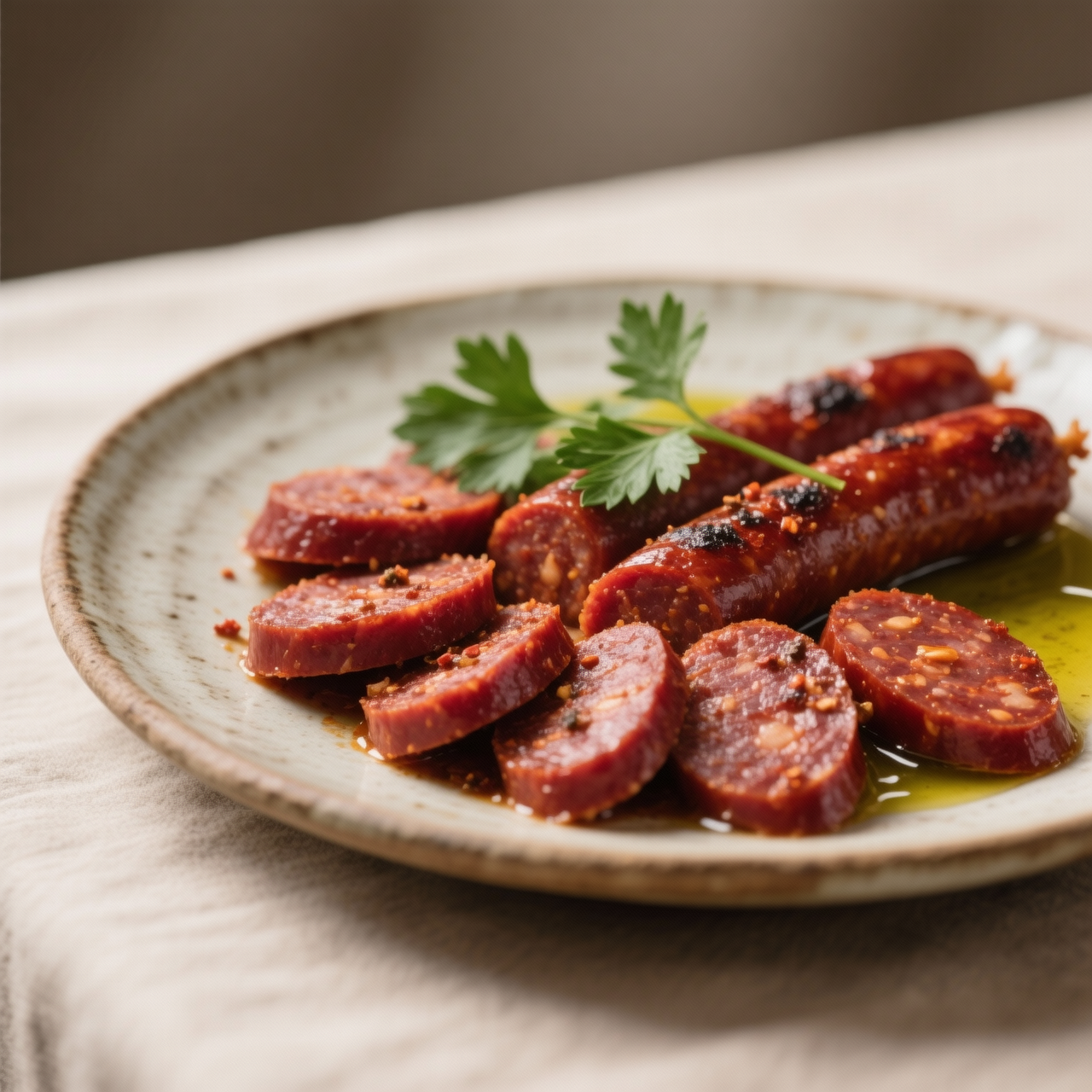
Sucuk (spiced sausage)
I still remember the first time I realized how far commercial sucuk had strayed from its roots. In Turkey, this garlicky, deeply spiced beef sausage isn’t just a breakfast staple; it’s a celebration of preservation, patience, and bold aromatics that have traveled along Anatolian trade routes for centuries. When you buy it pre-packaged at the supermarket, you’re usually paying around nine pounds a kilo for something that tastes suspiciously uniform, relies heavily on smoke flavoring and artificial colorants, and contains binders that dull that characteristic snap. Making it from scratch completely flips that equation. The process is remarkably forgiving once you understand the balance: coarse-cut beef shoulder, a generous proportion of beef fat, and a precise blend of toasted cumin, fenugreek, sumac, and crushed garlic. The real pitfalls aren’t complex chemistry—they’re rushing the cure or over-kneading the meat into a paste, which ruins the texture, or skipping the crucial resting phase that lets the spices bloom and the casing tighten. When you commit to grinding, seasoning, and stuffing it yourself, you gain a deeply personal pantry staple. Because it’s designed to cure and dry slightly, it scales beautifully into large batches. I always double the recipe, portion the links, and freeze them raw for future mornings. Thawed overnight in the fridge and sliced thin into a hot pan, they crisp at the edges while the fat renders into a fragrant oil that transforms a simple fried egg or flatbread into something genuinely memorable. This isn’t about replicating a factory product; it’s about reclaiming the raw, unapologetic warmth that made sucuk a cornerstone of the table in the first place.
Nutrition
| Per serving | Calories | Protein | Carbs | Fat | Sat fat | Fibre | Sugar | Sodium |
|---|---|---|---|---|---|---|---|---|
| beginner | 515kcal | 28g | 3g | 42g | 17g | 1g | 0g | 840mg |
| intermediate | 390kcal | 28g | 3g | 30g | 11g | 1g | 1g | 920mg |
| expert | 420kcal | 22g | 3g | 36g | 16g | 1g | 1g | 950mg |
Per serving · Ava-estimated — a guide, not a clinical figure.
- 800 gbeef chuck— Coarsely ground, kept very cold
- 200 gbeef fat— Finely diced, high melting point preferred
- 40 ggarlic— Freshly minced to a paste
- 18 gsalt— Non-iodized curing salt or fine sea salt
- 15 gTurkish red pepper flake— Aleppo or pul biber variety
- 8 gground cumin
- 5 gblack pepper— Freshly ground
- 5 gsumac
- 3 gfenugreek seed— Toasted and ground
- 3 gsugar— For fermentation starter
- 3 mnatural beef casing— 38-42mm diameter, soaked in warm water
Shop-bought sucuk runs steep at twelve to fifteen dollars a pound and relies heavily on sodium nitrites, cheap starch fillers, and pre-ground spice dust that tastes flat and metallic. This beginner version strips away the intimidating casing-stuffing and week-long curing chambers, delivering the same bold, smoky heat through a streamlined from-scratch method. You will mix coarsely ground beef chuck with a precise ratio of hard back fat, then bind the blend with toasted, freshly ground cumin, sumac, red pepper flakes, and a touch of garlic. The critical step here is keeping everything ice-cold during mixing to prevent the fat from smearing, which guarantees a tender bite instead of a greasy crumble. Watch your pan temperature closely; sucuk releases its own rich oils, so a medium-low heat allows the spices to bloom without scorching the exterior. After shaping into rustic links or thick slices, let the meat rest overnight in the fridge. This brief chill mimics traditional curing, deepening the flavor and firming the texture for perfect pan-frying. The result is a clean, vibrant breakfast sausage that freezes beautifully and costs a fraction of the deli version.
Equipment
- Heavy cast-iron skillet— retains heat evenly for gentle cooking
- Large chilled mixing bowl— keep in freezer for 15 minutes before use
- Spice grinder or mortar and pestle— electric grinder saves time
- Instant-read thermometer(optional)— ensures safe internal temperature
Method
- 1
Toast whole cumin seeds, coriander, dried mint, and crushed red pepper flakes in a dry skillet until fragrant, then pulse in a grinder into a coarse powder.
Do not let the spices darken; they should smell intensely earthy and citrusy.
toasting~ 3 min - 2
Combine ground beef chuck, diced beef back fat, spice powder, coarse sea salt, and ice water in a chilled bowl, mixing by hand until the meat becomes uniformly sticky.
Warm hands will melt the fat; rinse them in ice water between folds.
binding~ 4 minTricky bit - 3
Divide the chilled mixture into twelve equal portions and roll into short, thick logs, pressing firmly to eliminate trapped air pockets.
Keep logs loose enough to hold shape without compacting the meat.
shaping~ 3 min - 4
Heat a heavy skillet over medium-low, add a thin film of neutral oil, and cook the logs for ten minutes, turning frequently until deeply browned and cooked through.
The low heat prevents the exterior from bursting and the spices from burning.
searing~ 10 min - 5
Transfer the cooked sausage to a wire rack and let them rest for five minutes before slicing diagonally for serving.
Resting allows the internal juices to redistribute evenly.
resting~ 5 min
Cooking from frozen
Thaw completely in the fridge before slicing and pan-frying until crisp at the edges.
Storage times are a guide — always use your judgement and store food safely.