
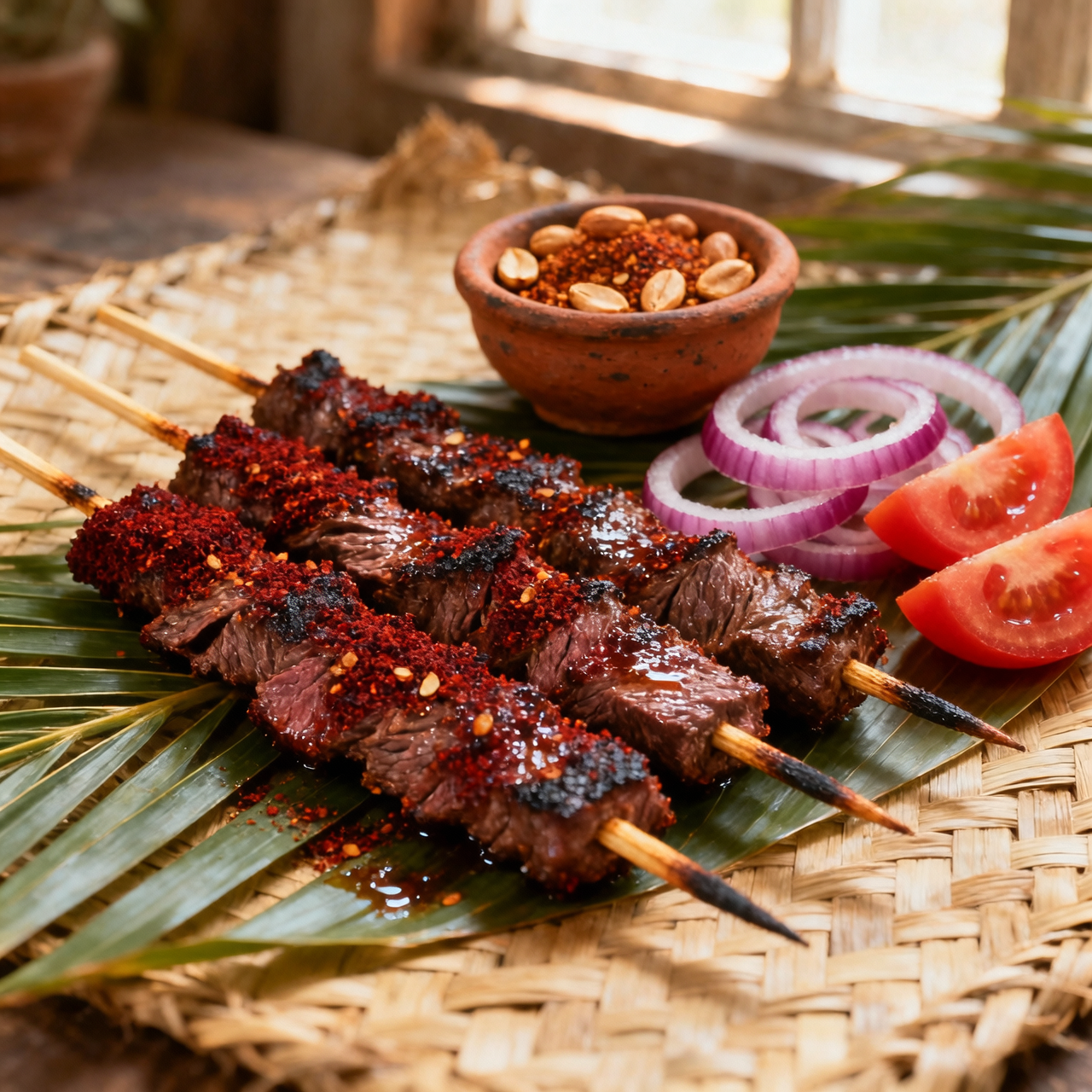
Suya
Suya has always been more than just street food to me; it is a rhythmic pulse of West African evenings, born from the Hausa communities of northern Nigeria and refined across generations of open-flame vendors. When I first learned to make it, I quickly understood that the magic lies not just in the meat, but in the careful alchemy of yaji, the iconic spice blend that carries roasted peanuts, ginger, smoked paprika, and subtle heat. This dish matters because it is fundamentally communal, a shared experience that bridges neighborhoods and celebrates the simple joy of gathering around a glowing grill. Yet, so many home cooks stumble on the same quiet pitfalls. They rush the marinating process, leaving the spice rub to sit on the surface rather than penetrate the fibers, or they slice the meat too thickly, guaranteeing a tough, chewy bite. Others drown the beef in oil, mistaking moisture for richness, when what suya truly demands is patience and a high, direct heat that crisps the edges while keeping the center tender. I have ruined plenty of batches by turning the skewers too early, letting the precious spice crust flake away before it could properly caramelize. The secret, I’ve learned, is in the restraint: thinly pounded meat, a confident hand with the rub, and a steady rotation over the coals. When done right, suya is smoky, deeply savory, and unmistakably alive—a testament to a culinary tradition that refuses to be rushed.
Nutrition
| Per serving | Calories | Protein | Carbs | Fat | Sat fat | Fibre | Sugar | Sodium |
|---|---|---|---|---|---|---|---|---|
| beginner | 750kcal | 58g | 28g | 46g | 10g | 9g | 5g | 1450mg |
| intermediate | 750kcal | 58g | 28g | 46g | 10g | 9g | 5g | 1450mg |
| expert | 750kcal | 58g | 28g | 46g | 10g | 9g | 5g | 1450mg |
Per serving · Ava-estimated — a guide, not a clinical figure.
- 800 gbeef sirloin— trimmed and partially frozen for easier slicing
- 150 gunsalted roasted peanut— dry roasted until golden
- 30 gsmoked paprika— finely ground
- 15 gcayenne pepper— adjust for heat preference
- 20 gground ginger— dried and powdered
- 10 ggarlic powder— pure, without additives
- 10 gonion powder— pure, without additives
- 60 mlgroundnut oil— high smoke point
- 15 gbeef bouillon cube— finely crumbled
- 10 gfine sea salt— kosher or fine grain
- 200 gred onion— for garnish
- 200 gtomato— firm and ripe
- 3 wholelime— for squeezing
This version prioritizes accessibility and confidence over tradition. Instead of grinding and blending your own spice mix from scratch, you will use a high-quality, store-bought suya or yaji paste as a direct substitute for the dry spice blend. The technique relies on controlled pan-searing rather than open-flame grilling, making it safe for any standard kitchen. Watch your heat carefully; beginners often rush the cooking process, which burns the exterior before the interior reaches a safe temperature. Keep the meat slices thin and uniform to ensure even cooking. I recommend pre-slicing your garnishes while the pan heats, so you can serve immediately after cooking while the crust is still crisp. The jarred paste already contains oil and binders, so you will need less additional fat during cooking. Don’t worry about achieving perfect charcoal marks; a deeply caramelized pan-sear delivers the same savory satisfaction. This approach guarantees a flavorful, reliable first attempt without overwhelming your prep space or testing your knife skills.
Equipment
- heavy-bottomed skillet— cast iron or stainless steel
- mixing bowl— medium size
- chef's knife— sharp blade
- tongs— metal or heat-resistant silicone
Method
- 1
Slice the beef against the grain into thin, uniform strips and pat completely dry with paper towels.
Moisture prevents proper browning.
slicing~ 5 min - 2
Combine the jarred suya paste with half of the groundnut oil in a large bowl until smooth.
Aim for a thick, spreadable consistency.
emulsifying~ 1 min - 3
Toss the beef strips in the spice mixture until every piece is thoroughly coated.
Let it rest for ten minutes.
marinating~ 10 min - 4
Heat a heavy skillet over medium-high heat until a drop of water sizzles instantly.
Pan must be fully hot before adding meat.
preheating~ 2 min - 5
Cook the beef in single layers, turning once until browned and crisp on both sides.
Work in batches to avoid steaming.
searing~ 4 minTricky bit - 6
Serve immediately with thinly sliced red onions, tomatoes, and lime wedges.
Serve while hot for best texture.
plating~ 1 min