
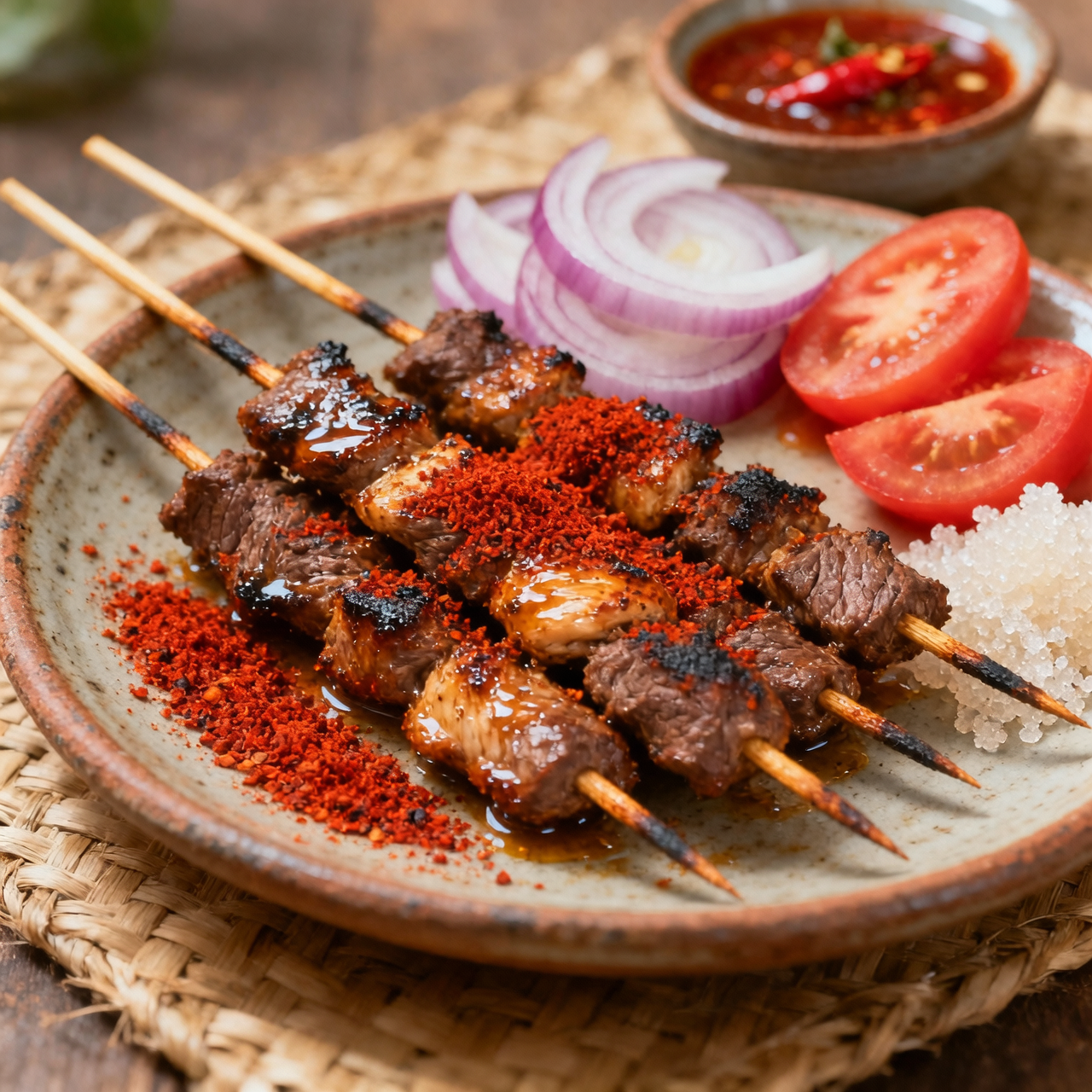
Suya spice (yaji)
I still remember the first time I properly understood yaji, not as just another spice blend, but as the quiet heartbeat of Northern Nigerian street culture. Long before it crossed borders and became a global pantry staple, this peanut-chilli-ginger dry rub was forged by Hausa traders and butchers who needed a way to preserve and elevate tough cuts of meat over open flames. What fascinates me is how yaji operates on balance rather than brute heat; it’s an alchemy of toasted peanuts, earthy paprika, sharp ginger, and the unmistakable depth of ground crayfish and dried chilies, all working in quiet harmony. When I make it, I always remind myself that patience is non-negotiable. The peanuts must be dry-roasted until fragrant but never browned, because bitterness ruins everything. The chilies need to be seeded carefully if you want that slow-building warmth without overwhelming the palate. A common pitfall I see, even among seasoned cooks, is rushing the grinding process. If you don’t let the toasted spices cool completely before blending, the residual heat turns your rub into a greasy, clumpy paste instead of a fine, shelf-stable dust. Another mistake is skimping on the salt or skipping the resting period. Yaji isn’t meant to be used the moment it’s mixed; it needs at least a day to marry, allowing the oils from the peanuts and the volatile compounds from the spices to fully integrate. I treat every batch like a small archive of West African culinary memory, knowing that when stored properly, it will outlast most of us. It’s not just a seasoning. It’s a testament to how resourcefulness, trade routes, and fire can transform humble ingredients into something profoundly enduring.
Nutrition
| Per serving | Calories | Protein | Carbs | Fat | Sat fat | Fibre | Sugar | Sodium |
|---|---|---|---|---|---|---|---|---|
| beginner | 85kcal | 4g | 5g | 6g | 1g | 2g | 1g | 130mg |
| intermediate | 245kcal | 8g | 11g | 18g | 3g | 5g | 2g | 480mg |
| expert | 85kcal | 3g | 6g | 6g | 1g | 2g | 2g | 240mg |
Per serving · Ava-estimated — a guide, not a clinical figure.
- 150 groasted peanut powder— finely ground and sifted to remove large fragments
- 40 gcayenne pepper— use pure chili powder for consistent heat distribution
- 25 gground ginger
- 15 ggarlic powder
- 15 gonion powder
- 10 gsmoked paprika— adds traditional smoky depth without moisture
- 20 gfine sea salt
- 10 gvegan bouillon powder(optional)— grind to a fine dust before mixing
- 3 gground cloves(optional)— use sparingly to maintain balance in the blend
This beginner-friendly take on Suya spice (yaji) simplifies the traditional dry-roasting and grinding process by using pre-roasted peanut flour and a high-quality jarred ginger paste. You will skip the messy prep and focus entirely on blooming the aromatics in a dry skillet. Gently toast your pre-measured spice blend over medium-low heat, stirring constantly to prevent scorching. Watch closely, as paprika and chili powder can turn bitter in seconds. Once fragrant, remove from heat and whisk in the peanut flour and ginger paste until completely uniform. Allow the mixture to cool fully before transferring to a sterilized glass jar. Stored in a cool, dark pantry, this dry rub will retain its potency for months. Always ensure your utensils are completely dry before scooping, as even a single drop of moisture can trigger mold growth during long-term storage. Mastering this simplified rub gives you a reliable foundation for authentic West African cooking without overwhelming a beginner's schedule.
Equipment
- Heavy-bottomed skillet— Non-stick or cast iron works well for dry toasting
- Fine-mesh sieve(optional)— Helps break up clumps in peanut flour
- Airtight glass jar— Essential for long-term pantry storage
Method
- 1
Place a heavy-bottomed skillet over medium-low heat and add your pre-measured dry spice blend.
Keep the flame gentle; spices burn rapidly.
dry-toasting~ 3 minTricky bit - 2
Stir the mixture constantly with a wooden spoon until fragrant and lightly toasted.
Watch for a nutty aroma and slight color shift.
blooming~ 2 minTricky bit - 3
Transfer the warm spices to a large bowl and immediately whisk in the peanut flour and jarred ginger paste.
Break up any stubborn lumps until completely uniform.
incorporating~ 2 min - 4
Spread the finished rub thinly on a parchment-lined baking sheet and allow it to cool completely.
Never seal a warm spice mix, or condensation will ruin it.
cooling~ 30 min - 5
Pack the cooled rub tightly into a sterilized glass jar and store in a cool, dark pantry.
Label with date; potency lasts up to six months.
storing~ 1 min
Storage times are a guide — always use your judgement and store food safely.