
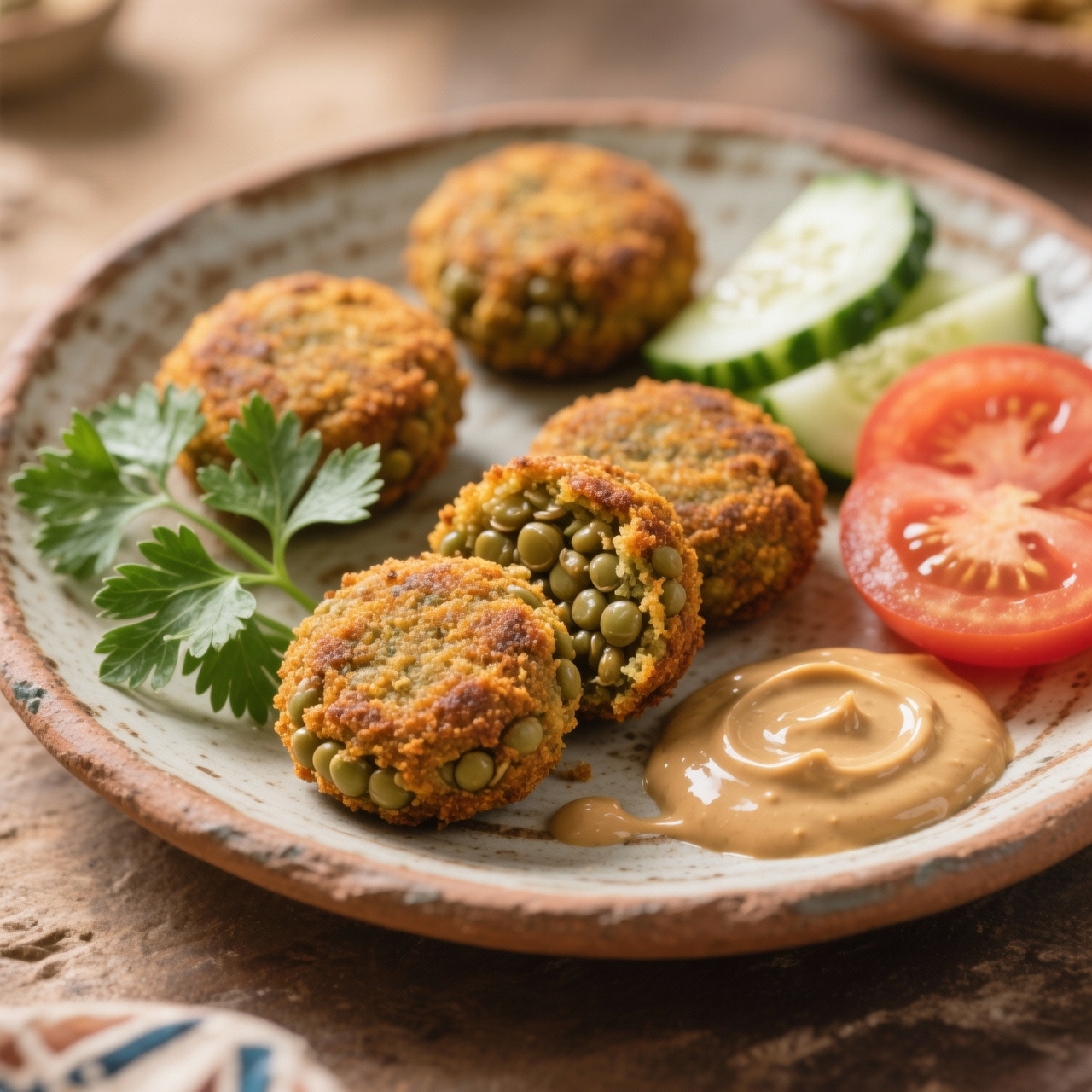
Ta'ameya (fava falafel)
I’ve always believed that true Egyptian street food shouldn’t taste like cardboard, which is why I refuse to buy those pre-packaged falafel boxes that cost nearly four pounds for six dry, crumbly discs. They’re loaded with stabilisers and wheat flour to mask the fact that they were never soaked from scratch, and they completely miss the vibrant, earthy soul of authentic ta’ameya. This dish traces back centuries along the Nile, born from Coptic fasting traditions that needed a protein-rich, plant-based staple, and it remains a cornerstone of Cairo’s culinary identity. When you make it yourself, the magic lies in the dried split fava beans, never canned and never cooked beforehand. The single biggest pitfall I see home cooks fall into is accidentally boiling the beans or skipping the overnight soak; doing so turns your mixture into a dense, gluey paste that shatters in hot oil. Another common mistake is rushing the grinding step. You want a coarse, sandy texture that holds together just enough to shape, not a smooth purée. Proper moisture management is everything. I always squeeze out excess water, fold in fresh parsley, cilantro, and crushed garlic, and let the mixture rest before shaping. When you freeze the raw patties on a tray and bag them once solid, you unlock a genuinely convenient pantry hero. Thawing isn’t required; you can drop them straight into shimmering oil for a crisp, verdant crust and a fluffy, herbaceous centre that no factory could ever replicate.
Nutrition
| Per serving | Calories | Protein | Carbs | Fat | Sat fat | Fibre | Sugar | Sodium |
|---|---|---|---|---|---|---|---|---|
| beginner | 410kcal | 19g | 48g | 16g | 3g | 12g | 2g | 380mg |
| intermediate | 395kcal | 16g | 41g | 13g | 1g | 8g | 2g | 520mg |
| expert | 360kcal | 15g | 40g | 13g | 2g | 11g | 2g | 480mg |
Per serving · Ava-estimated — a guide, not a clinical figure.
- 250 gDried fava bean— soaked in cold water for 24 hours, drained and peeled
- 150 gYellow onion— roughly chopped
- 4 pieceGarlic clove— peeled
- 20 gFresh parsley— leaves only
- 20 gFresh cilantro— leaves and tender stems
- 4 gBaking powder— aluminum-free preferred
- 6 gFine sea salt
- 3 gGround cumin
- 2 gGround coriander
- 500 mlNeutral oil— for deep frying
This beginner-friendly version strips away the traditional stone-grinding and complex spice-toasting steps, replacing them with a reliable food-processor method and forgiving resting times. You will soak dried split fava beans overnight instead of using canned varieties, ensuring the authentic dense, earthy texture that defines proper Egyptian ta’ameya. Unlike shop-bought falafel mixes, which often cost upwards of six dollars for a small box and rely on stale chickpea flour, chemical leaveners, and preservatives that leave the patties dry and crumbly, this method uses whole, hydrated beans bound only by fresh herbs and a touch of baking powder. Watch the moisture level carefully; the mixture should hold together when squeezed but never feel wet or pasty. If it is too loose, add a tablespoon of rice flour or rest it longer in the fridge. Keep your oil at a steady medium heat to achieve a crisp, emerald crust without burning the exterior or leaving the centre raw. The simplified shaping technique uses a flat-bottomed glass for consistent, even patties that freeze beautifully raw. This approach guarantees a confident first attempt while preserving the vibrant, herbaceous flavour that makes ta’ameya a beloved staple across Cairo street food stalls.
Equipment
- Food processor— pulse until coarse meal, not smooth paste
- Heavy-bottomed deep skillet— cast iron or stainless steel holds heat well
- Baking sheet— lined with parchment for freezing raw patties
Method
- 1
Drain and thoroughly rinse the soaked dried fava beans until the water runs clear.
Do not use canned beans; they contain too much moisture and will ruin the texture.
draining~ 2 min - 2
Pulse the rinsed beans in a food processor with chopped parsley, cilantro, garlic, onion, cumin, coriander, salt, and baking powder until the mixture resembles coarse sand.
Stop scraping down the sides before the beans turn into a smooth paste.
pulsing~ 2 minTricky bit - 3
Transfer the ground mixture to a bowl, cover tightly, and refrigerate for at least one hour.
This resting period hydrates the starches and prevents crumbling during frying.
resting~ 60 min - 4
Divide the chilled mixture into twelve equal portions and press each firmly into a compact, flat patty.
A damp flat-bottomed glass prevents sticking and ensures even thickness for uniform cooking.
shaping~ 5 minTricky bit - 5
Place the uncooked patties on a parchment-lined baking sheet and freeze until completely solid.
Freeze them raw so you can fry directly from the freezer later without thawing.
freezing~ 2 min - 6
Pour vegetable oil into a heavy skillet to a depth of two inches and heat until a dropped crumb sizzles immediately.
Maintain a steady medium heat to cook the centre before the exterior darkens.
oil_testing~ 5 minTricky bit - 7
Carefully lower the frozen or freshly shaped patties into the hot oil and fry for three to four minutes per side until deeply golden.
Work in small batches to avoid dropping the oil temperature.
pan_frying~ 8 min - 8
Remove the fritters with a slotted spoon and drain on a wire rack before serving warm.
Wire racks keep the crust crisp by allowing steam to escape.
draining~ 1 min
Cooking from frozen
Fry directly from frozen in medium-hot oil until deeply golden, adding about two extra minutes to the usual cooking time.
Storage times are a guide — always use your judgement and store food safely.