
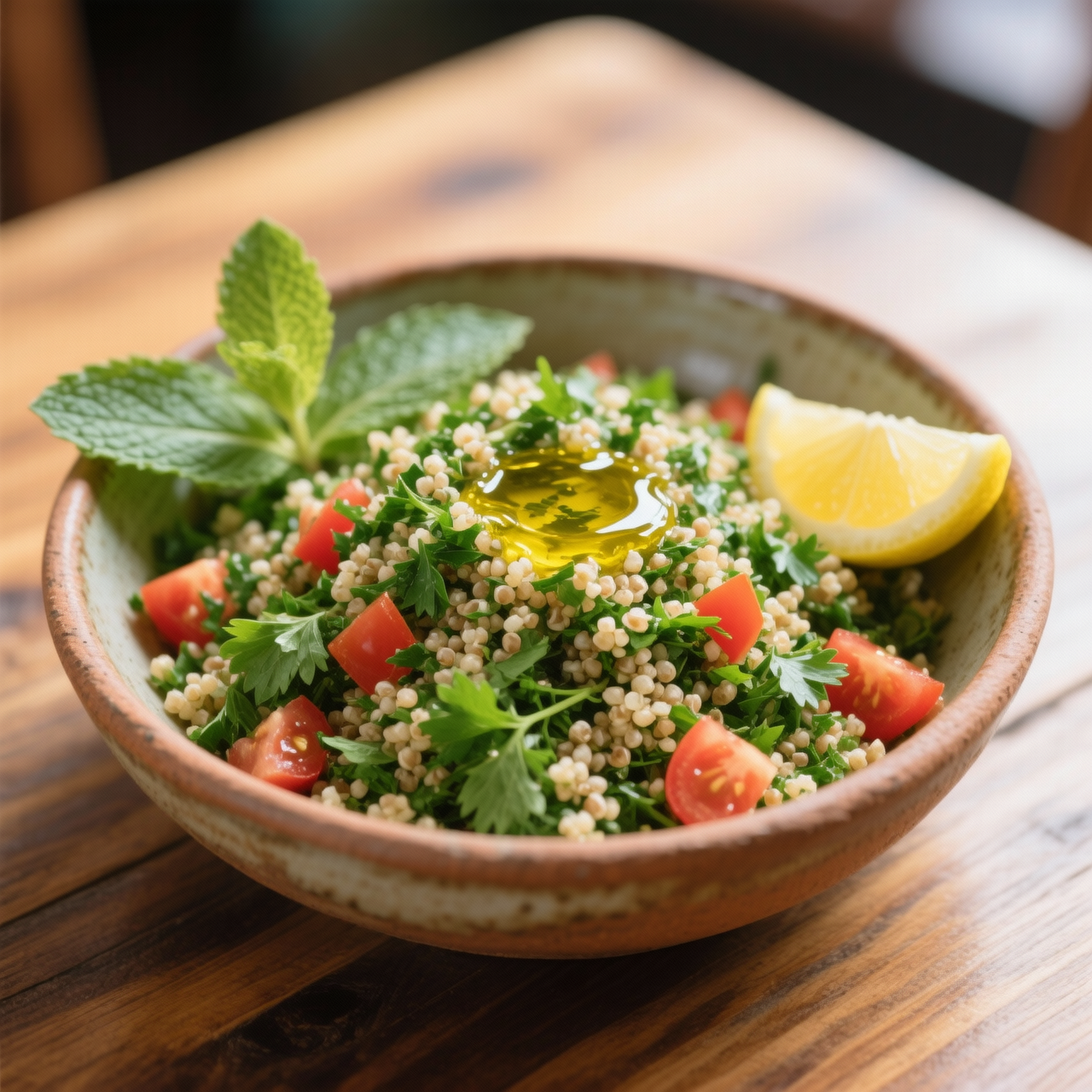
Tabbouleh
When I first learned to make tabbouleh in my grandmother’s kitchen in Beirut, I quickly realized it wasn’t really a salad at all—it was a lesson in restraint. True Lebanese tabbouleh doesn’t drown in bulgur or lean heavily on tomatoes; it’s a vibrant, herb-forward celebration where parsley takes center stage, finely minced until it practically dissolves into a fragrant green sea. I’ve watched countless well-meaning cooks outside the Levant turn it into a grain bowl, overloading the bulgur and drowning the delicate balance with heavy olive oil or lemon juice that masks the freshness rather than lifting it. This dish matters because it captures the essence of our culinary philosophy: let quality ingredients speak for themselves. The bulgur should be a whisper, just enough to carry the parsley, mint, and ripe tomatoes, while the dressing remains light, sharp, and clean. The most common pitfall I see is impatience. People rush the chopping, leaving coarse, uneven herbs that bruise instead of bloom. They forget to soak the bulgur properly, or worse, they cook it, turning what should be tender and bright into a heavy, pasty mess. Tabbouleh demands respect for the knife, an understanding of ratios, and a willingness to taste as you go. When done right, it’s not just a starter; it’s a bright, herbaceous memory of summer hillsides, served with warm pita and quiet pride.
Nutrition
| Per serving | Calories | Protein | Carbs | Fat | Sat fat | Fibre | Sugar | Sodium |
|---|---|---|---|---|---|---|---|---|
| beginner | 195kcal | 4g | 23g | 11g | 2g | 6g | 2g | 500mg |
| intermediate | 195kcal | 4g | 23g | 11g | 2g | 6g | 2g | 500mg |
| expert | 195kcal | 4g | 23g | 11g | 2g | 6g | 2g | 500mg |
Per serving · Ava-estimated — a guide, not a clinical figure.
- 80 gfine bulgur wheat— grade #1 or #2
- 120 gflat-leaf parsley— fresh, stems removed
- 30 gfresh mint leaf— fresh, not dried
- 200 groma tomato— firm and ripe
- 40 ggreen onion— white and light green parts only
- 45 mlextra virgin olive oil— cold-pressed, fruity
- 45 mlfresh lemon juice— strained of seeds
- 5 gfine sea salt
- 2 gblack pepper— freshly ground
- 5 gground sumac— deep red, astringent
At this level, we prioritize confidence over tradition, ensuring your first attempt yields a bright, balanced result without the intimidation of professional knife work. We rely on convenient shortcuts like pre-rinsed fine bulgur and jarred lemon juice, allowing you to focus entirely on the crucial assembly phase. The goal here is to learn the fundamental architecture of tabbouleh: how to properly hydrate the grains so they absorb the dressing rather than sitting heavy, and how to layer the ingredients to maintain crispness. Watch closely for moisture management. The most common beginner mistake is adding the tomatoes too early, which releases excess water and turns the salad into a mushy bowl. To prevent this, we drain the tomato seeds and dice them just before folding them into the mixture. Keep your dressing separate until the final minute, and toss gently with two forks rather than a spoon to avoid bruising the delicate herbs. You will notice how the acid from the lemon and the fat from the olive oil must be whisked vigorously before folding in. This version teaches you to trust your eyes and palate, proving that even with streamlined tools and prepped ingredients, you can achieve a genuinely refreshing starter that honors the dish’s vibrant character.
Equipment
- Large mixing bowl— stainless steel or glass
- Fine-mesh strainer— for draining bulgur
- Chef's knife— standard 8-inch
- Small whisk— for emulsifying dressing
Method
- 1
Place the fine bulgur wheat in a medium bowl and pour over the ice water.
Let it sit undisturbed until softened.
soaking~ 15 min - 2
Drain the bulgur thoroughly through a fine-mesh strainer and press gently with the back of a spoon to remove excess moisture.
Do not squeeze aggressively.
draining~ 2 min - 3
Transfer the drained bulgur to a large mixing bowl and immediately toss with half of the extra virgin olive oil to coat the grains.
Coating prevents clumping.
coating~ 1 min - 4
Whisk the fresh lemon juice, ground sumac, fine sea salt, and black pepper together in a small cup until fully dissolved.
Use jarred pre-ground sumac for convenience.
emulsifying~ 1 min - 5
Fold the chopped parsley, mint, green onion, and diced tomatoes into the oiled bulgur using two forks to avoid bruising the herbs.
Add tomatoes last to control moisture.
folding~ 2 min - 6
Pour the whisked dressing over the salad and toss gently until every component is evenly coated.
Stop as soon as the herbs look glossy.
dressing~ 1 minTricky bit - 7
Refrigerate the finished tabbouleh for at least fifteen minutes before serving to allow the flavors to marry.
Cover tightly with plastic wrap.
resting~ 15 min