
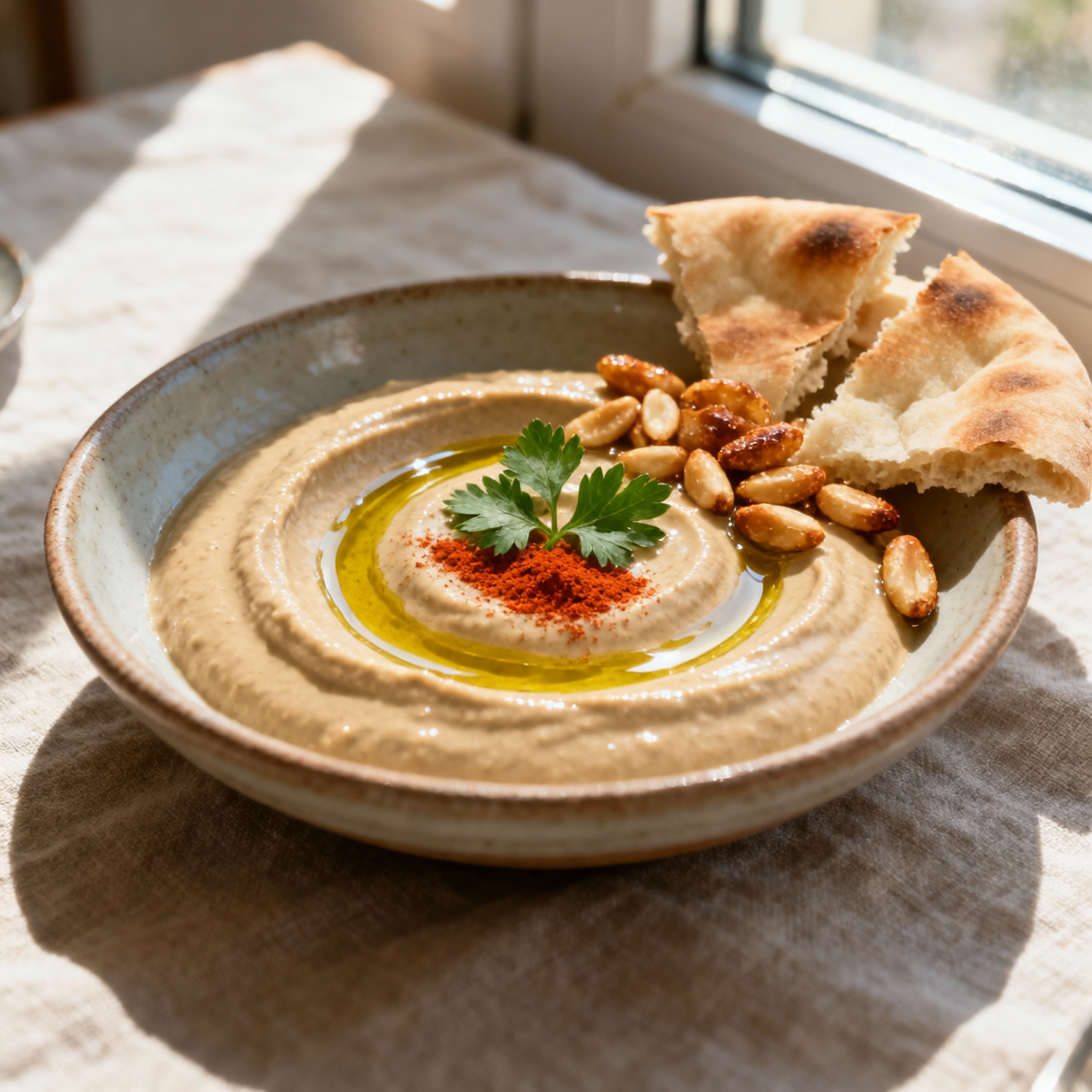
Tahini sauce (tarator)
I’ve spent years watching tahini separate, seize, and turn bitter when rushed, which is why I treat tarator less like a quick condiment and more like an emulsion that demands respect. In Lebanon, this sauce isn’t an afterthought; it’s the bright, nutty backbone that lifts everything from street-corner falafel to freshly grilled sea bass. The magic lies in the chemistry of tahini and lemon juice. When you first whisk them together, the mixture will thicken dramatically, sometimes looking almost pasty before loosening into a silky ribbon. That’s not failure—it’s the natural binding of sesame solids with acid. The real pitfall comes from pouring in all your water at once or skipping the slow, patient whisking. I always start with a generous squeeze of fresh lemon, a pinch of sea salt, and a whisper of crushed garlic if I’m feeling bold, then slowly stream in ice water until the sauce reaches a pourable consistency. Temperature matters too; cold water keeps the emulsion stable, while warm water can break it. Another common mistake is using stale or poorly ground tahini. Quality sesame paste should smell deeply earthy, not metallic. When you get the balance right, tarator becomes something quietly transformative: tangy enough to cut through rich fried foods, rich enough to stand alone with raw vegetables, and entirely plant-based without sacrificing depth. It’s a reminder that some of the most profound flavors come from just two or three ingredients, treated with intention. I keep mine in the fridge, give it a quick stir before serving, and let it rest at room temperature so it flows effortlessly over whatever I’m cooking.
Nutrition
| Per serving | Calories | Protein | Carbs | Fat | Sat fat | Fibre | Sugar | Sodium |
|---|---|---|---|---|---|---|---|---|
| beginner | 180kcal | 5g | 5g | 15g | 3g | 1g | 1g | 290mg |
| intermediate | 165kcal | 5g | 6g | 14g | 2g | 2g | 1g | 295mg |
| expert | 195kcal | 6g | 5g | 17g | 3g | 2g | 1g | 140mg |
Per serving · Ava-estimated — a guide, not a clinical figure.
- 150 gtahini— Stirred well to incorporate separated oil before measuring
- 60 mllemon juice— Freshly squeezed and strained
- 5 ggarlic— Peeled and finely minced
- 120 mlcold water— Added gradually to adjust consistency and stabilize emulsion
- 3 gsalt— Fine sea salt
This beginner-friendly tarator recipe strips away the intimidation of traditional Middle Eastern emulsions by leaning on reliable, store-bought tahini and a failproof mixing order. The biggest hurdle for new cooks is the sauce’s natural tendency to seize when acid meets sesame paste, turning thick and clumpy before it magically smooths out. Do not panic when this happens; it is completely expected and part of the process. We will hand-hold you through the exact moment to introduce cold water, which is the secret to coaxing a silky, pourable consistency from a stiff paste. Watch your texture closely: the sauce should coat the back of a spoon without pooling too quickly. If it breaks or looks grainy, simply add another splash of ice water and whisk vigorously until it comes back together. Keep your garlic finely minced or use a microplane to avoid harsh chunks, and always whisk in one direction to maintain a stable emulsion. This no-cook approach guarantees a bright, restaurant-style sauce in under ten minutes. Perfect for drizzling over falafel, grilled vegetables, or baked fish, it stores beautifully in the fridge for quick weeknight meals.
Equipment
- Medium mixing bowl— glass or ceramic retains cold better
- Wire whisk(optional)— a fork works in a pinch
- Measuring spoons— accuracy prevents breaking
Method
- 1
Measure and combine tahini, lemon juice, and minced garlic in a medium bowl.
Ensure your tahini is well-stirred in its jar before scooping.
mise en place~ 1 min - 2
Whisk vigorously until the mixture thickens into a stiff, clumpy paste.
Do not stop when it looks dry; this is the expected reaction.
seizing~ 1 minTricky bit - 3
Add ice-cold water one tablespoon at a time while whisking constantly.
Patience is key here; rushing will break the emulsion.
emulsification~ 2 minTricky bit - 4
Continue whisking until the sauce turns pale, glossy, and pourable.
The color will lighten significantly as it aerates.
aeration~ 2 min - 5
Season with salt to taste and transfer to a clean jar for storage.
Taste against a plain cracker or vegetable to check balance.
finishing~ 1 min
Cooking from frozen
Thaw in the refrigerator overnight and whisk vigorously with a splash of warm water or extra lemon juice to restore the emulsion.
Storage times are a guide — always use your judgement and store food safely.