
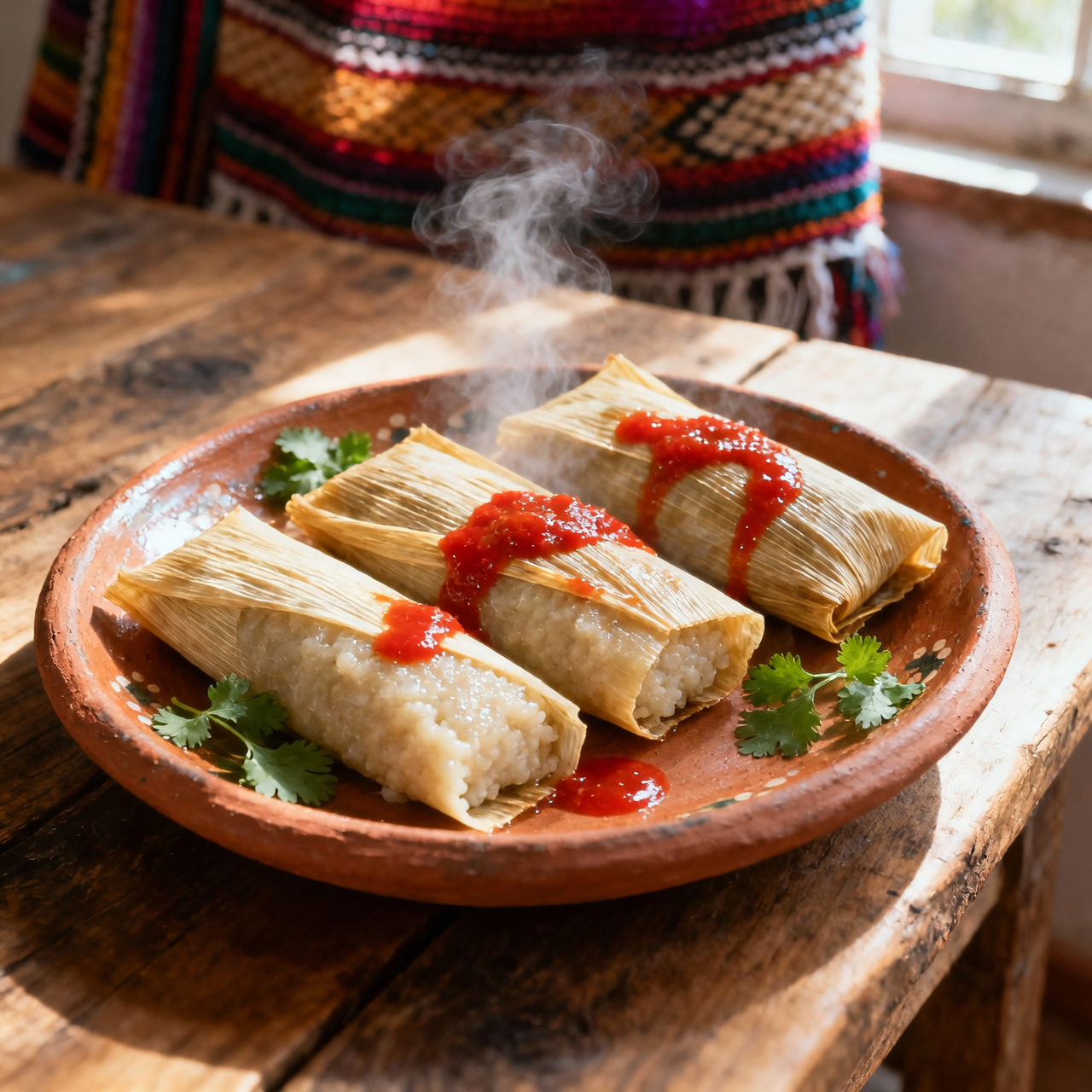
Tamales
I have always viewed tamales not merely as food, but as a living archive of Mesoamerican ingenuity. Long before European contact, Indigenous communities across the Americas perfected the technique of wrapping seasoned masa around corn husks and steaming them to tender perfection. This method was born of necessity and profound respect for the land, offering a portable, nourishing meal that sustained travelers, warriors, and families alike through centuries of change. When I prepare them today, I feel the weight of that lineage pressing gently against my hands. Tamales matter because they demand patience and presence in an era obsessed with speed. They force us to slow down, to soak the husks until they yield, to whip the lard until it sings, and to fold each bundle with deliberate care. Yet this very beauty is where so many stumble. The most common pitfall I see is rushing the masa; without properly aerated fat and a well-hydrated dough, the final product becomes dense and dry. Another frequent misstep is overfilling the husks, which causes them to burst open during the steam, ruining the delicate balance of filling and dough. Temperature control is equally unforgiving. If the water boils too aggressively, the tamales will toughen; if it simmers too quietly, they will remain gummy at the center. I always remind myself that the steam must whisper, not shout, and that listening to the pot is just as vital as tasting the filling. When done right, a tamal is a quiet triumph of tradition, a testament to what happens when we honor time and technique.
Nutrition
| Per serving | Calories | Protein | Carbs | Fat | Sat fat | Fibre | Sugar | Sodium |
|---|---|---|---|---|---|---|---|---|
| beginner | 1235kcal | 37g | 115g | 71g | 26g | 17g | 6g | 1310mg |
| intermediate | 1235kcal | 37g | 115g | 71g | 26g | 17g | 6g | 1310mg |
| expert | 1235kcal | 37g | 115g | 71g | 26g | 17g | 6g | 1310mg |
Per serving · Ava-estimated — a guide, not a clinical figure.
- 24 countDried corn husk— pliable and unbroken
- 500 gMasa harina— finely ground nixtamalized corn flour
- 250 gLard— room temperature, high quality
- 480 mlChicken broth— warm, low sodium
- 10 gBaking powder— aluminum-free
- 8 gSalt— fine sea salt
- 4 countDried guajillo chile— stems and seeds removed
- 3 countDried ancho chile— stems and seeds removed
- 200 gRoma tomato— ripe and firm
- 4 countGarlic clove— peeled
- 100 gWhite onion— quartered
- 3 gCumin seed— whole
- 2 gMexican oregano— dried leaves only
- 400 gChicken breast— cooked and shredded
- 2 gBlack pepper— freshly cracked
Focus on accessible shortcuts that remove the most tedious steps without sacrificing flavor. Use pre-soaked husks and a stand mixer to whip the fat and dough, ensuring proper aeration without physical strain. Simplify the folding technique into a straightforward envelope method, prioritizing secure seals over perfect aesthetics. Watch closely for dough consistency; it should spread easily like thick peanut butter. If the mixture feels stiff, add warm broth one tablespoon at a time until it floats in water. Keep the steaming liquid at a gentle, steady simmer to prevent scorching or waterlogging. Do not rush the resting phase after cooking, as the masa requires quiet time to fully set. This approach guarantees a forgiving, stress-free introduction to assembly while delivering comforting, authentic results. Embrace these conveniences to build confidence before advancing to traditional methods.
Equipment
- Large steamer pot— insert must elevate food above water line
- Stand mixer(optional)— paddle attachment required
- Large mixing bowls— glass or stainless steel
Method
- 1
Soak husks in warm water until fully pliable.
Place a heavy plate on top to keep them submerged.
soaking~ 15 min - 2
Blend chiles, tomatoes, onion, garlic, and broth into a smooth sauce.
Use a standard countertop blender.
pureeing~ 5 min - 3
Whip lard, baking powder, and salt until pale and fluffy.
Scrape down the bowl sides halfway through.
creaming~ 3 minTricky bit - 4
Fold masa harina into the fat mixture, adding broth until dough floats.
Add broth one tablespoon at a time if too stiff.
folding~ 7 minTricky bit - 5
Spread dough onto drained husks, add sauce and chicken, and fold tightly.
Leave a small border on all sides for sealing.
wrapping~ 10 minTricky bit - 6
Steam upright in a covered pot for one hour.
Check water level midway to prevent boiling dry.
steaming~ 60 min