
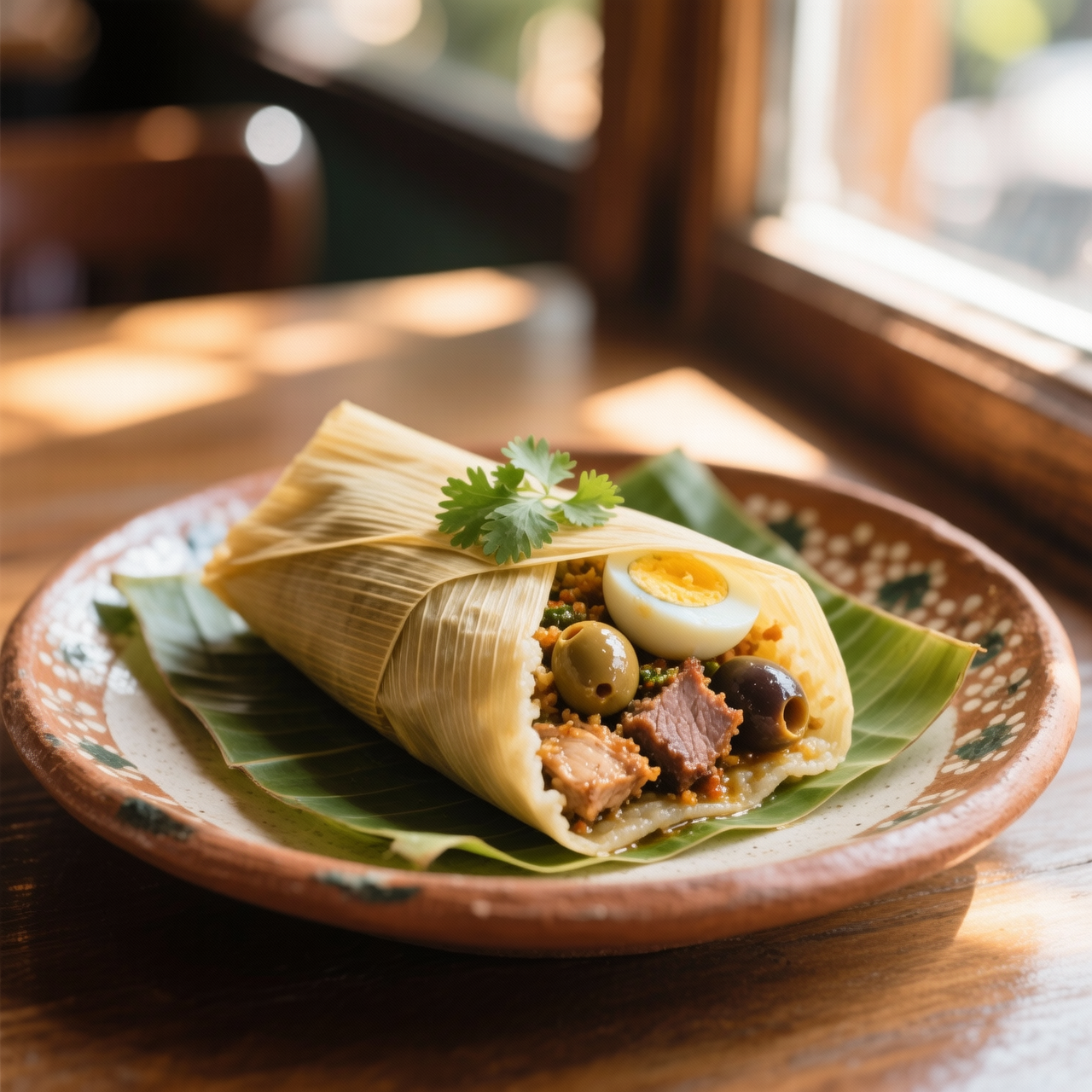
Tamales Peruanos
Tamales Peruanos hold a deeply cherished place in my heart, representing the soul of Peruvian weekend mornings and family gatherings. Unlike the ubiquitous Mexican tamales, our Peruvian versions are larger, wrapped in fragrant banana leaves rather than corn husks, and feature a softer, more savory dough enriched with a vibrant pork broth and a generous spoonful of ají amarillo paste. The origins trace back to the colonial era, blending indigenous corn traditions with Spanish influences, resulting in a dish that is both comforting and celebratory. What matters most to me is the sheer, unadulterated joy of unwrapping that steaming leaf to reveal tender, slow-braised pork and olives nestled in golden masa. The biggest pitfall people face is rushing the dough; it needs to be whipped until light and fluffy, and the broth must be deeply seasoned. Now, I know the temptation of grabbing a box of frozen, mass-produced tamales from the supermarket aisle. Those ultra-processed imposters cost nearly eight dollars for a box of four, yet they taste of cardboard, rely on hydrogenated vegetable shortening, and use artificial flavorings that completely mask the meat. Making them from scratch is a revelation. You control the fat, using real butter or fresh pork lard, and you build a complex, layered flavor profile with real ají amarillo and slow-cooked pork shoulder. There are absolutely no jarred sauces, stock cubes, or pre-made pastes allowed here. Even if you are a beginner, we simply streamline the technique by using a food processor for the dough, keeping it entirely from-scratch, real, and profoundly delicious.
Nutrition
| Per serving | Calories | Protein | Carbs | Fat | Sat fat | Fibre | Sugar | Sodium |
|---|---|---|---|---|---|---|---|---|
| beginner | 580kcal | 28g | 45g | 30g | 10g | 5g | 4g | 620mg |
| intermediate | 540kcal | 24g | 45g | 28g | 9g | 4g | 3g | 650mg |
| expert | 650kcal | 28g | 55g | 36g | 14g | 6g | 4g | 580mg |
Per serving · Ava-estimated — a guide, not a clinical figure.
- 500 gpork shoulder— cut into 2 cm cubes
- 1000 gfresh yellow corn— kernels removed from the cob
- 150 gpork lard— softened
- 200 gred onion— finely chopped
- 20 ggarlic— minced
- 60 gají panca paste
- 5 gground cumin
- 15 gsalt— plus more to taste
- 2 gblack pepper
- 500 mlpork broth— warm
- 12 sheetsbanana leaf— wiped clean and passed over an open flame to soften
- 12 piecesbotija olive— pitted
- 6 pieceshard-boiled egg— peeled and quartered
Shop-bought frozen tamales typically cost around $5 for a small pack of two, but they rely on hydrogenated vegetable shortening, excessive sodium, and artificial flavors, resulting in a dense, bland, and overly processed experience. This from-scratch beginner version delivers a fraction of the cost and infinitely superior flavor using real pork, rehydrated ají panca, fresh aromatics, and homemade broth. Unlike the expert level which requires grinding fresh wet corn and building a complex multi-stage reduction, this approach simplifies the technique by using high-quality cornmeal for the masa and a straightforward, single-blend aderezo. The masa is cooked before wrapping, creating a tender, cake-like texture. Watch closely for the masa consistency during cooking; it must be soft, spreadable, and pull away cleanly from the pan, adding more broth if it looks dry. Ensure your banana leaves are properly wilted over a flame so they don't crack when folding. This method guarantees a confident first attempt at authentic Peruvian tamales without sacrificing traditional, recognizable ingredients.
Equipment
- Heavy-bottomed pan— for cooking the pork and masa
- Blender— for the aderezo
- Large pot with steamer basket— must fit upright tamales
Method
- 1
Submerge the dried ají panca pods in hot water and let them soak until fully softened.
This takes about 15 minutes; press them down with a spoon to keep them submerged.
rehydrating~ 15 min - 2
Drain the ají and blend it with the onion, garlic, cumin, salt, and a splash of broth until completely smooth.
Scrape down the sides of the blender to ensure no large chunks remain.
blending~ 3 min - 3
Sear the pork pieces in the heavy-bottomed pan until browned, then pour in the blended aderezo and simmer until the pork is tender and the sauce is thick.
The oil should separate from the paste at the end, indicating the aderezo is properly cooked.
simmering~ 20 min - 4
Whisk the cornmeal into the remaining warm homemade broth and fat in the pan, stirring constantly over medium heat until it forms a thick, cohesive dough.
The masa is ready when it pulls away cleanly from the sides of the pan.
cooking_masa~ 10 minTricky bit - 5
Pass the banana leaves quickly over a gas flame or hot stove element until they turn dark green and become pliable.
Do not hold them over the flame too long or they will become brittle and tear.
wilting~ 2 min - 6
Spread a layer of masa on the center of a leaf, top with a piece of pork, a slice of egg, and an olive, then fold the sides in and tie securely with a strip of leaf.
Leave a little space at the top for the masa to expand during steaming.
folding~ 15 min - 7
Stand the wrapped tamales upright in the steamer basket and steam over boiling water until the masa is firm and pulls away from the leaf.
Keep the lid tightly covered and check the water level occasionally to prevent boiling dry.
steaming~ 60 min
Cooking from frozen
Steam directly from frozen for 45 minutes until the dough pulls away from the banana leaf.
Storage times are a guide — always use your judgement and store food safely.