
Tamarind Chutney
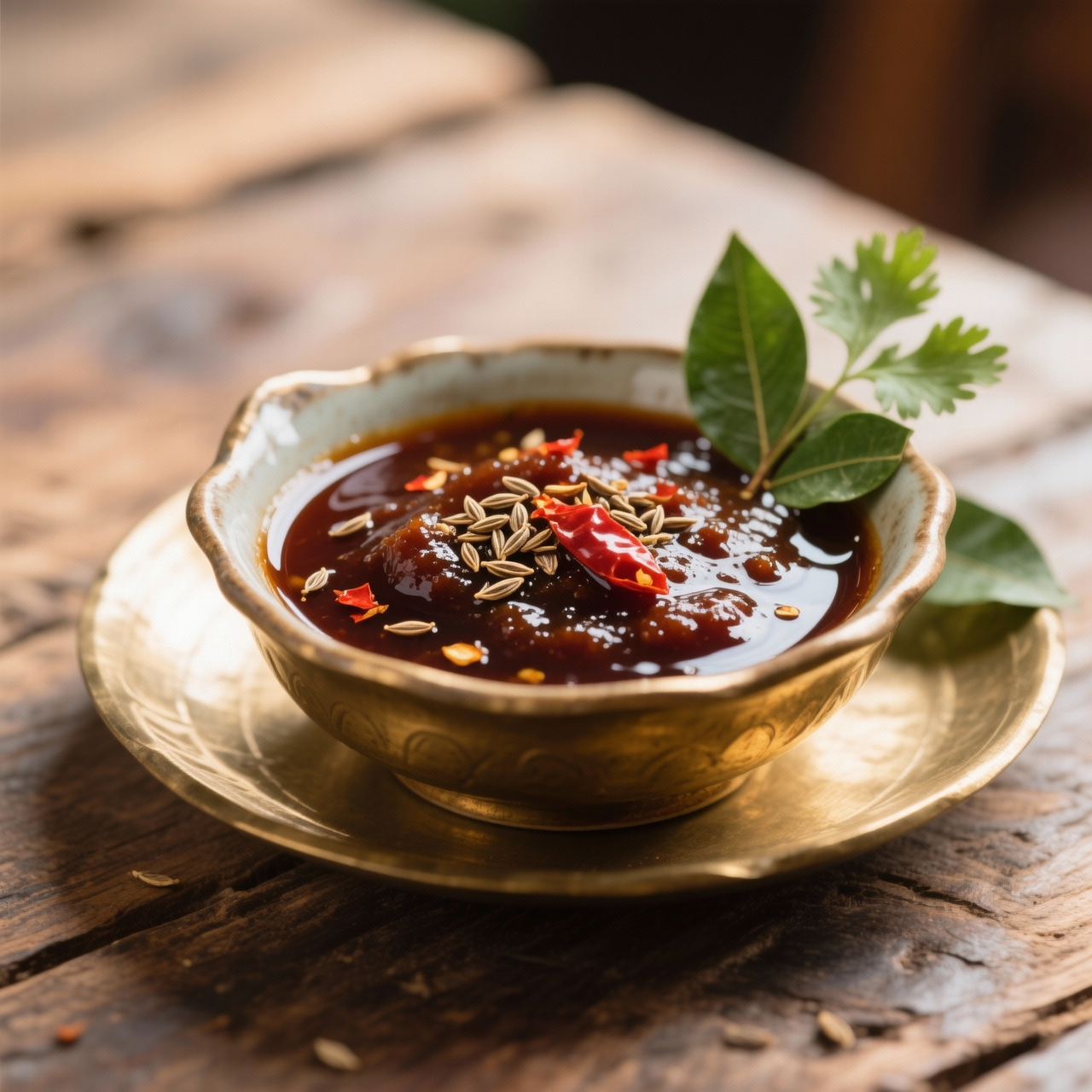
I’ve always believed that a great tamarind chutney is the quiet anchor of an Indian snack spread, balancing the sharp heat of green chutney with a deep, molasses-like sweetness that lingers on the palate. Born from the bustling streets of Mumbai and the home kitchens of Gujarat, this sweet-sour imli sauce is more than a simple condiment; it is a masterclass in patience and balance. Traditional cooks simmer dried tamarind blocks with jaggery, dates, and warm spices until the mixture reduces to a glossy, syrupy ribbon that coats the back of a spoon. The true magic lies in the precise ratio of sour to sweet, and missing that mark is the most common pitfall I encounter. Too much jaggery drowns the fruit’s bright acidity, turning it into mere caramel syrup, while undercooking leaves it watery and separated. I always remind myself to taste at every reduction stage, adjusting with a pinch of roasted cumin or a splash of water if it grows too dense. Another frequent misstep is skipping the fine straining process; those stubborn fibers and seeds will absolutely ruin the silky mouthfeel you are chasing. This chutney jars beautifully, actually developing a richer, more harmonious flavor as it rests in the fridge for a day or two. Whether you are drizzling it over crispy samosas, chaat, or simply using it as a glaze, its complexity elevates the ordinary. When you take the time to coax the pulp from the block and simmer it down with a watchful eye, you are preserving a centuries-old street food tradition in glass, ready to brighten any plate.
Nutrition
| Per serving | Calories | Protein | Carbs | Fat | Sat fat | Fibre | Sugar | Sodium |
|---|---|---|---|---|---|---|---|---|
| beginner | 75kcal | 0g | 19g | 0g | 0g | 1g | 14g | 110mg |
| intermediate | 45kcal | 1g | 11g | 0g | 0g | 1g | 9g | 95mg |
| expert | 160kcal | 1g | 38g | 2g | 0g | 2g | 28g | 120mg |
Per serving · Ava-estimated — a guide, not a clinical figure.
- 150 gtamarind— seedless block or pulp, soaked in warm water until soft
- 120 gjaggery— grated or finely chopped
- 2 gcumin seed— dry roasted and ground
- 3 gchili powder— adjust heat level to preference
- 5 gsalt— fine sea salt
- 500 mlwater— for soaking and adjusting final consistency
- 2 gblack salt(optional)— kala namak for enhanced tanginess
This beginner-friendly approach to tamarind chutney skips the labor-intensive seed-pitting and soaking steps by starting with ready-made tamarind concentrate or jarred paste. The goal is to build confidence through a straightforward, foolproof simmering method that guarantees a glossy, sweet-sour balance every time. You will combine the paste with water, jaggery or brown sugar, and pantry spices in a single pan, then gently reduce the mixture until it coats the back of a spoon. Watch the heat carefully during the final ten minutes; sugar-heavy syrups can scorch or boil over quickly if left unattended. A quick taste test midway through cooking lets you adjust the sweet and tangy ratio to your exact preference before the flavors lock in as it cools. This version prioritizes accessibility and consistency, proving you do not need a spice grinder or hours of prep to achieve a restaurant-quality condiment. Once cooled, transfer it to a clean glass jar and refrigerate. The chutney will naturally thicken further in the fridge, making it an ideal make-ahead staple for samosas, chaat, and everyday snacking.
Equipment
- Heavy-bottomed saucepan— prevents sugar scorching and uneven heating
- Silicone spatula— for scraping sticky sides and constant stirring
- Glass storage jar with lid— must be clean, dry, and heat-safe
Method
- 1
Combine tamarind paste, water, jaggery, cumin powder, and chili powder in the saucepan.
Stir over low heat until the sugar fully dissolves into the liquid.
dissolving~ 5 min - 2
Bring the mixture to a gentle simmer over medium-low heat.
Do not let it reach a rolling boil to avoid sticky splattering.
simmering~ 3 minTricky bit - 3
Reduce heat to low and cook uncovered, stirring occasionally, until the chutney thickens and coats the back of a spoon.
The syrup will thicken significantly as it cools, so stop cooking while still slightly runny.
reduction~ 10 minTricky bit - 4
Remove the pan from the heat and whisk in regular salt and black salt.
Taste and adjust sweetness or tanginess with a splash of warm water or extra sugar.
seasoning~ 2 min - 5
Transfer the cooled chutney to a sterilized glass jar and seal tightly.
Refrigerate immediately after it reaches room temperature for best preservation.
preserving~ 1 min
Cooking from frozen
Thaw overnight in the refrigerator and whisk thoroughly to restore a smooth, glossy consistency.
Storage times are a guide — always use your judgement and store food safely.