
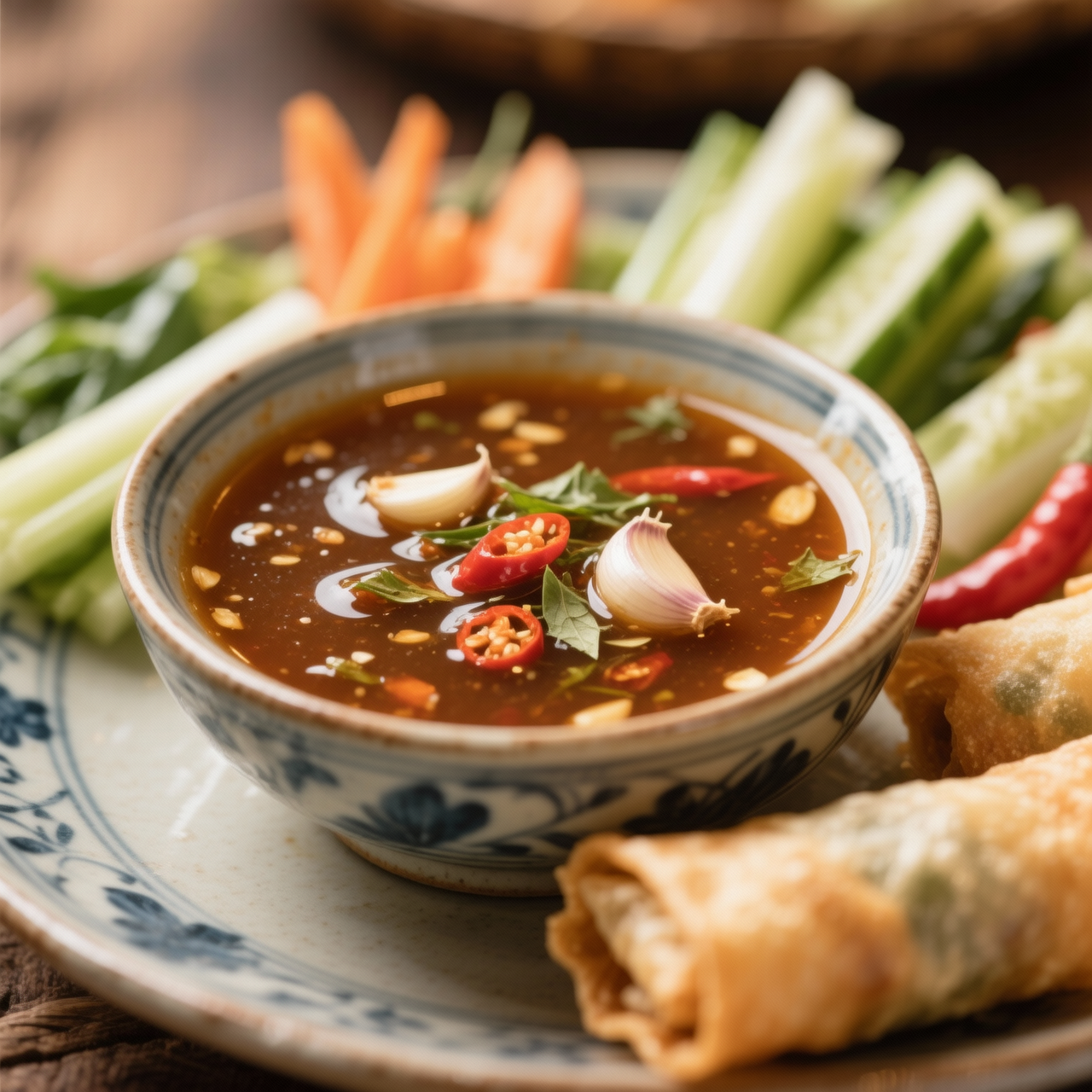
Tamarind Dipping Sauce
When I first learned to balance the sharp, fruity tang of tamarind with the deep caramel sweetness of palm sugar, I realized this sauce was less of a condiment and more of a culinary bridge. In Vietnamese coastal kitchens, this sweet-sour dip is the quiet star that elevates steamed crabs, grilled prawns, and fried fish from simple to spectacular. Its roots stretch back to the Mekong Delta, where tamarind pods hang heavy on roadside trees and cooks have long relied on their natural acidity to cut through the richness of river and sea harvests. What makes this sauce matter today is its effortless versatility and clean, pescatarian-friendly profile, but mastering it demands patience. The most common mistake I see is rushing the extraction of the tamarind pulp, which leaves behind bitter seeds and fibrous skins that ruin the silky mouthfeel. Another frequent pitfall is leaning too heavily on refined white sugar instead of unrefined palm or rock sugar, which strips away the necessary depth and leaves the finish tasting flat and one-dimensional. Heat management matters too; a gentle simmer is all you need to coax the flavors into harmony, while a rolling boil will scorch the sugars and dull the bright, fruity notes. I always recommend tasting as you go, adjusting the fish sauce incrementally until the salty-sweet-sour triangle clicks into place. When done right, this sauce should coat the back of a spoon lightly, offering a glossy, translucent sheen and an immediate, mouth-watering brightness that makes every bite of shellfish sing. It is humble, deeply rooted, and entirely unforgiving of shortcuts, but the reward is a timeless accompaniment that feels both ancient and effortlessly modern.
Nutrition
| Per serving | Calories | Protein | Carbs | Fat | Sat fat | Fibre | Sugar | Sodium |
|---|---|---|---|---|---|---|---|---|
| beginner | 75kcal | 1g | 18g | 0g | 0g | 1g | 14g | 490mg |
| intermediate | 105kcal | 2g | 24g | 1g | 0g | 1g | 20g | 380mg |
| expert | 52kcal | 1g | 12g | 1g | 0g | 1g | 9g | 310mg |
Per serving · Ava-estimated — a guide, not a clinical figure.
- 50 gtamarind paste— pulp only, seeds and fibers removed
- 60 gsugar— white or palm sugar
- 30 mlfish sauce— standard Vietnamese variety
- 100 mlwater— warm for easier dissolving
- 10 ggarlic— peeled and finely minced
- 5 gbird's eye chili(optional)— fresh, thinly sliced
This beginner-friendly approach skips the traditional soaking, straining, and seed-picking by using ready-made tamarind concentrate and pre-measured pantry staples. You will work with a simplified ratio system that guarantees a balanced sweet-sour profile every time, making it perfect for first-time cooks. Jarred paste and standard fish sauce remove guesswork, letting you focus on heat control. Start by combining the concentrate, sugar, fish sauce, and water in a small saucepan over medium-low heat. The key to success here is patience during the dissolution phase: keep the heat low and stir constantly until every sugar crystal disappears before the liquid ever reaches a simmer. Rushing this step will leave your sauce gritty and uneven. Watch the mixture closely as it warms, since sugar syrups can scorch in seconds. Once slightly thickened, remove it from the heat and let it cool completely, which naturally increases its viscosity and deepens the flavor. Taste it at room temperature before serving, adjusting with a splash of water if it proves too intense or a pinch of sugar if the tamarind leans too tart. This streamlined method delivers reliable, restaurant-style results without specialized equipment.
Equipment
- Small saucepan— stainless steel or non-stick works best for sugar work
- Whisk— prevents sugar from settling and scorching on the bottom
- Fine-mesh sieve— catches any undissolved crystals or concentrate impurities
Method
- 1
Combine tamarind concentrate, sugar, fish sauce, and water in a small saucepan.
Use a 1:1 volume ratio of sugar to paste as your baseline.
combining~ 1 min - 2
Place the pan over medium-low heat and whisk continuously until the sugar fully dissolves.
Never let the mixture bubble before the crystals are completely gone.
dissolving~ 3 minTricky bit - 3
Gently simmer the liquid for three minutes until it lightly coats a spoon.
Reduce heat immediately if the edges darken or smell caramelized.
reducing~ 3 min - 4
Strain the warm sauce through a fine-mesh sieve into a glass jar and cool completely.
The viscosity will increase significantly as the temperature drops.
straining~ 2 min
Cooking from frozen
Thaw overnight in the refrigerator and whisk vigorously to restore its original silky consistency before serving.
Storage times are a guide — always use your judgement and store food safely.