
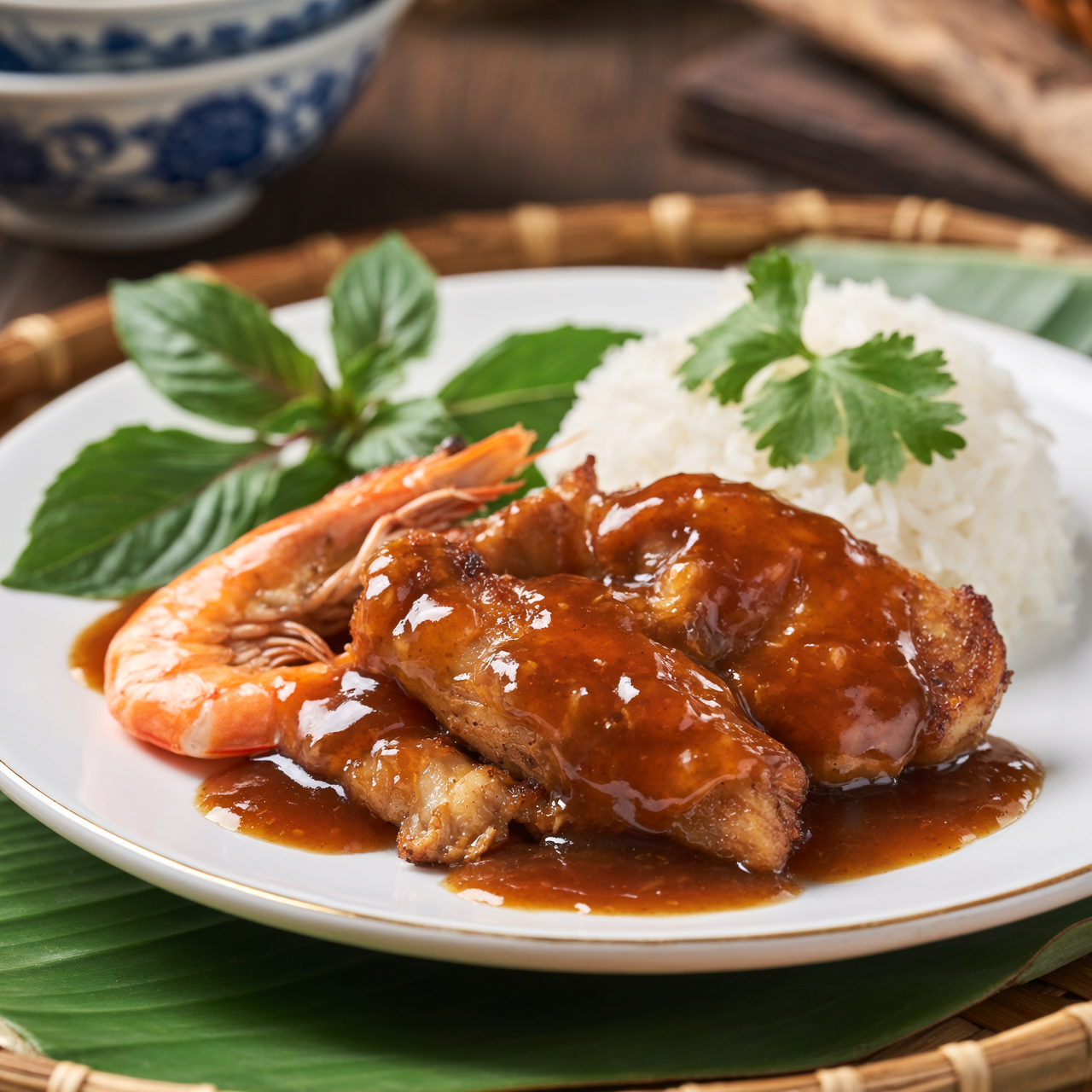
Tamarind Sauce
I’ve spent years chasing the perfect balance between sweet, sour, salty, and spicy, but nothing quite anchors that pursuit like a properly made tamarind sauce. In Thai kitchens, this dark, syrupy foundation is less of a condiment and more of a culinary compass, guiding everything from the iconic tang of pad thai to the bright glaze on grilled seafood or the subtle depth in vegetable stir-fries. Its origins trace back to ancient trade routes that brought the tamarind tree to Southeast Asia, where cooks quickly recognized its remarkable ability to cut through richness and awaken the palate without relying on animal products. Making it at home matters because commercial versions often lean too heavily on refined sugar or artificial stabilizers, flattening that natural, fruity acidity into a one-dimensional syrup. The real magic happens when you start with a block of pure, pressed pulp, soak it in warm water, and patiently massage the fibers to release every drop of tart nectar. The most common pitfall I see is rushing the reduction; simmer it too aggressively, and the sugars caramelize prematurely, leaving behind a bitter edge. Another mistake is under-salting. Without a proper balance of palm sugar, tamarind extract, and a touch of soy sauce or coconut aminos, the sauce lacks dimension and fails to cling properly to noodles or vegetables. I always recommend tasting it at room temperature, as heat masks acidity and exaggerates sweetness. Let it cool before your final adjustment, and you’ll find yourself with a glossy, versatile liquid that transforms humble ingredients into something deeply satisfying. It’s a quiet workhorse, but when done right, it sings.
Nutrition
| Per serving | Calories | Protein | Carbs | Fat | Sat fat | Fibre | Sugar | Sodium |
|---|---|---|---|---|---|---|---|---|
| beginner | 95kcal | 1g | 23g | 0g | 0g | 1g | 19g | 260mg |
| intermediate | 48kcal | 1g | 12g | 0g | 0g | 1g | 10g | 115mg |
| expert | 135kcal | 1g | 33g | 0g | 0g | 3g | 28g | 620mg |
Per serving · Ava-estimated — a guide, not a clinical figure.
- 60 gTamarind paste— Use seedless concentrate for a smoother sauce
- 50 gPalm sugar— Finely chopped to aid dissolving
- 30 mlSoy sauce— Light soy sauce or tamari recommended
- 100 mlWater
This beginner-friendly version skips the traditional soaking and straining of whole tamarind blocks by relying on readily available jarred tamarind concentrate. The shortcut cuts prep time dramatically while preserving the signature sweet-sour profile essential for pad thai, spring rolls, or stir-fries. Because concentrate is highly potent and thick, the key to success is gentle dilution and controlled simmering. Start by whisking the concentrate into warm water until completely smooth before adding your sugar and salt. Keep the heat at a steady medium-low during the reduction phase; boiling too vigorously will cause the sugars to crystallize or scorch, leaving you with a bitter, overly thick glaze rather than a pourable sauce. Taste frequently as it reduces, adjusting with a splash of water if it tightens too quickly or a pinch more sugar if the sourness overpowers. The sauce will naturally thicken as it cools, so pull it off the heat just as it lightly coats the back of a spoon. Store chilled and use within two weeks.
Equipment
- Medium saucepan— heavy-bottomed prevents scorching
- Whisk— stainless steel works best
- Airtight glass jar— for cooling and storage
Method
- 1
Dissolve the jarred tamarind concentrate in warm water until completely smooth and lump-free.
Warm water integrates faster than cold.
dissolving~ 1 min - 2
Add granulated sugar, salt, and a splash of soy alternative, then whisk vigorously until fully combined.
Scrape the pan edges to ensure even mixing.
whisking~ 2 min - 3
Simmer the mixture over medium-low heat, stirring constantly, until it reduces to a glossy, spoon-coating consistency.
Bubbles should be gentle, not rolling.
reducing~ 5 minTricky bit - 4
Remove from heat and allow the sauce to cool completely before transferring to an airtight container.
Sauce will thicken further as it drops in temperature.
cooling~ 10 min
Cooking from frozen
Thaw overnight in the fridge and whisk vigorously to re-emulsify before gently warming.
Storage times are a guide — always use your judgement and store food safely.