
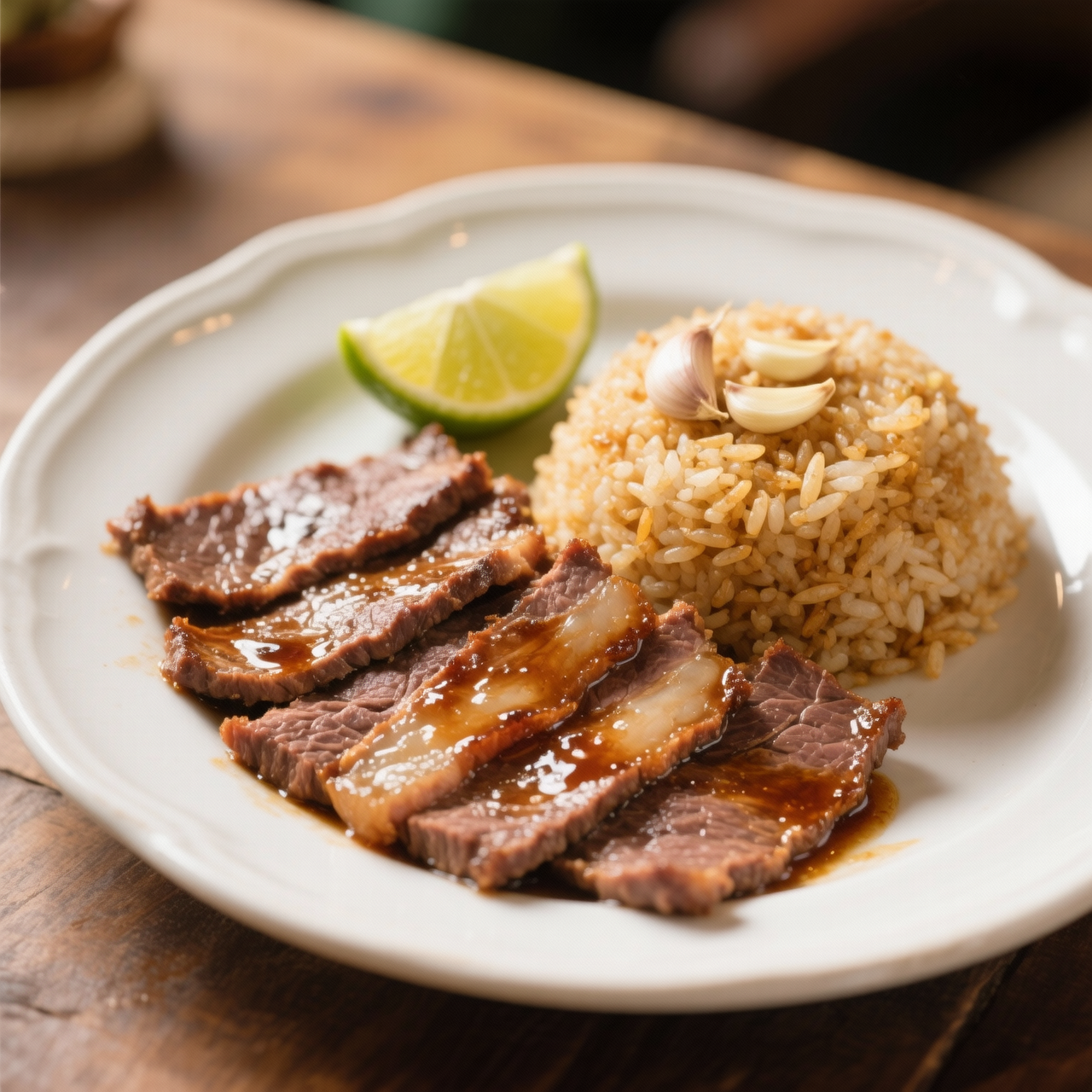
Tapa (Cured Beef)
I first learned to cure tapa watching my lola balance sweet and savory over a low flame, and it remains one of the most honest ways to transform a humble cut of beef into something extraordinary. Originally a preservation method adapted during the Spanish colonial period, tapa has evolved into the cornerstone of the Filipino tapsilog breakfast, a dish that grounds the morning with deep umami and comforting familiarity. Store-bought frozen tapa packs typically run eight to twelve dollars a pound, but they are almost always laden with phosphates, excessive sodium, and artificial tenderizers that leave the meat unnaturally soft and chemically sweet. When you cure it yourself, you bypass the industrial shortcuts and actually taste the beef. The biggest mistake I see home cooks make is rushing the process or drowning thin slices in straight soy sauce, which masks the meat’s natural flavor and prevents a proper caramelized crust. You must slice the beef thinly against the grain, balance your marinade with a modest amount of acid like palm or cane vinegar alongside fresh garlic, and let it rest uncovered in the fridge for at least a full day. Cooking it requires a gentle hand; start over medium-low to render the fat and gently cook the center, then crank the heat for a final sear. This patience ensures every bite is tender, richly savory, and deeply personal, proving that the best breakfast staples are never bought, they are patiently made.
Nutrition
| Per serving | Calories | Protein | Carbs | Fat | Sat fat | Fibre | Sugar | Sodium |
|---|---|---|---|---|---|---|---|---|
| beginner | 285kcal | 27g | 11g | 15g | 4g | 1g | 9g | 780mg |
| intermediate | 380kcal | 28g | 12g | 14g | 4g | 0g | 8g | 850mg |
| expert | 390kcal | 34g | 14g | 23g | 8g | 0g | 12g | 850mg |
Per serving · Ava-estimated — a guide, not a clinical figure.
- 1000 gbeef sirloin— Partially frozen for easier slicing into 2mm strips
- 60 mlsoy sauce— Light or regular
- 30 mlcalamansi juice— Freshly squeezed or bottled; lemon juice can substitute
- 30 ggarlic— Finely minced or pressed
- 50 gbrown sugar— Adjust to taste for traditional sweet-salty profile
- 5 gblack pepper— Freshly ground preferred
- 30 mlcooking oil(optional)— Neutral oil for marinating and later frying
Store-bought tapa is surprisingly expensive and often relies on mechanical tenderizers, excessive sodium, and artificial preservatives to mimic a slow-cured product. This beginner-friendly, from-scratch version strips away the additives and focuses on a straightforward quick-cure technique that guarantees tender, flavourful beef with zero guesswork. The key to success is slicing your chosen beef cut paper-thin across the grain, which mimics the traditional pounding process and ensures every bite melts in your mouth. You will combine pantry staples like vinegar, soy sauce, sugar, and fresh garlic into a simple balancing marinade that penetrates the meat quickly. Watch the sugar closely as it hits the pan, as it will naturally caramelize and darken the edges while the beef finishes cooking. The biggest pitfall is overcrowding the skillet, which traps steam and boils the meat instead of giving it that signature crisp, savoury crust. Work in small batches if necessary, and trust that a simple 15-minute room-temperature cure is enough to transform lean cuts into a deeply savoury breakfast staple. Once mastered, you can scale the marinade and freeze the raw portions for effortless weekday mornings.
Equipment
- Heavy-bottomed skillet— Non-stick is highly recommended for beginners to prevent sticking
- Chef's knife— Keep it razor-sharp for thin slicing
- Medium mixing bowl— Glass or ceramic for easy cleaning
- Freezer-safe resealable bags— For batch portioning and freezing
Method
- 1
Slice the beef thinly against the grain to ensure maximum tenderness.
Partially freezing the meat for 20 minutes makes uniform slicing effortless.
slicing_against_the_grain~ 5 min - 2
Whisk together rice vinegar, soy sauce, white sugar, freshly minced garlic, and cracked black pepper until the sugar fully dissolves.
Taste a drop; it should lean slightly sweet and tangy before adding to the meat.
dissolving~ 2 min - 3
Submerge the beef strips in the liquid mixture, gently massage to distribute evenly, and let it rest uncovered at room temperature for exactly 15 minutes.
Do not exceed 15 minutes or the vinegar will begin to toughen the muscle fibres.
quick_curing~ 15 minTricky bit - 4
Pour cooking oil into a heavy skillet and heat over medium until it shimmers but does not smoke.
A single drop of water should dance and evaporate instantly when ready.
heating_to_shimmer~ 2 min - 5
Lay the marinated strips into the hot pan in a single layer and fry without moving them until the edges brown, then flip to finish cooking.
Cook in two batches to avoid steaming the meat and ruining the caramelization.
pan_searing~ 6 minTricky bit - 6
Transfer the cooked meat to a clean plate, discard the excess pan liquid, and serve immediately alongside garlic rice.
Letting it rest for one minute helps redistribute the juices for a moister bite.
resting_and_plating~ 1 min
Cooking from frozen
Thaw completely in the fridge, then warm gently in a skillet with a splash of water to restore moisture without overcooking.
Storage times are a guide — always use your judgement and store food safely.