
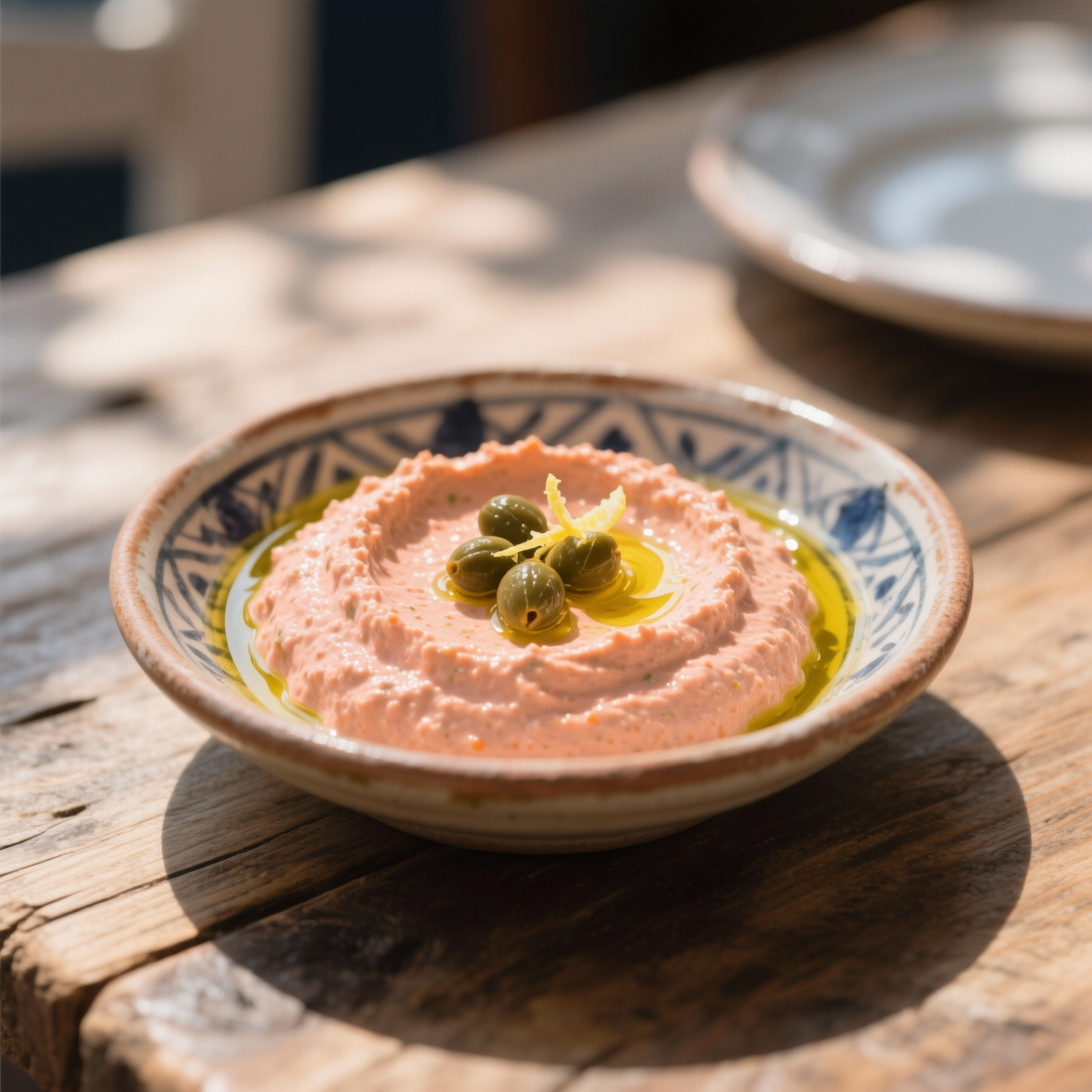
Taramasalata
Taramasalata has always felt to me like the quiet rebel of the Greek table. While tzatziki and hummus grab the spotlight, this cured carp or cod roe dip holds a deeper, brinier kind of magic. Its name literally means “fish roe salad,” and it traces its roots straight to the Aegean, where generations of fishermen’s families learned to stretch precious salted roe with stale bread, olive oil, and lemon juice into something impossibly creamy. Making it at home isn’t just about ditching the gelatinous supermarket tubs; it’s about reclaiming an ingredient that deserves respect. The biggest mistake I see cooks make is rushing the emulsion. You cannot dump the oil in all at once, nor can you use warm bread that turns the mixture gummy. The secret lies in patience: soaking the bread until it’s completely soft, squeezing out every last drop of water, and whisking the roe into a pale, fluffy paste before introducing the olive oil drop by drop. If you break it, the dip will split into a greasy, salty mess that no amount of stirring can rescue. Another pitfall is over-lemoning. You want a bright finish, not a vinegar punch that masks the delicate oceanic flavor of the roe. When done right, the texture should be cloud-light, almost aerated, with a clean, savory depth that lingers. This recipe is my love letter to that balance. It’s a reminder that the simplest pantry staples, when treated with care and a steady hand, can outshine anything pre-packaged. I make it for every gathering, not as an afterthought, but as the anchor that sets the tone for everything else on the mezze board.
Nutrition
| Per serving | Calories | Protein | Carbs | Fat | Sat fat | Fibre | Sugar | Sodium |
|---|---|---|---|---|---|---|---|---|
| beginner | 185kcal | 7g | 15g | 11g | 2g | 1g | 2g | 480mg |
| intermediate | 290kcal | 5g | 10g | 25g | 3g | 1g | 1g | 800mg |
| expert | 220kcal | 5g | 10g | 18g | 3g | 1g | 1g | 480mg |
Per serving · Ava-estimated — a guide, not a clinical figure.
- 150 gtarama— Cured carp or cod roe, preferably pink or white
- 100 gstale white bread— Crusts removed, soaked in water until soft and squeezed dry
- 250 mlextra virgin olive oil— Added very slowly to form a stable emulsion
- 45 mllemon juice— Freshly squeezed
- 50 gred onion— Finely grated or juiced to extract liquid only
- 150 mlwater— Used for soaking bread and adjusting consistency
- 2 gblack pepper(optional)— Freshly ground
This beginner-friendly approach skips the traditional labor of boiling potatoes or meticulously soaking stale bread, relying instead on quick-soaking crustless white bread and high-quality jarred tarama paste. The key to success here is temperature and patience: ensure all ingredients sit at room temperature before starting to prevent the emulsion from breaking. You will focus on mastering the slow, steady incorporation of olive oil, either with a food processor for guaranteed results or a sturdy whisk if you prefer to build confidence by hand. Watch closely for the color shift from pink to a pale, creamy ivory, which signals that the fat has fully bonded with the starch. Taste frequently as you finish with lemon juice, since cured roe varies widely in saltiness. If the dip tightens too much, rescue it by whisking in a teaspoon of cold water. This streamlined method guarantees a restaurant-smooth texture in under fifteen minutes, delivering the same rich, briny comfort of the classic without the guesswork or cleanup.
Equipment
- Food processor or electric hand mixer— Guarantees a stable emulsion without arm fatigue
Method
- 1
Tear crustless white bread into small pieces and soak in cold water for exactly five minutes.
Do not rush; the bread must fully soften to blend smoothly.
soaking~ 5 min - 2
Drain the bread thoroughly and squeeze it by the handful until absolutely no water drips out.
Excess moisture is the number one cause of a split dip.
wringing~ 1 minTricky bit - 3
Combine the squeezed bread and two tablespoons of jarred tarama paste in your processor bowl, then pulse until completely uniform and pale pink.
Scrape down the sides halfway through to avoid dry pockets.
pureeing~ 1 min - 4
Turn the machine to medium speed and slowly drizzle in olive oil in a thin, steady stream until the mixture thickens and turns creamy white.
Adding the oil too quickly will break the emulsion; patience pays off here.
emulsifying~ 2 minTricky bit - 5
Blend in fresh lemon juice one tablespoon at a time, tasting between additions to balance the natural saltiness of the roe.
Stop when the dip tastes bright but not sour, then transfer to a serving bowl.
seasoning~ 2 min
Storage times are a guide — always use your judgement and store food safely.