
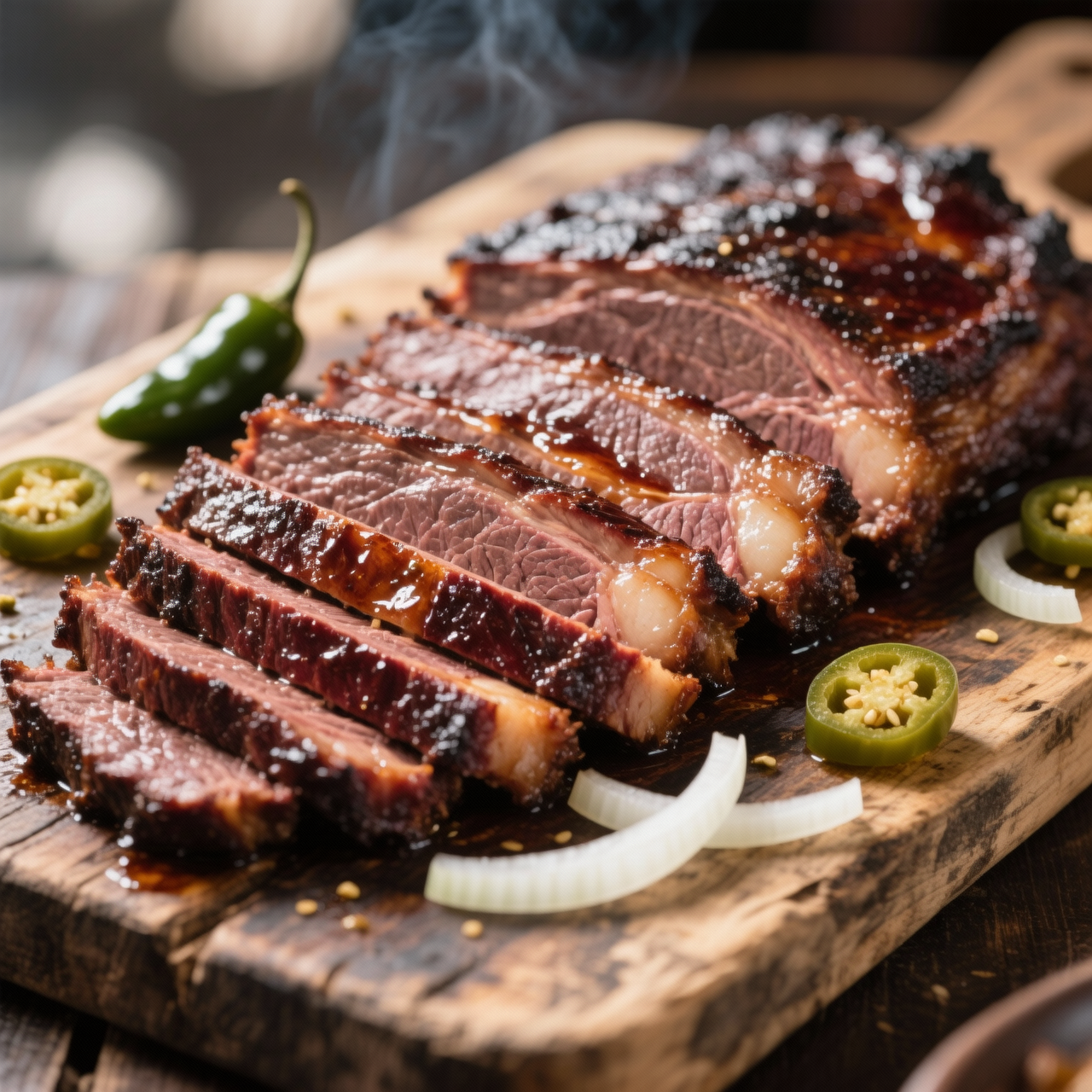
Texas Brisket
I’ve always believed that Texas brisket is less of a recipe and more of a slow, deliberate conversation between fire, smoke, and time. Born in the post-war Central Texas butcher shops where cheap, tough cuts of beef were transformed through patient smoking over post oak, this dish became the undisputed heart of American barbecue. It matters because it refuses shortcuts; it demands respect for the animal, the wood, and the process. When I step up to my pit, I’m participating in a lineage that stretches back generations of pitmasters who learned to coax tenderness out of one of the cow’s hardest-working muscles. Yet, for all its reverence, brisket is notoriously unforgiving. The most common pitfall I see is rushing the stall, cranking the heat when the internal temperature plateaus around 150 degrees Fahrenheit. That stall is not a flaw—it’s moisture evaporating and collagen slowly breaking down. Pushing past it too fast yields dry, stringy meat instead of that coveted, buttery slice that practically melts on the tongue. Another mistake is overcomplicating the rub; Texas purists stick to salt and coarse black pepper for a reason, letting the oak smoke and beef speak for themselves. I’ve ruined more than one brisket by chasing novelty instead of trusting the fundamentals. When you finally slice against the grain and see that perfect smoke ring, you understand why we keep coming back to the pit. It’s not just dinner; it’s patience made edible.
Nutrition
| Per serving | Calories | Protein | Carbs | Fat | Sat fat | Fibre | Sugar | Sodium |
|---|---|---|---|---|---|---|---|---|
| beginner | 780kcal | 65g | 22g | 48g | 17g | 5g | 8g | 1600mg |
| intermediate | 780kcal | 65g | 22g | 48g | 17g | 5g | 8g | 1600mg |
| expert | 780kcal | 65g | 22g | 48g | 17g | 5g | 8g | 1600mg |
Per serving · Ava-estimated — a guide, not a clinical figure.
- 1500 gbeef brisket— packer cut, untrimmed fat cap preferred
- 30 gkosher salt— coarse grain only
- 45 gblack peppercorn— whole, freshly cracked
- 15 ggarlic powder— pure, anti-caking free if possible
- 15 gonion powder— pure, no additives
- 10 gsmoked paprika— Spanish or Hungarian variety
- 20 gbrown sugar(optional)— packed, light or dark
- 30 mlapple cider vinegar— with mother, unpasteurized
- 200 gyellow onion— quartered, skin on for roasting
- 500 mlbeef broth— low sodium, unflavored
This version embraces strategic shortcuts to guarantee a confident first attempt without sacrificing the soul of the dish. Instead of blending spices by hand, you will use a high-quality commercial barbecue rub that mirrors the traditional salt-and-pepper ratio, saving you prep time and measurement anxiety. We bypass the offset smoker entirely in favor of a heavy Dutch oven and your home oven’s reliable convection setting, which mimics the low, steady heat required for collagen breakdown. The braising liquid is simplified to a ready-made beef broth base, gently fortified with a splash of vinegar to tenderize the meat. Your primary focus here is temperature management and patience. Trust the thermometer, not the clock. Keep the lid sealed tight to trap moisture, and resist the urge to check the meat before the two-hour mark. When slicing, use a sharp knife and cut perpendicularly across the visible muscle fibers to prevent tearing. This approach removes the intimidation factor of live-fire cooking while delivering the same tender, bark-rich result that makes Texas brisket legendary.
Equipment
- Dutch oven— 6-quart enameled cast iron preferred
- Instant-read thermometer— digital probe
Method
- 1
Preheat your conventional oven to 275°F.
Ensure the oven rack is centered.
preheating~ 10 min - 2
Pat the brisket thoroughly dry and coat it evenly with the pre-mixed barbecue rub.
Do not skip the drying step; moisture prevents bark formation.
seasoning~ 5 min - 3
Sear the seasoned meat in a hot Dutch oven until deeply browned on both sides.
A dark fond left in the pan is desirable.
searing~ 8 minTricky bit - 4
Pour the beef broth and apple cider vinegar into the pot and scatter the onion quarters around the meat.
The liquid should come halfway up the sides of the meat.
braising~ 5 min - 5
Cover the vessel tightly and roast until a probe thermometer registers 200°F and slides in without resistance.
Check temperature only after four hours to prevent heat loss.
roasting~ 240 minTricky bit