
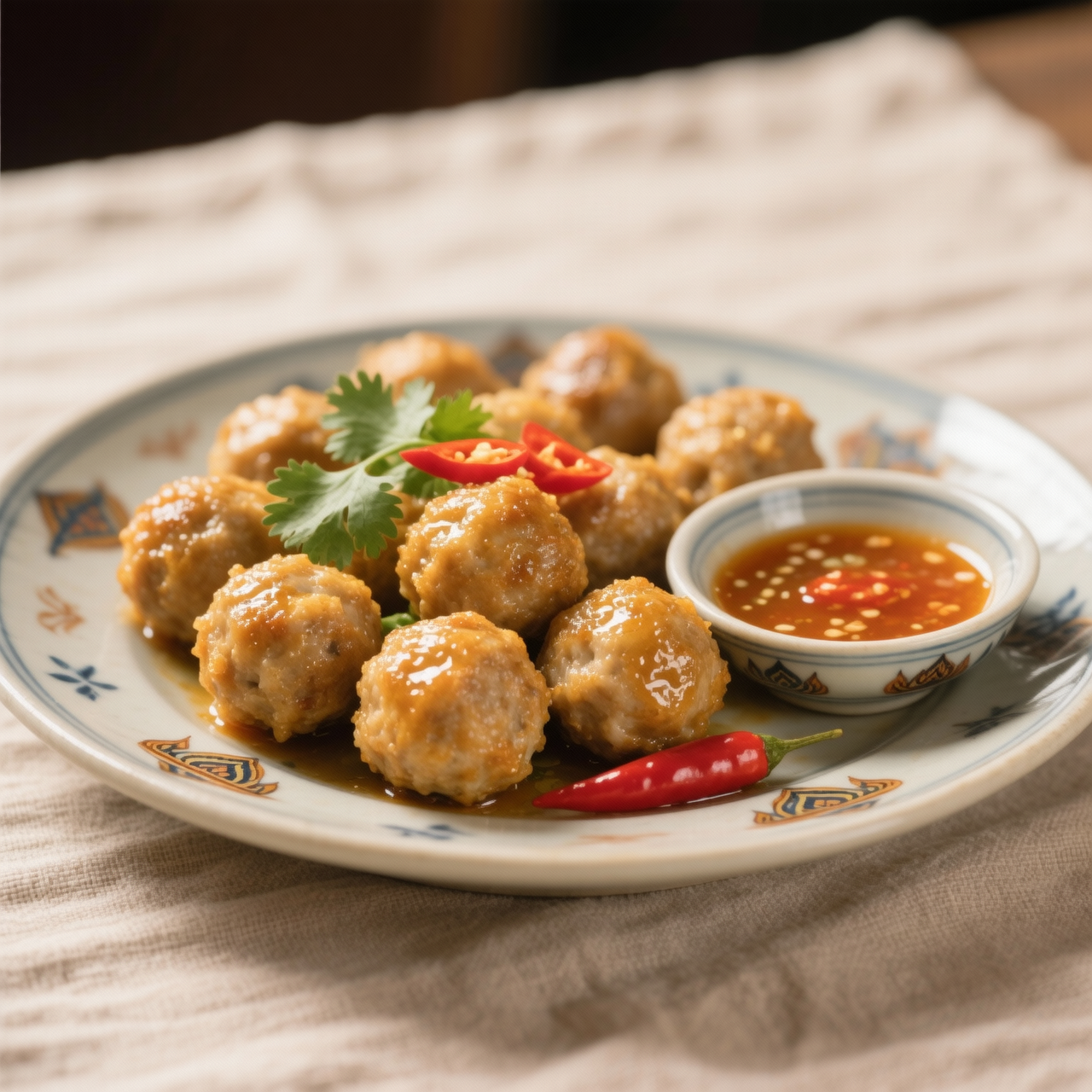
Thai Fish Balls
When I first tasted proper Thai fish balls at a night market in Chiang Mai, I was struck by how they practically bounced on the plate. That signature springiness comes from a careful, rhythmic pounding of fresh white fish with ice-cold water and aromatic pastes, a technique that transforms humble ingredients into something almost magical. Back home, I see so many people settling for those vacuum-packed versions in supermarket freezers, usually hovering around three pounds for a plastic tray of rubbery, filler-heavy discs. They taste overwhelmingly of salt and stabilizers, completely missing the delicate balance of lemongrass, galangal, and coriander root that defines authentic Thai snacks. Making them from scratch is absolutely worth the effort, not just for the superior flavor but because you control exactly what goes into your food. The biggest mistake beginners make is letting the fish mixture warm up during preparation; heat breaks the protein structure and turns your balls into mush. You must keep everything brutally cold, scrape the bowl down constantly, and beat the paste until it clings thickly to a spoon like a glossy ribbon. Another common pitfall is overworking the mixture with a food processor instead of a mortar or a heavy knife, which heats the flesh too quickly. If you respect the temperature, pound patiently, and fry them just until golden, you will get that deeply satisfying snap with every bite. It is a humble street food elevated by patience and real ingredients, and once you taste the difference, you will never look at the shop-bought tubs the same way again.
Nutrition
| Per serving | Calories | Protein | Carbs | Fat | Sat fat | Fibre | Sugar | Sodium |
|---|---|---|---|---|---|---|---|---|
| beginner | 215kcal | 23g | 4g | 11g | 2g | 0g | 1g | 510mg |
| intermediate | 195kcal | 21g | 9g | 9g | 2g | 1g | 2g | 510mg |
| expert | 265kcal | 26g | 10g | 13g | 2g | 1g | 2g | 620mg |
Per serving · Ava-estimated — a guide, not a clinical figure.
- 500 gwhite fish fillet— Skinless and boneless, kept very cold
- 40 gtapioca starch
- 4 piecegarlic clove— Peeled
- 2 piececilantro root— Thoroughly cleaned
- 25 mlfish sauce
- 10 ggranulated sugar
- 2 gground white pepper
- 60 mlice water— Essential for maintaining paste temperature during mixing
Store-bought Thai fish balls cost around eight dollars for a plastic tub and typically deliver a rubbery, spongy bite loaded with phosphates, excess sodium, and starchy fillers that mask stale spices. This beginner version skips the traditional mortar-and-pestle pounding and the hunt for hard-to-find pastes, relying instead on a simple food-processor method to achieve that signature springy, clean-tasting texture entirely from scratch. You will blend fresh lemongrass, garlic, shallots, and cilantro roots with mild white fish, then fold in a handful of pantry staples like cornstarch, fish sauce, and an egg white to lock in moisture. The key to success is keeping every ingredient ice-cold before processing; warm fish turns mushy rather than bouncy. After blending to a glossy paste, chill the mixture for twenty minutes to firm up. Test a single ball in simmering water—if it floats and rebounds when pressed, you are ready to shape the rest. Watch your oil temperature if pan-frying, aiming for a steady medium heat so the exterior crisps without splitting. These freeze beautifully raw, making them a reliable batch staple that outperforms any supermarket alternative in both texture and pure, bright flavor.
Equipment
- Food processor— standard bowl size works best
- Chilled mixing bowl— keep in freezer while prepping
- Heavy-bottomed pan or wok— for poaching or shallow frying
- Instant-read thermometer(optional)— highly recommended for monitoring oil heat
Method
- 1
Place the food processor bowl, a large mixing bowl, and a parchment-lined baking sheet in the freezer for 15 minutes before beginning.
Cold equipment prevents the fish proteins from breaking down into a mushy paste.
chilling prep~ 15 min - 2
Trim the tough outer layers from three lemongrass stalks, then pulse them with two shallots, four peeled garlic cloves, and a handful of cilantro roots into a coarse, fragrant paste.
Scrape down the sides halfway through to ensure even blending.
aromatic paste~ 1 min - 3
Add 500g of chilled boneless white fish fillets, one tablespoon of fish sauce, one teaspoon of cane sugar, one tablespoon of cornstarch, and one lightly beaten egg white, then process until the mixture becomes a thick, glossy dough that clings to the blade.
Stop and test the bounce immediately; over-processing warms the mix.
emulsification~ 2 minTricky bit - 4
Transfer the paste to your chilled bowl, cover tightly, and refrigerate for 20 minutes.
This resting period allows the starch to hydrate and the proteins to tighten.
protein setting~ 20 min - 5
Dip your hands in a bowl of ice water, scoop tablespoon-sized portions of the chilled paste, and roll them into smooth spheres before arranging on the lined tray.
Rewet your hands frequently to keep the paste from sticking.
portioning~ 5 min - 6
Heat one inch of neutral oil in your pan to 165°C, gently lower the balls in small batches, and fry for three to four minutes until golden and firm.
Fry in small batches to maintain a steady temperature and avoid soggy results.
shallow frying~ 4 minTricky bit - 7
Remove the cooked balls to a wire rack or paper towels to drain, then immediately bag and freeze any uncooked portions on the tray.
Raw balls freeze solid in two hours; cook directly from frozen by adding two minutes to frying time.
flash freezing~ 2 min
Cooking from frozen
Drop directly into hot oil or simmering broth straight from the freezer, adding two extra minutes to ensure they are cooked through.
Storage times are a guide — always use your judgement and store food safely.