
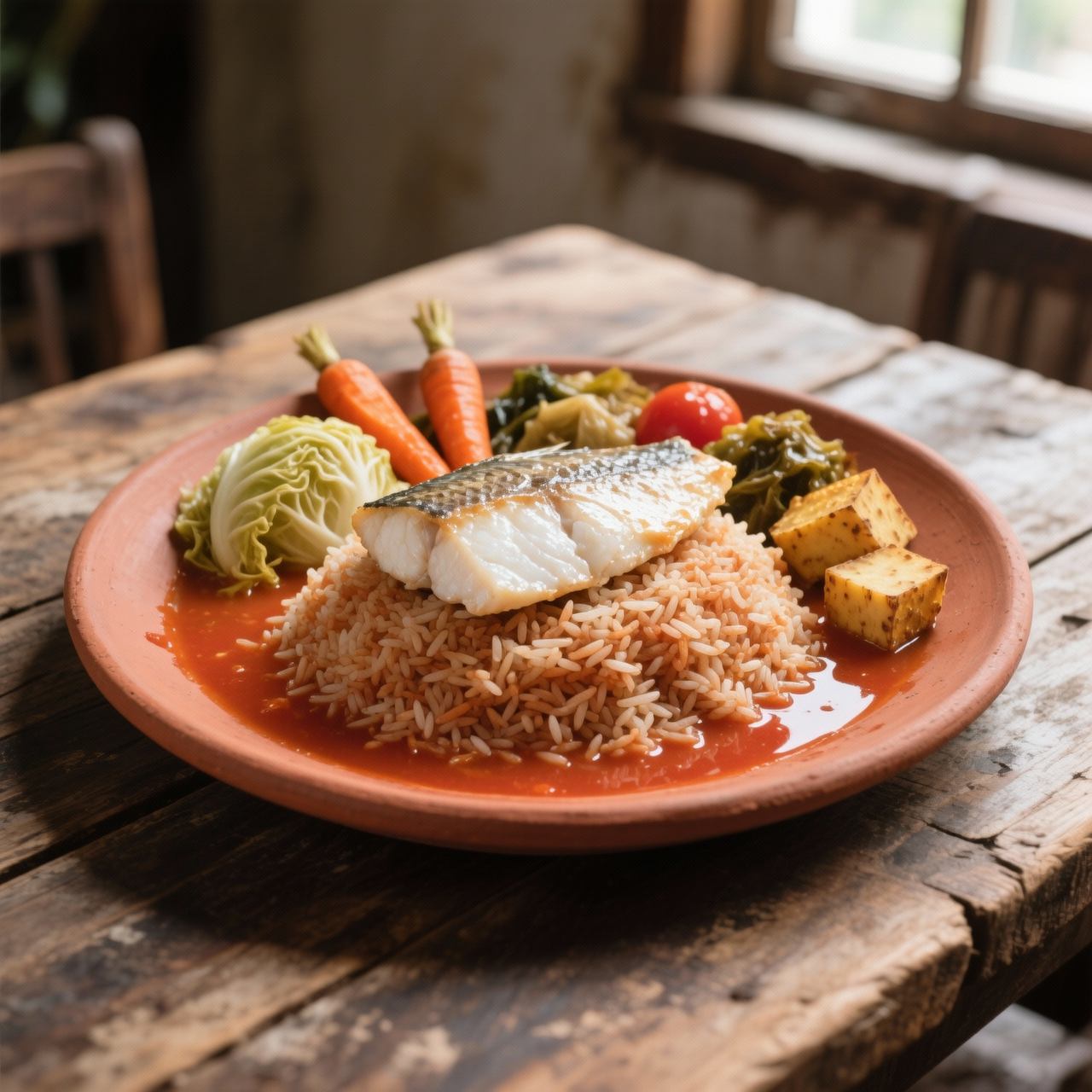
Thieboudienne
I’ve always believed that Thieboudienne is less a recipe and more a living archive of West African resilience. Born in the coastal kitchens of Saint-Louis, Senegal, this dish emerged from the collision of local Wolof traditions and the ingredients brought by early trade routes. When I first learned to prepare it, I quickly realized that the magic isn’t in rigid measurements but in rhythm. You start with broken rice, slowly coaxing it to absorb the deeply caramelized tomato base and the briny essence of whatever firm white fish you’ve chosen. It matters because it feeds more than hunger; it feeds memory, community, and a profound respect for what the land and sea offer. Yet, so many stumble at the very heart of it. The most common pitfall is rushing the tomato reduction. If you don’t let those crushed tomatoes fry down until they darken and the oil separates, you’ll lose the foundational depth that defines the dish. Another mistake is washing the rice too vigorously or skipping the crucial soak, which leaves the grains brittle and prone to turning into a gummy paste. I’ve also seen cooks drown the pot in liquid too early, forgetting that the rice must steam gently in its own aromatic broth. Thieboudienne demands patience, a willingness to adjust heat, and an ear for the quiet hiss of properly simmering rice. When you honor those rhythms, the result isn’t just a meal—it’s a testament to generations who turned humble ingredients into something extraordinary.
Nutrition
| Per serving | Calories | Protein | Carbs | Fat | Sat fat | Fibre | Sugar | Sodium |
|---|---|---|---|---|---|---|---|---|
| beginner | 950kcal | 41g | 124g | 31g | 5g | 7g | 12g | 1320mg |
| intermediate | 950kcal | 41g | 124g | 31g | 5g | 7g | 12g | 1320mg |
| expert | 950kcal | 41g | 124g | 31g | 5g | 7g | 12g | 1320mg |
Per serving · Ava-estimated — a guide, not a clinical figure.
- 600 gFirm white fish— cut into thick steaks or fillets
- 400 gLong-grain rice— rinsed until water runs clear
- 500 gRipe tomatoes— cored and quartered
- 200 gYellow onion— coarsely chopped
- 30 gGarlic cloves— peeled
- 2 wholeScotch bonnet peppers— left intact
- 30 gTamarind paste— seedless
- 15 gFermented fish seasoning— traditional guedj or yet
- 250 gCassava root— peeled and halved lengthwise
- 150 gCarrots— peeled and cut into thick rounds
- 200 gGreen cabbage— cored and cut into large wedges
- 120 mlNeutral cooking oil
- 1000 mlWater
- 10 gFine sea salt
- 2 wholeBay leaves
This level embraces strategic shortcuts to guarantee a confident first attempt without sacrificing the dish’s soul. A high-quality jarred tomato and fish base replaces the lengthy traditional reduction, saving you from hours of stirring. Pre-washed rice eliminates the tedious rinsing stage, while the fish is gently poached in the sauce rather than aggressively seared to prevent it from breaking apart. Watch the heat closely; commercial bases often contain wheat flour and stabilizers that will scorch or split if the pot boils too vigorously. Keep your vegetables uniformly chunky so they absorb flavor evenly during the accelerated cook time. Always taste before adding extra salt, as pre-mixed pastes carry heavy sodium loads. This version prioritizes accessibility and consistency, ensuring your first attempt yields a cohesive, deeply comforting plate that captures the essential rhythm of a classic Thieboudienne while keeping the process entirely manageable for a busy weeknight.
Equipment
- Large Dutch oven— heavy bottomed
- Wooden spoon— flat edge preferred
- Chef's knife
- Fine mesh strainer
Method
- 1
Heat the neutral oil in the Dutch oven over medium heat.
Oil should shimmer gently.
heating~ 1 min - 2
Sear the fish steaks for two minutes per side until lightly golden.
Do not crowd the pan.
pan-searing~ 2 minTricky bit - 3
Remove the fish and pour the jarred tomato base directly into the pot.
Scrape up any browned bits.
deglazing~ 1 min - 4
Stir in the water and bring the mixture to a gentle simmer.
Reduce heat immediately once bubbling.
simmering~ 5 min - 5
Nestle the vegetables into the bubbling liquid and cover the pot tightly.
Denser roots go in first.
braising~ 15 min - 6
Stir in the rinsed rice and arrange the whole scotch bonnet peppers on top.
Keep peppers intact for flavor.
folding~ 1 minTricky bit - 7
Reduce the heat to low and cook undisturbed until the rice is tender.
Lid stays on.
steaming~ 20 minTricky bit - 8
Remove from heat and let the pot rest covered for ten minutes.
Steam finishes the grains.
resting~ 10 min