
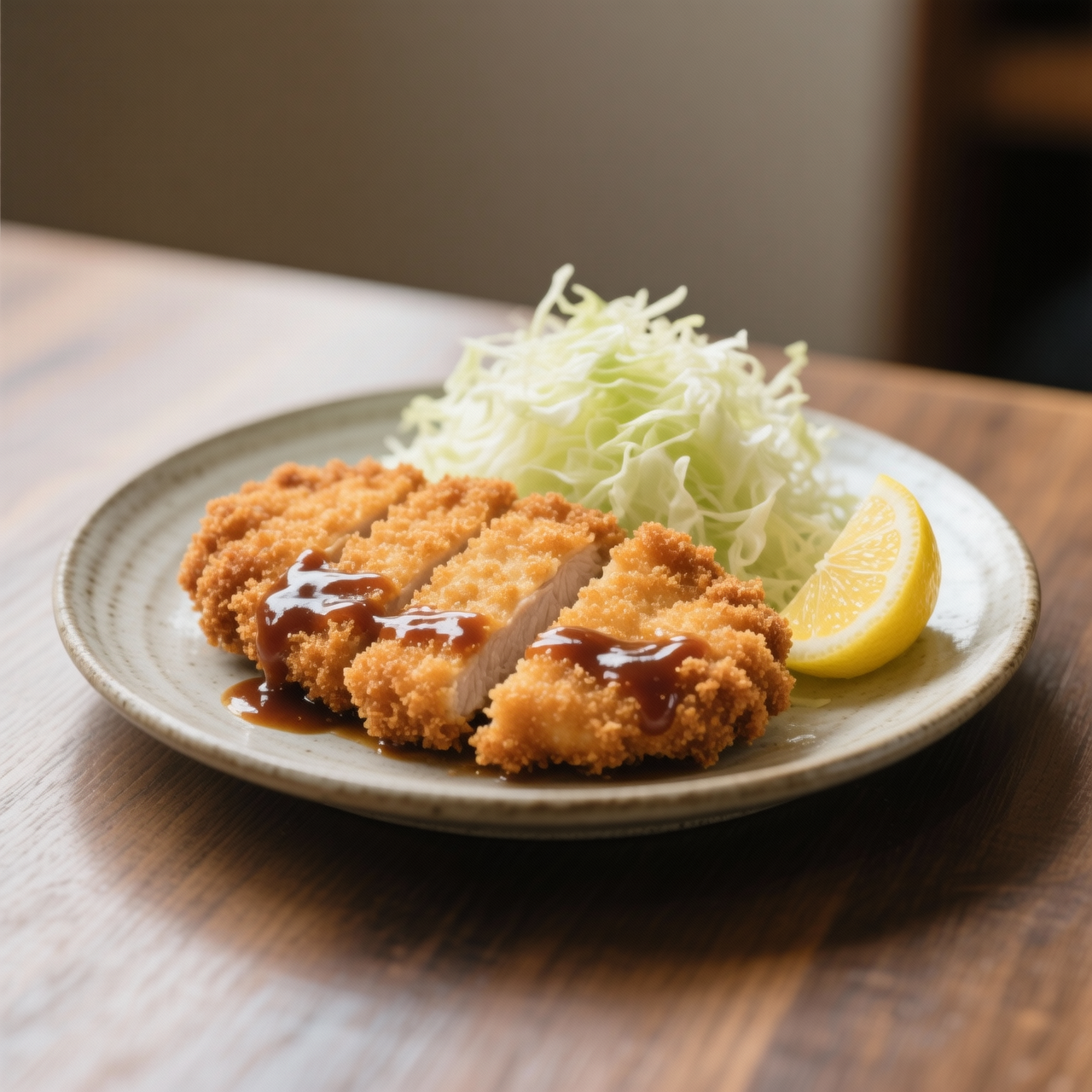
Tonkatsu (Pork Cutlet)
Tonkatsu arrived in Japan during the late nineteenth century as a brilliant adaptation of European breaded cutlets, quickly evolving into a beloved national comfort food that balances satisfying crunch with tender, juicy pork. I’ve always believed that making it from scratch isn’t just a culinary exercise; it’s a necessary rebellion against the sad reality of supermarket freezers. Those pre-packaged, microwaveable versions usually run around eight to twelve dollars for a few pale, uniformly shaped discs. They arrive soggy straight out of the box, taste overwhelmingly of industrial oil and preservatives, and completely lack the delicate contrast that defines the dish. When you build tonkatsu yourself, you control every layer. The common pitfalls I see beginners fall into are almost always temperature-related or rushed. Many skip the crucial resting step after seasoning the pork, which guarantees tough, contracted meat. Others pack the panko too tightly, creating a dense barrier that steams instead of shatters. Still others drop cutlets into lukewarm oil, resulting in a greasy, collapsed crust that soaks through in seconds. The secret is maintaining steady, moderate heat, pressing the crumbs lightly rather than packing them, and allowing the meat to come closer to room temperature before frying. When done right, the exterior audibly cracks while the interior remains succulent and mild, demanding nothing more than a sharp knife, a wedge of lemon, and a small bowl of finely shredded cabbage. This is why the from-scratch method matters: it transforms a simple weeknight protein into something genuinely memorable, proving that patience and proper technique will always outperform factory shortcuts.
Nutrition
| Per serving | Calories | Protein | Carbs | Fat | Sat fat | Fibre | Sugar | Sodium |
|---|---|---|---|---|---|---|---|---|
| beginner | 560kcal | 30g | 38g | 26g | 5g | 2g | 2g | 480mg |
| intermediate | 460kcal | 30g | 26g | 20g | 6g | 1g | 8g | 650mg |
| expert | 485kcal | 34g | 28g | 23g | 5g | 2g | 9g | 720mg |
Per serving · Ava-estimated — a guide, not a clinical figure.
- 400 gpork loin chop— about 1.5 cm thick, lightly scored around the edges to prevent curling
- 5 gsalt— fine sea salt
- 2 gblack pepper— freshly ground
- 60 gall-purpose flour— for dredging
- 2 largeegg— lightly beaten until uniform
- 150 gpanko breadcrumb— Japanese-style, medium grind
- 1000 mlvegetable oil— neutral high-smoke-point oil for deep frying
- 300 ggreen cabbage(optional)— core removed, very finely shredded
- 60 mltonkatsu sauce(optional)— store-bought or homemade
- 1 wholelemon(optional)— cut into wedges for serving
This beginner-friendly Tonkatsu focuses on mastering the essential three-step breading process without overwhelming your kitchen. Unlike the frozen, pre-cooked versions found in supermarkets—which often cost nearly as much as a proper pork loin yet deliver a soggy, cardboard-like crust and overly salty, artificial seasoning—this from-scratch method guarantees a shatteringly crisp exterior and juicy meat. We skip complex tempura-style batters and instead rely on a straightforward flour-egg-panko sequence that’s highly forgiving. The key difference here is technique pacing: you’ll learn to score the meat lightly to prevent curling, press the panko firmly so it actually sticks during frying, and maintain a steady oil temperature using simple visual cues rather than expensive thermometers. Watch closely for the oil’s surface to shimmer and ripple gently; if it smokes, it’s too hot and will burn the crumbs before the pork cooks through. Drain the finished cutlets on a wire rack instead of paper towels to keep the bottom crisp. Serve immediately alongside a quick, hand-whisked cabbage salad and a simple scratch-made dipping sauce. With just a few mindful steps, you’ll achieve a restaurant-quality result that completely outshines any store-bought alternative.
Equipment
- Heavy-bottomed skillet— Maintains even oil temperature for consistent frying
- Wire cooling rack— Prevents steam from making the bottom crust soggy
- Shallow baking dishes— Three separate plates for the breading station
Method
- 1
Trim excess fat and score the edges of each pork loin cutlet every half inch, then pound them to an even half-inch thickness.
Scoring prevents curling during frying.
pounding~ 5 min - 2
Season the pork generously on both sides with salt and freshly ground black pepper.
Salt early to draw moisture and season the meat deeply.
dry brining~ 1 min - 3
Set up three shallow dishes with plain flour, lightly beaten eggs, and coarse panko breadcrumbs.
Keep one hand wet and one hand dry to prevent clumping.
mise en place~ 2 min - 4
Dredge each cutlet in flour, dip completely into the egg, then press firmly into the panko until fully coated.
Pressing ensures the crumbs adhere and create a solid crust.
breading~ 4 minTricky bit - 5
Heat neutral oil in a heavy-bottomed skillet until it shimmers and a dropped breadcrumb sizzles immediately.
Maintain medium heat to avoid burning the exterior before the pork cooks.
shallow frying~ 5 minTricky bit - 6
Fry the cutlets in batches for three to four minutes per side until deep golden brown.
Do not overcrowd the pan, which drops the oil temperature.
pan frying~ 7 min - 7
Transfer the finished cutlets to a wire rack and let them rest for two minutes before slicing.
Resting allows juices to redistribute and the crust to set.
resting~ 2 min
Cooking from frozen
Thaw overnight in the fridge, then reheat in a 200C oven for ten minutes to restore the shattering crust without drying the meat.
Storage times are a guide — always use your judgement and store food safely.