
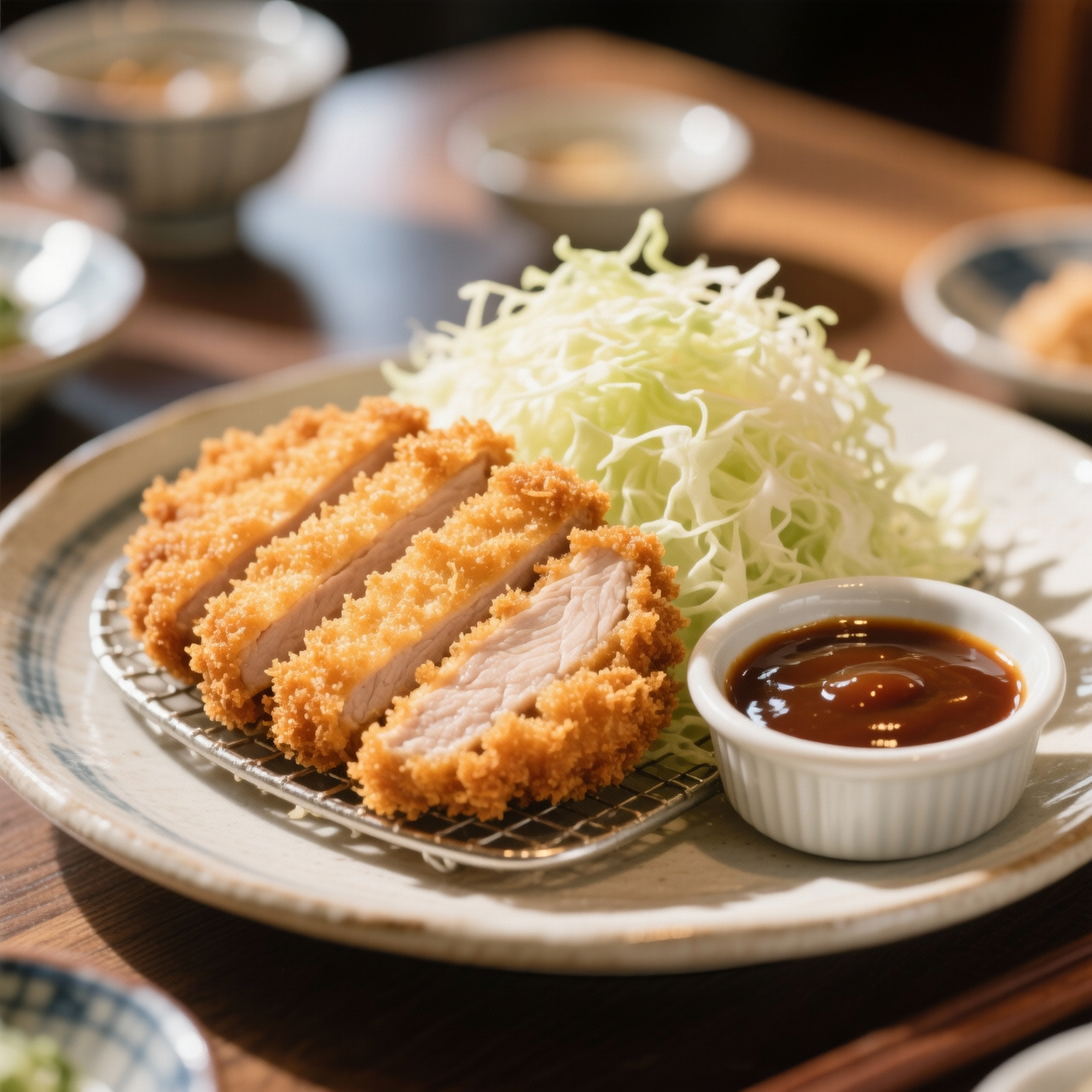
Tonkatsu Sauce
I have always believed that a great tonkatsu sauce should not merely coat a cutlet, but actively elevate it. Born in Japan during the late nineteenth century as a localized adaptation of Western demi-glace and Worcestershire sauces, this tangy brown condiment quickly established its own distinct culinary identity. It represents a masterclass in balancing sweet, sour, salty, and umami notes without relying on animal stocks or heavy meat reductions. When I decided to develop a fully vegan iteration, my primary objective was to preserve that precise flavor equilibrium while allowing fermented vegetables and fruit reductions to provide natural depth. The true secret lies in patience rather than complexity. I frequently see home cooks rush the simmering phase, which results in a thin, one-dimensional liquid that lacks body. Others compensate by pouring in excessive sweeteners, completely drowning out the bright acidity that defines an authentic profile. I have watched countless batches fail because the resting period was skipped entirely. Those quiet hours after the heat is turned off are essential, giving the sharp edges of rice vinegar and grated apple time to soften into a cohesive, velvety syrup. Crafting it yourself grants complete control over viscosity and salt levels, eliminating the artificial thickeners found in commercial jars. A successful batch must coat the back of a spoon without running off. Whether you are finishing a plant-based breaded cutlet or glazing roasted seasonal vegetables, this sauce delivers a nostalgic, restaurant-grade richness to simple weeknight plates. Trust the low heat, respect the resting phase, and always allow the mixture to cool completely before transferring to glass. It remains a quiet pantry staple that consistently turns ordinary meals into deeply comforting experiences.
Nutrition
| Per serving | Calories | Protein | Carbs | Fat | Sat fat | Fibre | Sugar | Sodium |
|---|---|---|---|---|---|---|---|---|
| beginner | 35kcal | 1g | 8g | 0g | 0g | 1g | 6g | 420mg |
| intermediate | 60kcal | 1g | 14g | 0g | 0g | 1g | 11g | 420mg |
| expert | 138kcal | 2g | 30g | 1g | 0g | 2g | 23g | 1050mg |
Per serving · Ava-estimated — a guide, not a clinical figure.
- 60 mlsoy sauce— Use a standard Japanese variety for authentic flavor
- 60 mltomato ketchup
- 40 mlvegan Worcestershire sauce— Verify label for fish-free certification
- 30 mlmirin
- 25 ggranulated sugar
- 100 gapple— Fuji or Gala variety, peeled and finely grated
- 5 ggarlic— Freshly minced
- 5 gginger— Freshly grated
Focus on a beginner approach that uses pre-measured pantry staples like tomato paste, soy sauce, and a splash of rice vinegar to mimic the complex traditional blend without hours of simmering fruit and spices. The goal is a quick, reliable tangy-sweet glaze that coats evenly. We will guide you through gentle simmering to marry the flavors without scorching the natural sugars. Watch closely for the sauce to coat the back of a spoon, which serves as your primary visual cue that it has reduced to the perfect consistency. If it thickens too quickly during the simmer, a tablespoon of water will instantly rescue it. Always taste as you progress; beginners often underestimate how much the acidity balances the sweetness, so adjust with a pinch of sugar or a dash of vinegar until it hits that familiar restaurant-style punch. This method skips tedious grinding and long reductions, delivering a confident, foolproof result in under twenty minutes. Store leftovers in a sealed jar in the fridge for up to two weeks, and reheat gently with a splash of water to restore its pourable texture.
Equipment
- Small saucepan— heavy-bottomed prevents hot spots
- Silicone whisk— keeps sugars moving during heat
- Measuring spoons— precision matters for balance
Method
- 1
Whisk together the tomato paste, soy sauce, rice vinegar, brown sugar, and vegan Worcestershire sauce in a small saucepan.
Ensure the paste is fully dissolved before applying heat.
dissolving~ 1 min - 2
Place the pan over medium-low heat and gently warm the mixture until small bubbles form around the edges.
Do not let it boil vigorously or the sugars will scorch.
simmering~ 2 minTricky bit - 3
Lower the heat and stir the sauce continuously for five minutes until it thickens enough to coat the back of a spoon.
Draw a line with your finger; it should hold its shape without running.
reduction~ 5 min - 4
Remove the pan from the stove and allow the sauce to cool completely at room temperature before storing.
The viscosity will increase naturally as it drops in temperature.
resting~ 15 min
Cooking from frozen
Thaw overnight in the refrigerator, then whisk vigorously until the emulsion fully recombines and the texture is smooth.
Storage times are a guide — always use your judgement and store food safely.