
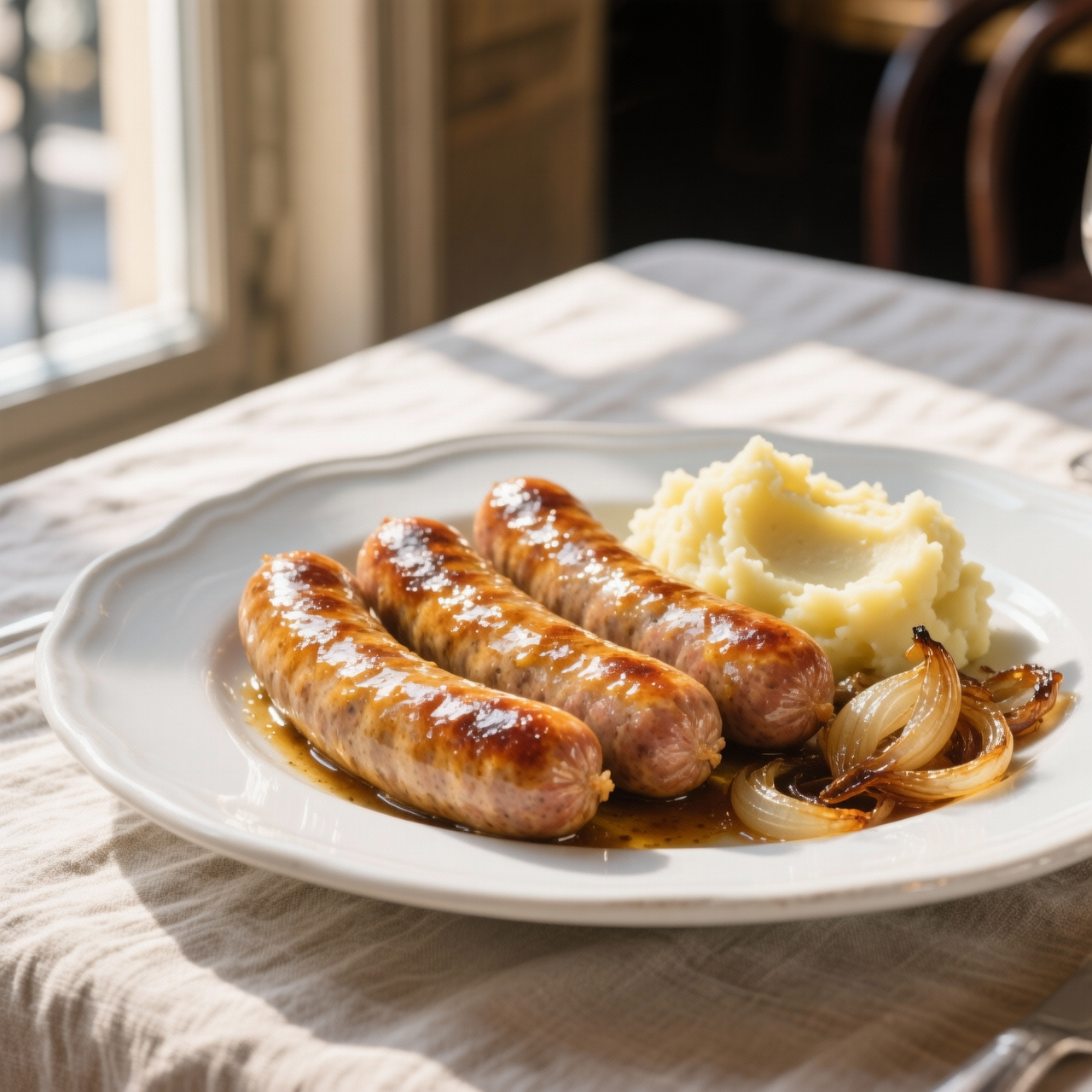
Toulouse sausages
I still remember my first encounter with a proper Toulouse sausage in a cramped butcher’s shop near the Garonne, where the coarsely chopped pork and sharp garlic scent cut through the damp air. That experience ruined me for supermarket packs, which typically run five or six pounds for a plastic tray of homogenised, rubbery links that taste overwhelmingly of salt, artificial stabilisers, and vague herbs. Shop-bought versions are packed with rusk, phosphate binders, and preservatives to survive long supply chains, but they sacrifice everything that makes a true charcuterie link sing. Making them from scratch isn’t just about reclaiming flavour; it’s about respecting the old French ratio of roughly eighty percent lean pork shoulder to twenty percent back fat, hand-chopped to keep the texture open and juicy. The biggest pitfall I see home cooks fall into is overworking the meat or skipping the rest, which turns a tender sausage into a dense, springy brick. You also need to keep everything brutally cold during mixing and stuffing, otherwise the fat will smear and leak out during cooking. I always recommend making a double batch, linking them up, and freezing them flat on a tray before bagging, because they hold their shape and flavour remarkably well. When you finally bite into your own version, properly seasoned with fresh thyme, crushed black pepper, and just enough garlic to wake the palate without overpowering the pork, you’ll never look at a vacuum-sealed pack again. It takes a quiet Saturday morning and a bit of patience, but the reward is a deeply savoury, authentically French staple that actually tastes of what it’s supposed to be.
Nutrition
| Per serving | Calories | Protein | Carbs | Fat | Sat fat | Fibre | Sugar | Sodium |
|---|---|---|---|---|---|---|---|---|
| beginner | 450kcal | 22g | 2g | 38g | 13g | 1g | 1g | 640mg |
| intermediate | 480kcal | 28g | 2g | 38g | 13g | 0g | 1g | 820mg |
| expert | 360kcal | 26g | 2g | 28g | 9g | 0g | 0g | 820mg |
Per serving · Ava-estimated — a guide, not a clinical figure.
- 800 gpork shoulder— trimmed and cubed for grinding
- 200 gpork fatback— kept chilled to maintain emulsion
- 18 gfine sea salt— standard sausage curing ratio
- 3 gblack pepper— freshly cracked
- 10 ggarlic— finely minced
- 1 gnutmeg(optional)— freshly grated
- 3 mhog casing— soaked and rinsed before stuffing
This beginner-friendly approach strips away the intimidation factor of traditional charcuterie while keeping the recipe entirely from scratch. Shop-bought Toulouse sausages typically cost £4–£6 per pack, yet they often rely on cheap fillers, excess water, and artificial preservatives that dilute the pork’s rich, herby flavour and create a mushy, inconsistent texture. Here, you will work with just a few recognisable cuts of pork, fresh aromatics, and simple seasoning, using a food processor instead of a professional grinder to achieve the perfect coarse grind. The key difference at this level is temperature management and simplified shaping; you will skip the traditional meat stuffer and instead use a piping bag or chilled hands to form neat, uniform links directly onto a tray. Chill the mixture thoroughly before cooking to keep the fat intact and prevent crumbling. Watch for a gentle sizzle rather than a violent fry to allow the links to cook through without bursting. This forgiving method guarantees juicy, deeply flavoured sausages that snap when cooked, and the recipe scales effortlessly so you can batch-produce, freeze, and pull out homemade links whenever you need a quick, wholesome weeknight dinner.
Equipment
- Food processor— ensure blades and bowl are chilled before use
- Large mixing bowl— metal or glass retains cold better than plastic
- Piping bag with wide tip(optional)— substitute with two chilled spoons if unavailable
- Heavy-bottomed skillet— cast iron or stainless steel for even heat
Method
- 1
Pulse chilled pork shoulder and pork back fat in a food processor until the texture resembles coarse breadcrumbs.
Work in short bursts and keep everything cold to stop the fat from smearing.
pulsing~ 2 min - 2
Transfer the ground meat to a chilled bowl and vigorously mix in minced garlic, chopped shallots, fresh parsley, thyme, sea salt, and black pepper.
Mix until the meat becomes slightly tacky, indicating proper protein extraction.
binding~ 2 min - 3
Cover the bowl tightly and refrigerate until the mixture is completely cold and firm to the touch.
Firm fat ensures clean shaping and prevents the links from falling apart.
chilling~ 1 min - 4
Scoop the mixture into a piping bag fitted with a wide tip, or keep it in a bowl and chill until firm.
Lightly oil your hands or the bag to prevent sticking.
shaping~ 5 minTricky bit - 5
Pan-fry the links in a preheated heavy skillet with a thin layer of neutral oil over medium heat, turning until deeply golden and cooked through.
Avoid crowding the pan and keep the heat steady to prevent casing burst.
searing~ 15 min
Cooking from frozen
Thaw overnight in the refrigerator, then pan-fry gently to restore the casing's snap and warm the interior.
Storage times are a guide — always use your judgement and store food safely.