
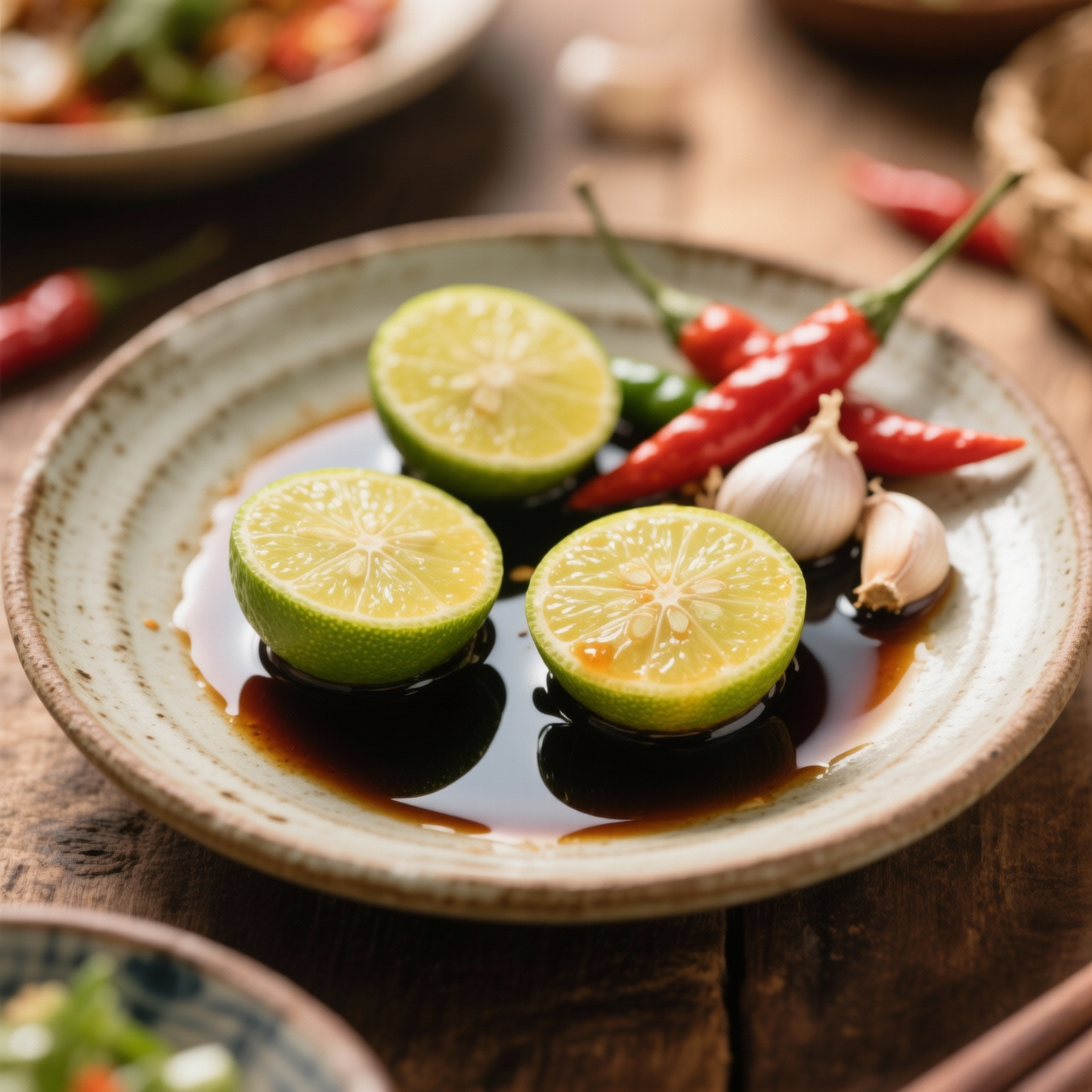
Toyomansi
Toyomansi is one of those quiet pillars of Filipino cooking that rarely gets a spotlight but absolutely anchors the table. When I first learned how to make it, I thought it was just soy sauce and citrus squeezed together, but it’s really about balance and respect for the ingredients. Historically, it emerged as a practical adaptation of the Chinese soy sauce brought by merchants, married with the intensely fragrant, tart calamansi that grows abundantly across the archipelago. It matters because it bridges the gap between heavy, savory mains and the bright acidity needed to cut through them, whether you’re dipping grilled meats, drizzling over steamed fish, or tossing with rice. The beauty lies in its simplicity, but that’s exactly where the pitfalls hide. Many people rush it, using bottled lime juice or cheap, overly salty soy sauce, which turns it into a one-dimensional brine instead of a living, aromatic dip. I’ve seen it left sitting on counters for hours, oxidizing and turning bitter, or made with too much sugar that masks the citrus entirely. The secret is treating it like a fresh vinaigrette: use good-quality, naturally brewed soy sauce, squeeze the calamansi by hand right before serving, and stir gently. Let it rest for just ten minutes so the flavors can introduce themselves to each other without drowning out the delicate floral notes. When done right, it’s bright, savory, and endlessly adaptable, a testament to how Filipino food turns everyday staples into something quietly profound.
Nutrition
| Per serving | Calories | Protein | Carbs | Fat | Sat fat | Fibre | Sugar | Sodium |
|---|---|---|---|---|---|---|---|---|
| beginner | 15kcal | 1g | 2g | 0g | 0g | 0g | 1g | 420mg |
| intermediate | 75kcal | 2g | 4g | 4g | 1g | 0g | 3g | 720mg |
| expert | 28kcal | 1g | 5g | 0g | 0g | 0g | 4g | 450mg |
Per serving · Ava-estimated — a guide, not a clinical figure.
- 30 mlSoy sauce— Light or regular Filipino-style variety
- 4 pieceCalamansi— Roll firmly before halving and squeezing
- 5 gSugar(optional)— White or brown
- 2 pieceChili(optional)— Bird's eye variety, thinly sliced
This beginner-friendly version strips away guesswork, focusing on reliable shortcuts and clear balancing cues to guarantee a foolproof dipping sauce on your first try. Instead of hunting for fresh calamansi or mincing raw garlic, you will use bottled juice and jarred garlic paste, which deliver consistent results. The goal here is confidence: you will learn how to layer salty, tangy, and slightly sweet notes without overcomplicating the process. Start by combining your base ingredients in a small bowl, then stir vigorously to fully integrate the flavors before taking a crucial taste test. Because commercial soy sauce and bottled citrus vary widely in saltiness and acidity, adjust with tiny increments of extra citrus or sugar until the profile matches your palate. Let the mixture rest for ten minutes at room temperature; this brief sitting period allows sharp edges to mellow into a harmonious blend. Keep a clean spoon handy for tasting to avoid contamination, and store leftovers in a sealed jar for up to a week.
Equipment
- Small mixing bowl— glass or ceramic makes cleanup easier
- Measuring spoons— essential for precise flavor balancing
Method
- 1
Pour the soy sauce into a small mixing bowl.
Use a standard light soy sauce for authentic flavor.
measuring~ 0 min - 2
Add the bottled calamansi juice and garlic paste, then whisk until fully combined.
Shake the bottled juice well before pouring for consistent acidity.
blending~ 0 min - 3
Taste the mixture with a clean spoon and adjust with extra citrus or a pinch of sugar as needed.
Wait ten minutes before final adjustments so the sharpness mellows.
balancing~ 10 min
Storage times are a guide — always use your judgement and store food safely.