
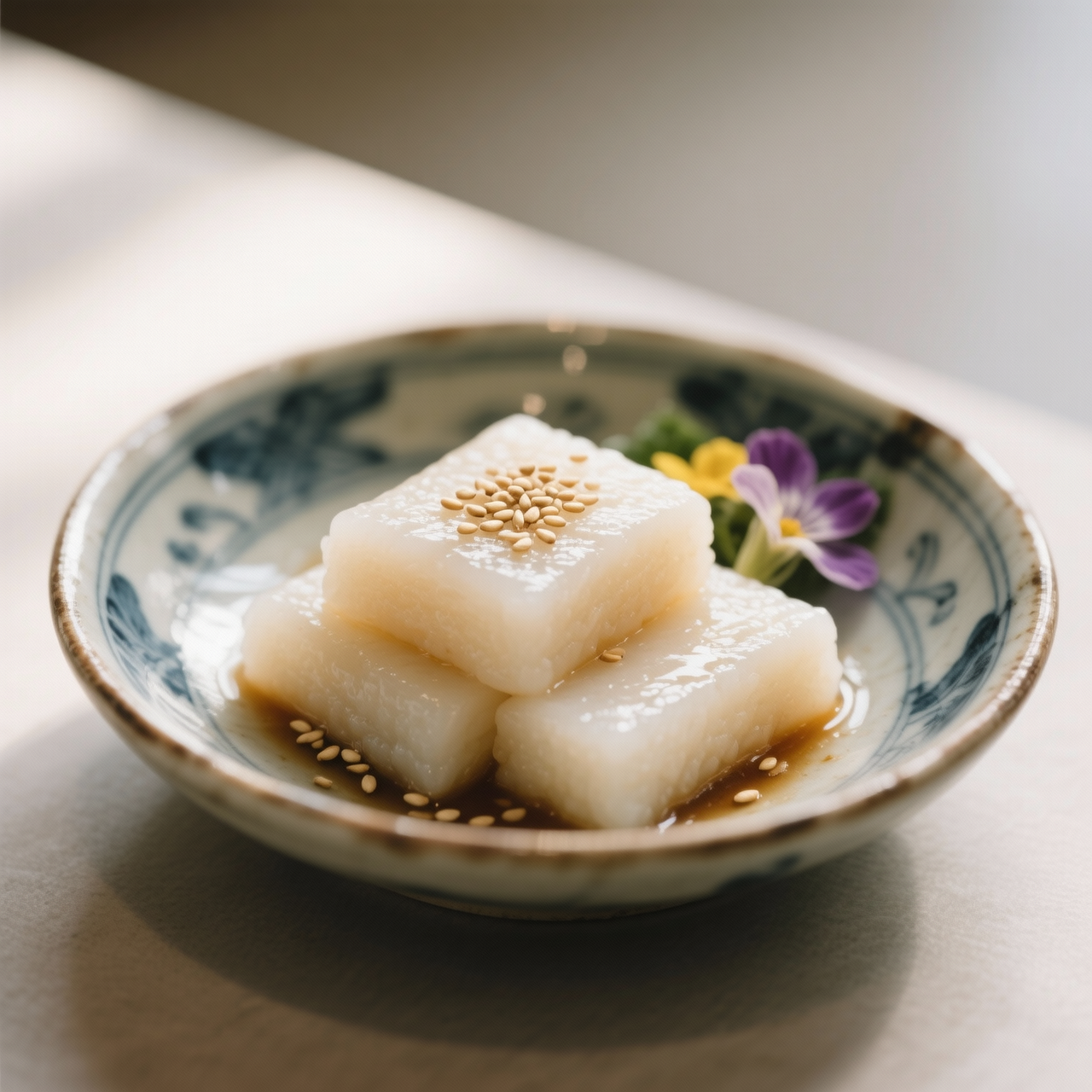
Tteok (Rice Cakes)
I still remember the first time I tried to shape garaetteok by hand, only to end up with a brittle, chalky cylinder that cracked the moment I sliced it. Traditional Korean tteok isn’t just a side dish; it’s a centuries-old practice born from rice cultivation, where pounding and steaming transformed humble grains into resilient, chewy staples that sustained families through long winters. Today, you can grab a vacuum-packed log at any Asian grocer for four or five dollars, but those commercial blocks are loaded with preservatives, often stale from the start, and completely lack that springy, toothsome bite that makes homemade tteok so deeply satisfying. Making it yourself strips away the additives and returns control to your hands, especially since a single batch easily yields enough to portion and freeze for weeks. The real trick lies in respecting the dough’s hydration. Too little water and it will shatter; too much and it becomes a gummy mess that won’t hold its cylindrical shape. I always steam the dough just until it turns glossy and translucent, then knead it vigorously while it’s still too hot to comfortably hold—that heat is what aligns the starch molecules into that signature elastic network. Rolling it evenly takes patience, but a light dusting of toasted sesame oil on your palms prevents sticking without altering the clean, neutral flavor. Once cooled, slice it into uniform coins, lay them flat on a parchment-lined tray, and freeze them solid before transferring to bags. When you need them later, they’ll go straight from frozen into a simmering broth or a hot skillet, thawing just enough to absorb sauces while keeping their structure intact. It’s a quiet, rewarding process that turns a simple pantry staple into something genuinely alive.
Nutrition
| Per serving | Calories | Protein | Carbs | Fat | Sat fat | Fibre | Sugar | Sodium |
|---|---|---|---|---|---|---|---|---|
| beginner | 370kcal | 4g | 78g | 1g | 0g | 1g | 0g | 160mg |
| intermediate | 195kcal | 4g | 42g | 2g | 0g | 1g | 0g | 115mg |
| expert | 225kcal | 4g | 47g | 1g | 0g | 1g | 0g | 12mg |
Per serving · Ava-estimated — a guide, not a clinical figure.
- 500 gRice flour— Short-grain white rice flour or dedicated tteok flour yields the best chewy texture
- 200 gWater— Room temperature; add gradually as humidity affects absorption
- 3 gSalt(optional)— Fine sea salt or kosher salt to tighten the dough structure
Store-bought tteok costs around $6 to $8 per 500-gram package and often arrives stale, hardened, or packed with preservatives and modified starches that dull the authentic chew. This beginner-friendly method skips the traditional multi-day soaking, steaming, and pounding of whole rice, replacing it with a straightforward, from-scratch rice flour dough. You will mix just three pantry staples, knead until pliable, hand-roll into logs, and steam them to achieve the signature bouncy, elastic texture. Watch closely for proper dough hydration; too much water makes it gummy, while too little causes cracking. The kneading stage is forgiving—push, fold, and turn until the surface is completely smooth. Hand-rolling replaces industrial extrusion, giving you uniform logs that slice cleanly for soups, stir-fries, or freezing. This approach guarantees a clean, fresh rice flavor and a superior mouthfeel that frozen grocery brands simply cannot match, all while keeping the process approachable and entirely additive-free.
Equipment
- Large mixing bowl— at least 3-quart capacity
- Heavy-bottomed pot with steamer insert— bamboo or metal steamer works
- Rolling pin— smooth wooden or silicone preferred
- Sharp chef's knife— keep blade lightly oiled
- Parchment paper— prevents sticking during steaming
Method
- 1
Combine rice flour, water, and salt in a large bowl until a shaggy dough forms.
Add water gradually to avoid a sticky mess.
hydrating~ 2 min - 2
Knead the mixture on a lightly floured surface for five minutes until smooth and pliable.
The dough should feel like soft playdough without cracking.
kneading~ 5 minTricky bit - 3
Divide the dough into four equal pieces and roll each into a long, even log about two centimeters thick.
Keep thickness uniform to ensure even cooking.
rolling~ 3 min - 4
Steam the logs in a lined basket for twenty minutes until firm and translucent at the edges.
Line with parchment or cabbage leaves to prevent sticking.
steaming~ 20 minTricky bit - 5
Transfer the hot logs to a cutting board, brush lightly with sesame oil to prevent sticking, and slice diagonally into two-centimeter pieces.
Work quickly while pliable; they harden as they cool.
brushing~ 3 min - 6
Let the slices cool completely before packing into airtight bags for freezing or immediate use.
Flash freeze on a tray first to keep individual pieces separate.
cooling~ 15 min
Cooking from frozen
Drop frozen slices directly into boiling broth or a lightly oiled pan; they will soften and brown without becoming mushy.
Storage times are a guide — always use your judgement and store food safely.