
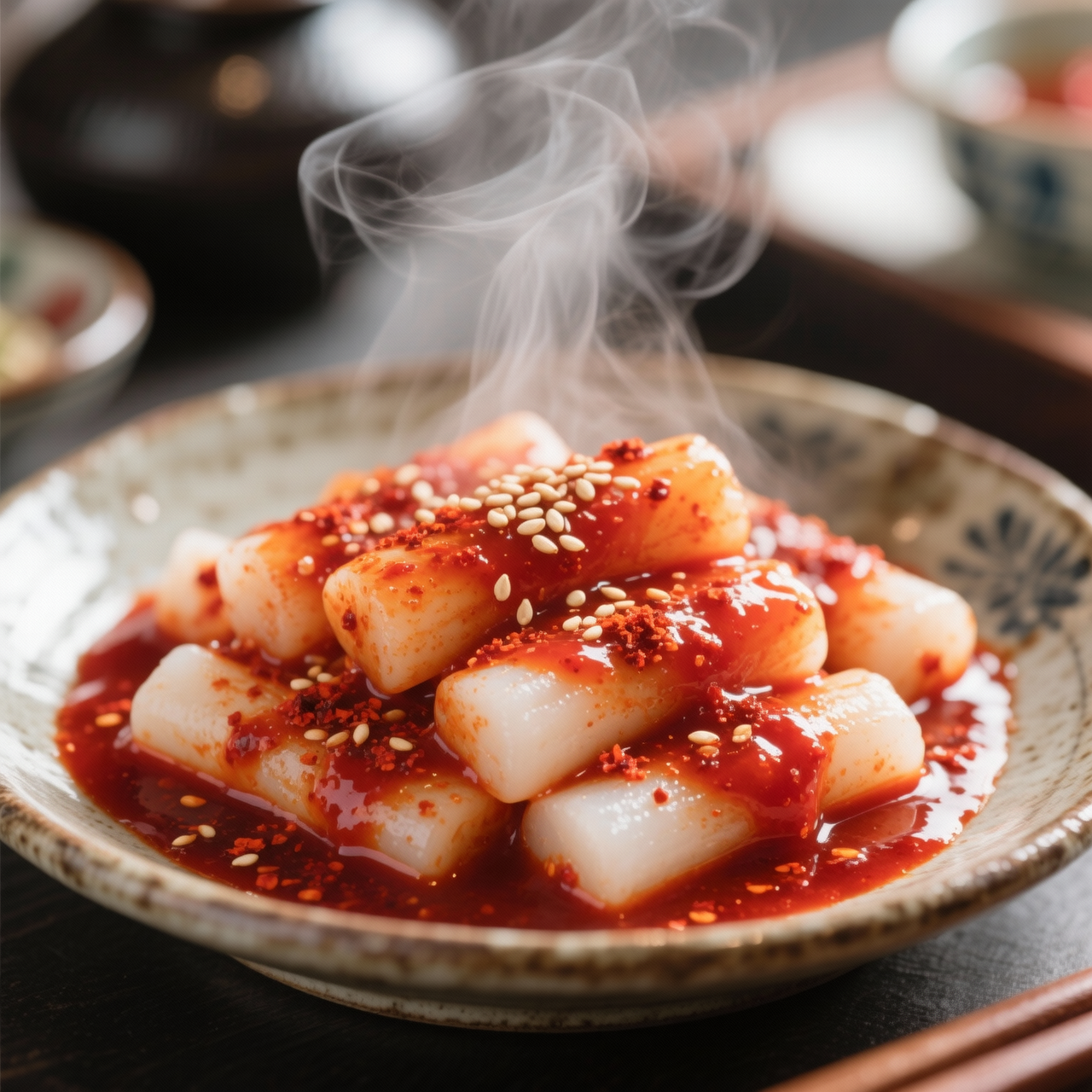
Tteokbokki Sauce
I’ve always believed that the soul of Korean street food lives in its sauces, and none captures that vibrant, communal energy quite like tteokbokki sauce. Born from post-war ingenuity and refined over decades in bustling market stalls across South Korea, this glossy, sweet-spicy glaze transformed simple rice cakes into a cultural phenomenon. At its core, it’s a masterclass in balancing gochujang’s fermented depth with the bright sweetness of sugar or syrup and the savory backbone of soy sauce. What matters most to me about this recipe is its accessibility and adaptability, especially when keeping it vegan. Traditional versions sometimes lean on anchovy broth or fish sauce for umami, but a carefully layered plant-based foundation using kelp, mushrooms, or a touch of toasted sesame oil achieves the exact same resonant depth without compromising the dish’s ethical footprint. When I make it, I focus on coaxing out the gochujang’s natural complexity by gently simmering it just long enough to mellow the raw edge without burning the sugars. The most common pitfall I see is rushing the reduction or overloading the pan with water, which leaves the sauce thin and one-dimensional. It needs patience and steady, low heat to thicken into that signature clingy consistency that coats every ingredient perfectly. Another frequent misstep is using low-quality gochujang that relies heavily on corn syrup rather than real fermented soybeans and glutinous rice, which robs the sauce of its authentic, lingering heat. Treat this sauce as a living base rather than a static recipe, adjust the heat to your palate, and let it bubble slowly until it glistens. That’s how you honor its roots while keeping it entirely plant-forward.
Nutrition
| Per serving | Calories | Protein | Carbs | Fat | Sat fat | Fibre | Sugar | Sodium |
|---|---|---|---|---|---|---|---|---|
| beginner | 135kcal | 2g | 22g | 4g | 1g | 2g | 13g | 720mg |
| intermediate | 118kcal | 3g | 23g | 2g | 0g | 2g | 14g | 760mg |
| expert | 145kcal | 2g | 28g | 4g | 1g | 2g | 21g | 720mg |
Per serving · Ava-estimated — a guide, not a clinical figure.
- 60 ggochujang— Verify vegan certification to avoid hidden seafood or fish sauce additives
- 15 ggochugaru— Korean chili flakes, fine or coarse grind
- 30 mlsoy sauce— Use tamari or certified vegan soy sauce
- 30 mlrice syrup— Maple syrup or cane sugar can be substituted
- 6 ggarlic— Fresh cloves, finely minced or pressed
- 15 mltoasted sesame oil— Provides essential nutty aroma
- 240 mlwater— Or unsalted vegetable broth for deeper flavor
This beginner-friendly version relies on trusted store-bought shortcuts to deliver reliable results without intimidating prep work. You will use ready-made gochujang and pre-measured liquid seasonings, bypassing the need to grind dried chilies or simmer homemade dashi. The key to success here is temperature control and patience. Keep your heat firmly at medium-low and stir constantly with a silicone spatula to prevent the natural sugars in the paste from scorching against the pan bottom. Watch for the sauce to transition from a watery sheen to a glossy, syrupy consistency that easily coats the back of a spoon. If it thickens too aggressively before your rice cakes are ready, simply splash in a tablespoon of water and keep moving. Taste at the halfway mark and gently adjust the balance by adding a pinch of sugar or a drop of soy sauce until it hits your preferred sweet-spicy ratio. This forgiving method guarantees a smooth, restaurant-quality coating on your very first attempt.
Equipment
- Heavy-bottomed saucepan— non-stick works well
- Silicone spatula— flexible edge prevents scorching
- Measuring spoons— standard set
Method
- 1
Whisk together the gochujang, soy sauce, sweetener, and water in a cold saucepan until completely smooth.
Ensure no lumps remain before heating.
emulsifying~ 1 min - 2
Place the pan over medium-low heat and stir constantly until the mixture begins to bubble gently.
Never walk away during this phase.
simmering~ 3 minTricky bit - 3
Continue cooking and stirring until the sauce coats the back of a spoon thickly.
If it splatters, lower the heat immediately.
reducing~ 4 min - 4
Remove from the heat and let the sauce rest for two minutes before tossing.
Resting allows the starches to fully set.
resting~ 2 min
Cooking from frozen
Thaw overnight in the refrigerator, whisk in a splash of water to restore fluidity, and warm gently over low heat.
Storage times are a guide — always use your judgement and store food safely.