
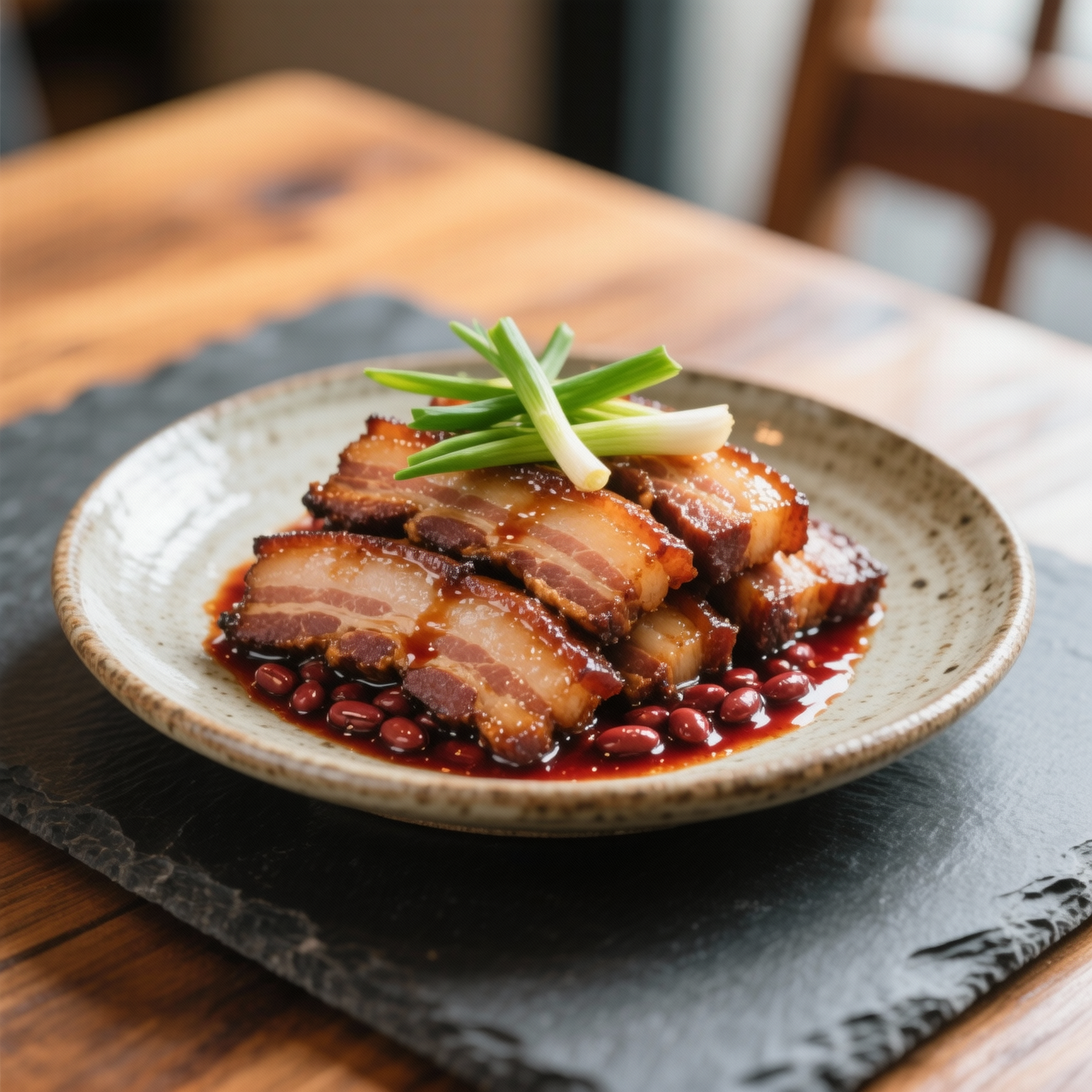
Twice-Cooked Pork
I’ve always believed that twice-cooked pork is where Sichuan’s culinary philosophy truly shines, marrying patience with boldness in a single, sizzling dish. Its origins trace back to Qing dynasty kitchens, where thrifty cooks would boil leftover cuts of pork belly, slice them thin, and fry them again with garlic sprouts and fermented broad bean paste to coax out a second life of flavor. I love how this humble beginning evolved into a cornerstone of regional identity, proving that transformation often happens in the wok. What makes it matter today isn’t just its rich, umami-heavy profile, but the way it teaches us to respect ingredients through process. You can’t rush it. The first simmer must gently render the fat without turning the meat tough, and the second cook requires a fiercely hot pan so the slices curl into little cups that catch every drop of chili oil and soy. Too many home cooks skip the initial poaching, tossing raw pork straight into the wok and ending up with chewy, greasy strips. Others drown the dish in sauce, masking the delicate balance of sweet, salty, and numbing heat. I’ve learned that the magic lies in restraint: let the pork breathe, let the doubanjiang bloom in oil, and trust that the garlic sprouts will soften just enough to retain their snap. When done right, this dish feels like a conversation between generations, each bite echoing the rhythm of Sichuan’s bustling markets and quiet family tables.
Nutrition
| Per serving | Calories | Protein | Carbs | Fat | Sat fat | Fibre | Sugar | Sodium |
|---|---|---|---|---|---|---|---|---|
| beginner | 690kcal | 20g | 11g | 60g | 19g | 2g | 4g | 720mg |
| intermediate | 690kcal | 20g | 11g | 60g | 19g | 2g | 4g | 720mg |
| expert | 690kcal | 20g | 11g | 60g | 19g | 2g | 4g | 720mg |
Per serving · Ava-estimated — a guide, not a clinical figure.
- 500 gPork belly— skin-on, evenly layered fat and meat
- 200 gGarlic scape— firm and vibrant green, not wilted
- 30 gFermented broad bean paste— well-aged, dark red, and aromatic
- 25 gFresh ginger— unpeeled for boiling, peeled for stir-frying
- 15 gFresh garlic— plump cloves, finely minced
- 15 mlLight soy sauce— brewed naturally, not artificially darkened
- 5 mlDark soy sauce— thick, slightly sweet, for color depth
- 20 mlShaoxing rice wine— aged, not cooking wine with added salt
- 10 gGranulated sugar— fine crystal for quick dissolving
- 30 mlVegetable oil— high smoke point, neutral flavor
- 5 mlToasted sesame oil— pure, unadulterated, added off heat
This version is engineered for your first confident attempt, removing the intimidation factor of traditional Sichuan wok work. Instead of juggling multiple high-heat additions, you will rely on a pre-mixed seasoning ratio that guarantees balance from the start. The pork belly is boiled until fork-tender, then sliced uniformly so it crisps predictably without curling or burning. I recommend using a heavy non-stick skillet rather than a carbon steel wok, as it requires less oil and forgives temperature fluctuations. Watch for the moment the pork fat renders and turns translucent; that is your signal to introduce the aromatics. The jarred broad bean paste is already finely ground, so it integrates quickly without scorching. Keep the heat at medium-high and stir constantly to build a cohesive glaze rather than a dry fry. This approach prioritizes consistency over theatrical wok hei, ensuring you achieve the signature salty-savory depth without overwhelming your palate. Trust the visual cues over strict timing, and do not rush the cooling step before slicing. By the end, you will have a reliable baseline that proves this dish is entirely approachable.
Equipment
- Heavy-bottomed skillet— non-stick surface is highly recommended for beginners
- Chef knife— keep it sharp for safe, even cuts
- Wire cooling rack— allows air circulation to prevent soggy meat
Method
- 1
Bring a large pot of water to a rolling boil and fully submerge the pork belly.
Water should cover the meat by at least two inches.
simmering~ 20 minTricky bit - 2
Remove the pork from the water and let it rest on a wire rack until completely cool.
Cooling prevents crumbling during slicing.
cooling~ 10 min - 3
Slice the chilled pork belly into uniform quarter-inch thick pieces.
A sharp knife ensures clean edges.
slicing~ 5 min - 4
Trim the garlic scapes and cut them into two-inch diagonal segments.
Keep pieces similar in size for even cooking.
prepping~ 3 min - 5
Heat the neutral oil in a heavy-bottomed pan over medium-high heat until shimmering.
Oil should ripple but not smoke.
heating~ 2 min - 6
Add the pork slices and cook undisturbed until the fat renders and edges turn golden.
Do not crowd the pan to ensure proper crisping.
rendering~ 6 minTricky bit - 7
Stir in the fermented bean paste, minced ginger, garlic, and seasonings until fully coated.
Paste should sizzle immediately upon contact.
blooming~ 2 minTricky bit