
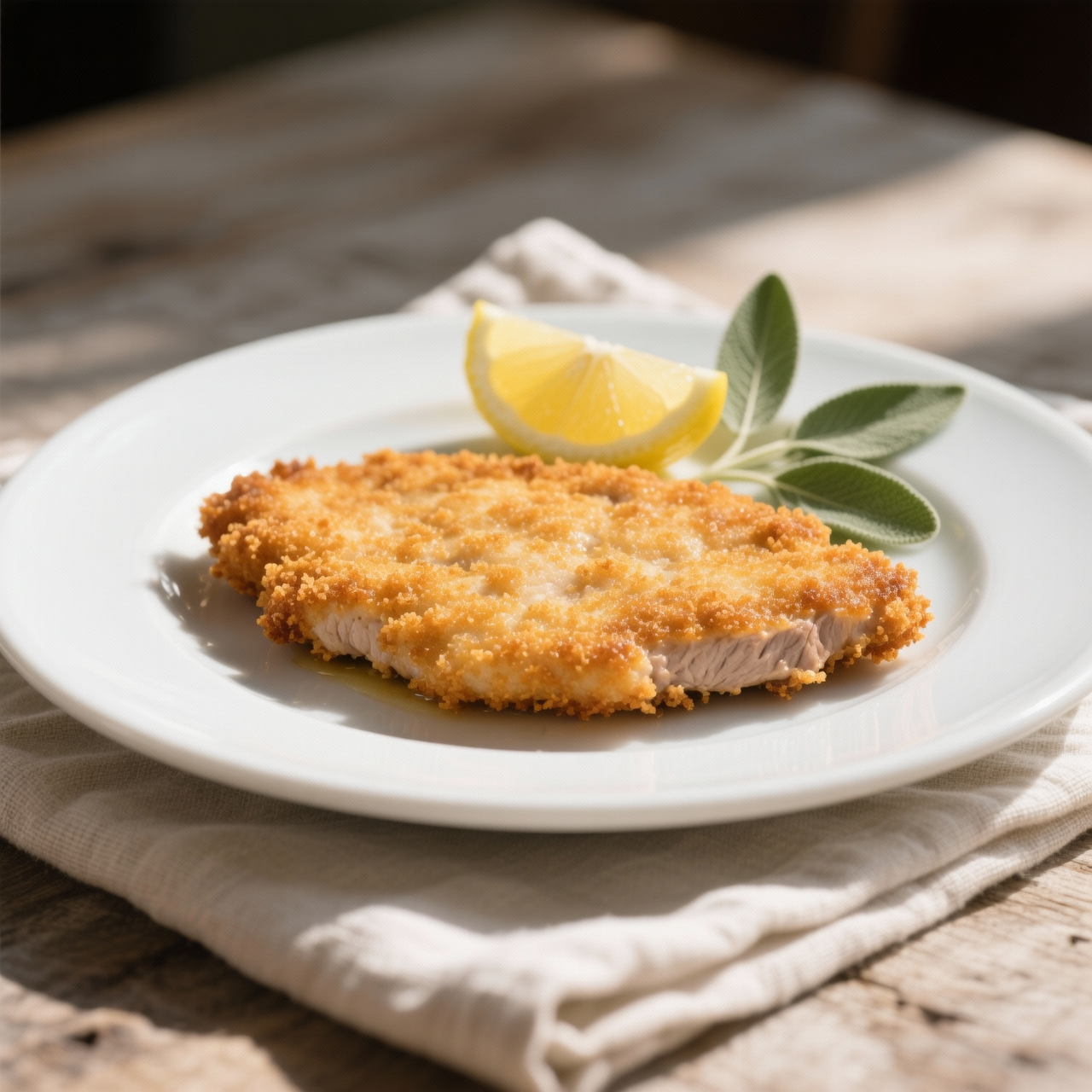
Veal Milanese (breaded cutlet)
I first learned the true rhythm of a proper cotoletta alla milanese in a cramped Lombard kitchen, where the only magic came from patience and a sharp knife. Historically, this golden cutlet traces back to the twelfth-century chronicles of Milan, evolving from a simple, bone-in veal chop into the elegant, boneless version many of us know today. It matters because it proves that culinary luxury does not require a pantry full of industrial stabilizers; it just demands respect for the ingredient. Walking down the supermarket frozen aisle, you will find pre-breaded cutlets selling for roughly eight to ten dollars a box, yet they are almost always padded with soy fillers, drowning in chemical leaveners, and coated in stale, machine-pressed crumbs that turn to cardboard when fried. Making it from scratch strips away that commercial deception entirely. The real pitfalls are entirely mechanical: skipping the initial flour dredge so the egg wash slides right off, pressing the breadcrumbs so aggressively that the coating suffocates the meat, or frying at a timid temperature that leaves the crust greasy and limp. Veal is exceptionally delicate, and it forgives neither heavy-handed pounding nor a neglected resting period after cooking. When you follow the proper sequence, the crust shatters like thin glass while the interior stays impossibly tender. You need only fresh eggs, day-old bread pulsed by hand, and a clean, hot pan with enough clarified butter to float the edges. It is a dish that refuses to be rushed, but rewards you with a quiet, unpretentious perfection that no factory line could ever replicate.
Nutrition
| Per serving | Calories | Protein | Carbs | Fat | Sat fat | Fibre | Sugar | Sodium |
|---|---|---|---|---|---|---|---|---|
| beginner | 485kcal | 34g | 22g | 26g | 7g | 2g | 1g | 720mg |
| intermediate | 480kcal | 34g | 22g | 26g | 8g | 2g | 2g | 520mg |
| expert | 510kcal | 36g | 24g | 26g | 8g | 1g | 1g | 490mg |
Per serving · Ava-estimated — a guide, not a clinical figure.
- 200 gVeal cutlet— Boneless, pounded to 1/4-inch thickness
- 50 gAll-purpose flour— For dredging
- 1 largeEgg— Lightly beaten
- 80 gFine dry breadcrumb— Plain, unseasoned
- 5 gSalt— Kosher or fine sea salt
- 2 gBlack pepper— Freshly ground
- 100 gClarified butter— Or neutral oil for shallow frying
- 1 wholeLemon(optional)— Cut into wedges for serving
This beginner-friendly approach strips away restaurant intimidation while keeping every step strictly from scratch. Unlike frozen aisle cutlets that cost upwards of ten dollars for two, rely on stale fillers, and taste like cardboard, this version uses fresh veal, real eggs, and homemade toasted breadcrumbs for a fraction of the price and a genuinely crisp crust. You will pound the meat gently to an even quarter-inch thickness, which guarantees uniform cooking without tearing. The key is setting up a simple three-bowl station: seasoned flour, lightly beaten eggs, and your fresh crumb mixture. Press firmly but do not pat; let the coating set on a wire rack for ten minutes before frying to prevent breading slough. Maintain a steady medium heat in your oil—too hot burns the crust before the meat warms, too cool makes it greasy. Fry just until golden, then drain immediately on a rack, not paper towels, to preserve crunch. Finish with a quick squeeze of fresh lemon. Watch your pan temperature closely, and you will achieve a tender, juicy interior with a shatteringly crisp shell on your very first try.
Equipment
- Heavy-bottomed pan— cast iron or stainless steel ensures even heat distribution
- Meat mallet— wrap in plastic wrap to pound meat safely
- Three shallow bowls— for the flour, egg, and crumb stations
- Wire cooling rack— prevents steam from softening the crust
Method
- 1
Place veal cutlets between two sheets of plastic wrap and pound gently to an even quarter-inch thickness.
Work from the center outward to avoid tearing the edges.
pounding~ 3 min - 2
Arrange three shallow bowls with seasoned all-purpose flour, lightly beaten eggs, and a mixture of fresh breadcrumbs and grated parmesan.
Keep one hand wet for the egg bowl and one dry for the flour to prevent clumping.
mise en place~ 5 min - 3
Coat each cutlet thoroughly in flour, dip into the egg until completely submerged, and press firmly into the breadcrumb mixture.
Press gently but thoroughly to ensure the crumbs adhere completely.
dredging~ 4 minTricky bit - 4
Transfer breaded cutlets to a wire rack and rest for ten minutes to allow the coating to bind securely.
Do not skip this step, or the crust will slide off during frying.
resting~ 10 min - 5
Heat a half-inch layer of neutral oil to three hundred fifty degrees Fahrenheit and fry cutlets until deeply golden and crisp.
Maintain a gentle sizzle and do not crowd the pan.
shallow frying~ 8 minTricky bit - 6
Remove from the oil, drain on a clean wire rack, season immediately with fine salt, and serve with lemon wedges.
Seasoning hot crust helps the salt adhere without making it soggy.
finishing~ 1 min
Cooking from frozen
Thaw completely in the fridge overnight, then reheat uncovered on a wire rack at 375°F until hot and crisp; never microwave.
Storage times are a guide — always use your judgement and store food safely.