
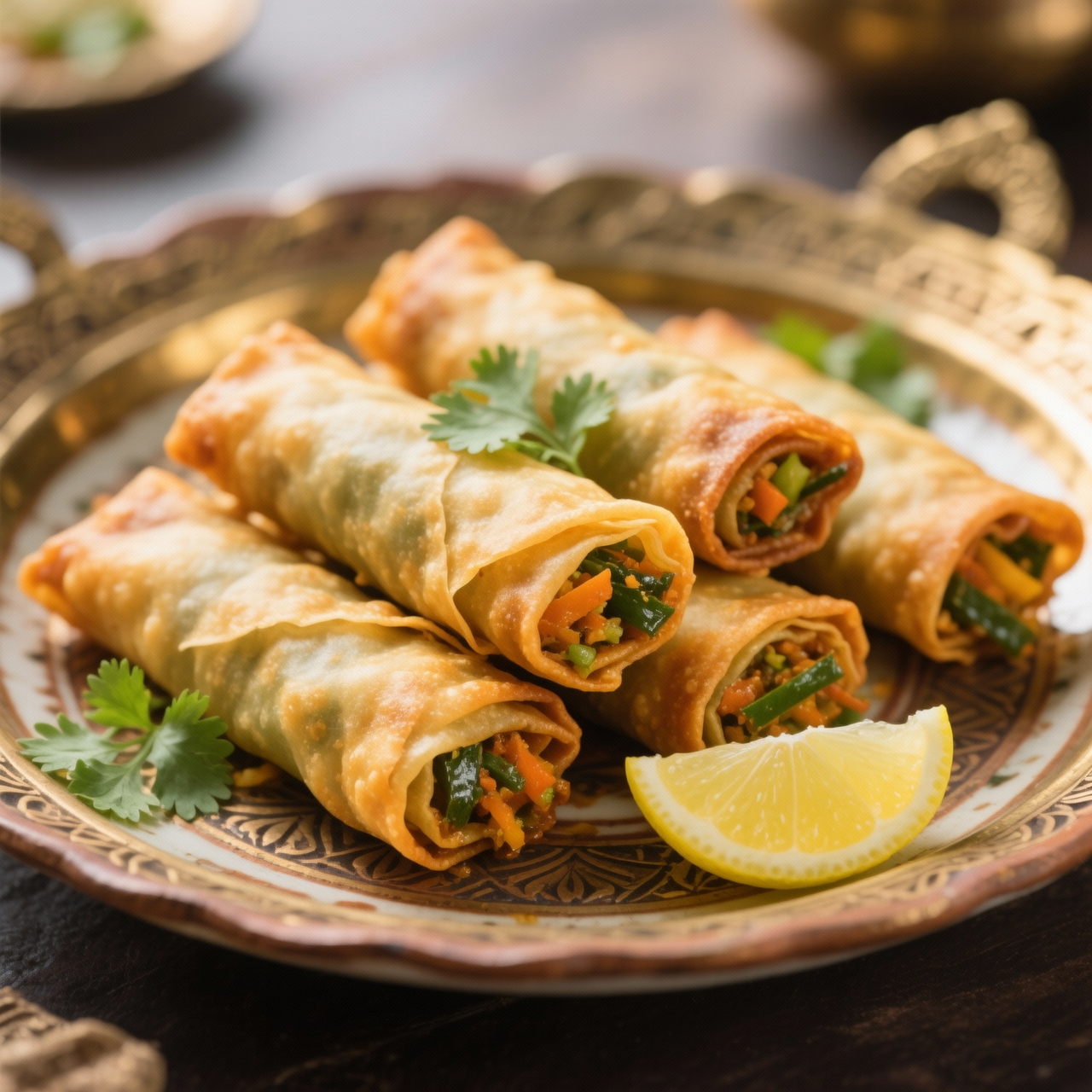
Vegetable Spring Rolls
I first learned to fold these in a cramped Mumbai kitchen where the monsoon humidity made every wrapper stick like damp paper. Indian vegetable spring rolls aren’t actually a traditional staple from the subcontinent’s ancient pantheon; they’re a beloved colonial-era adaptation that found its soul in street-side stalls and home kitchens alike, marrying delicate wheat wrappers with spiced cabbage, carrots, and glass noodles. Making them from scratch matters because the shop-bought versions have quietly taken over supermarket freezers, costing nearly twice as much per portion while delivering a greasy, cardboard-thin pastry and a filling that tastes suspiciously like preservative-laden mush. When you roll your own, you control the crunch, the spice, and the oil absorption, turning a humble snack into something genuinely vibrant. The most common pitfall I see is overstuffing and sealing with water, which guarantees a burst seam and a soggy fry. Instead, keep your filling bone-dry by squeezing the cabbage through a clean tea towel, use a thin cornstarch slurry as your edible glue, and never crowd the pan. If you’re tempted to shortcut with pre-rolled wrappers or jarred sauces, resist it; the dough needs to be stretched and rested just long enough to become pliable without tearing. Batch them raw on parchment-lined trays, freeze them solid, then transfer to bags so you always have a ready-to-fry stash. It takes patience, but the reward is a crisp, golden cylinder that shatters on the bite, revealing a fragrant, peppery core that store-bought versions simply cannot replicate.
Nutrition
| Per serving | Calories | Protein | Carbs | Fat | Sat fat | Fibre | Sugar | Sodium |
|---|---|---|---|---|---|---|---|---|
| beginner | 310kcal | 7g | 38g | 12g | 2g | 5g | 4g | 420mg |
| intermediate | 285kcal | 5g | 36g | 13g | 2g | 4g | 3g | 340mg |
| expert | 460kcal | 9g | 52g | 22g | 3g | 6g | 5g | 380mg |
Per serving · Ava-estimated — a guide, not a clinical figure.
- 24 sheetsspring roll wrapper— vegan-friendly, kept covered with a damp cloth during assembly to prevent drying
- 200 gcabbage— finely shredded and squeezed to remove excess moisture before cooking
- 100 gcarrot— peeled and julienned into thin matchsticks
- 1 mediumbell pepper— red or green, thinly sliced
- 50 ggreen bean— trimmed, blanched, and finely chopped
- 15 gginger— freshly grated
- 4 clovesgarlic clove— minced
- 2 wholegreen chili— finely chopped, seeds removed for milder heat
- 30 mlsoy sauce— low sodium preferred
- 15 mlrice vinegar— adds brightness to the filling
- 5 gblack pepper— freshly ground
- 15 mlvegetable oil— for stir-frying the filling until just tender
- 10 gcornstarch— mixed with 2 tbsp water to create a sealing paste
This beginner-friendly approach strips away the intimidation of traditional Indian street food while keeping everything strictly from-scratch, honoring the unprocessed mandate. While a frozen supermarket pack costs around $8 and hides behind heavy preservatives, refined oils, and stale fillings, this version delivers bright, crisp rolls made entirely in your kitchen for a fraction of the price. The technique here focuses on a forgiving three-ingredient dough that requires no complex lamination or precise hydration calculations. Instead of worrying about perfect thinness, we roll the dough into manageable squares that naturally puff during frying. The vegetable filling relies on quick sautéing rather than intricate spice layering, ensuring moisture control without demanding expert knife skills. Watch closely during the sealing stage: a simple flour-water paste acts as edible glue, but excess moisture will cause the rolls to burst. Keep your filling cool before wrapping, and maintain a steady medium heat in your oil so the exterior crisps evenly without absorbing grease. The result is a reliably crunchy snack with a tender interior, perfectly portioned for batch freezing and future reheating.
Equipment
- Heavy-bottomed pan— non-stick is fine here
- Rolling pin— use a light touch to avoid tearing thin dough
- Large mixing bowl— wide rim makes dough handling easier
Method
- 1
Combine all-purpose flour, warm water, and salt until a cohesive ball forms.
Add water one tablespoon at a time to prevent stickiness.
kneading~ 3 min - 2
Cover the dough and let it rest at room temperature for twenty minutes.
Relaxing the gluten makes rolling effortless.
resting~ 20 min - 3
Sauté finely chopped cabbage, carrots, ginger, and green chilies in neutral oil until tender.
Drive off excess moisture to keep wrappers from turning soggy.
sweating~ 6 min - 4
Toss the completely cooled vegetables with toasted cumin powder, black pepper, and fresh coriander.
Taste before adding salt to account for dipping sauces later.
seasoning~ 2 min - 5
Roll the dough into thin squares and brush the edges with a thick flour-water slurry to seal the filling inside.
Press firmly along all seams to lock out air pockets.
sealing~ 15 minTricky bit - 6
Gently lower the assembled rolls into medium-hot oil and turn until uniformly golden brown.
Drain on a wire rack rather than paper towels to preserve crunch.
shallow-frying~ 8 min
Cooking from frozen
Air-fry or deep-fry directly from frozen until golden and crisp, no thawing required.
Storage times are a guide — always use your judgement and store food safely.