
Yakitori Tare
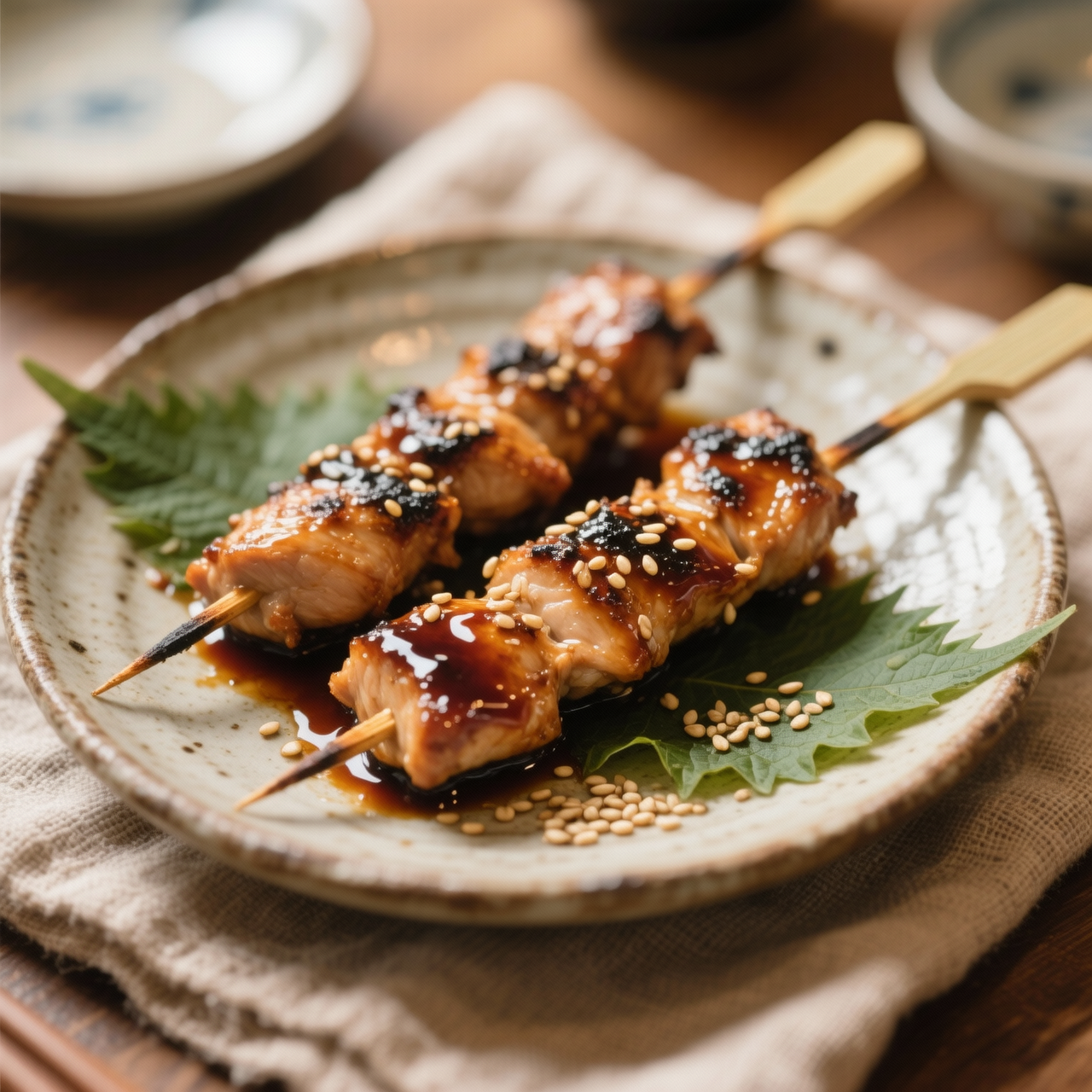
When I first stood at a counter in Osaka watching an oyaji brush that dark, glossy glaze over charcoal-kissed skewers, I understood why yakitori tare isn’t just a condiment—it’s the heartbeat of Japanese street grilling. Born in the bustling izakayas and yatai stalls of the mid-twentieth century, this sweet-soy reduction was originally a clever way to stretch precious ingredients, layering mirin, sake, soy sauce, and a touch of sugar into a complex, self-basting lacquer. What makes it matter today is its transformative power: a simple brushstroke turns lean chicken thigh, crisp scallions, or earthy shiitake into something deeply savory, sweet, and irresistibly caramelized. The pitfalls, however, are where most home cooks stumble. Rush the simmer and you’ll get a thin, harshly salty liquid. Crank the heat and the sugar will scorch, leaving a bitter, glassy mess. I’ve learned to keep the flame low and patient, letting the alcohol evaporate slowly while the sugars gently reduce to a ribbon-like consistency. Never skip the resting period, either; the flavors need time to marry off the stove. Strain it through fine mesh for that signature sheen, and store it properly. This isn’t a sauce you pour over—it’s a glaze you build, layer by layer, until the skewers practically glisten.
Nutrition
| Per serving | Calories | Protein | Carbs | Fat | Sat fat | Fibre | Sugar | Sodium |
|---|---|---|---|---|---|---|---|---|
| beginner | 160kcal | 2g | 36g | 0g | 0g | 0g | 30g | 1950mg |
| intermediate | 110kcal | 2g | 24g | 0g | 0g | 0g | 20g | 650mg |
| expert | 32kcal | 0g | 7g | 0g | 0g | 0g | 7g | 1050mg |
Per serving · Ava-estimated — a guide, not a clinical figure.
- 200 mlsoy sauce— Japanese koikuchi recommended for authentic depth
- 200 mlmirin— Hon-mirin preferred over sweet cooking wine
- 100 mlsake— Junmai or standard cooking sake
- 100 gsugar— White granulated or light brown sugar
- 5 gkombu(optional)— Dried kelp, surface lightly wiped clean
This beginner-friendly version skips the traditional dashi stock and sake reduction, leaning on pantry staples and a few smart shortcuts to deliver that signature sweet-savory yakitori glaze without the fuss. You will use standard soy sauce, mirin, and a touch of brown sugar for immediate depth, plus a spoonful of store-bought ginger-garlic paste to save prep time. The goal is a foolproof reduction that thickens into a glossy, brushable coating for grilled chicken, beef, or vegetables. Watch your heat carefully once the mixture starts simmering; sauces this high in sugar can scorch quickly and turn bitter. Keep the burner on medium-low and stir gently with a silicone spatula to ensure even evaporation. You will know it is ready when the liquid coats the back of a spoon and leaves a clear trail when you drag your finger through it. Do not over-reduce, or it will turn into a hard candy glaze once it cools. Let it cool completely before brushing onto skewers, as the residual heat will continue to thicken it. This approach guarantees a reliable, restaurant-style finish on your very first try.
Equipment
- Small heavy-bottomed saucepan— prevents hot spots and sugar scorching
- Silicone spatula— heat-resistant for constant stirring
- Fine-mesh strainer(optional)— optional for removing ginger-garlic bits
Method
- 1
Combine soy sauce, mirin, brown sugar, ginger-garlic paste, and a splash of water in the saucepan over medium heat.
Whisk immediately to dissolve the sugar before it heats up.
dissolving~ 1 min - 2
Reduce heat to medium-low and bring the mixture to a gentle simmer.
Avoid a rolling boil, which will cause rapid evaporation and uneven thickening.
simmering~ 2 min - 3
Stir continuously for 10 to 12 minutes until the liquid reduces by half and coats the back of a spoon.
Watch closely near the end, as the high sugar content can burn in seconds.
reducing~ 10 minTricky bit - 4
Remove from heat and immediately strain through a fine-mesh sieve into a clean heatproof bowl.
Straining ensures a perfectly smooth, glossy glaze that brushes evenly.
straining~ 2 min - 5
Allow the tare to cool completely at room temperature before transferring to an airtight container.
The sauce will thicken significantly as it cools, so do not add more water.
cooling~ 20 min
Cooking from frozen
Thaw overnight in the fridge and gently warm in a saucepan, whisking until glossy and fluid again.
Storage times are a guide — always use your judgement and store food safely.