
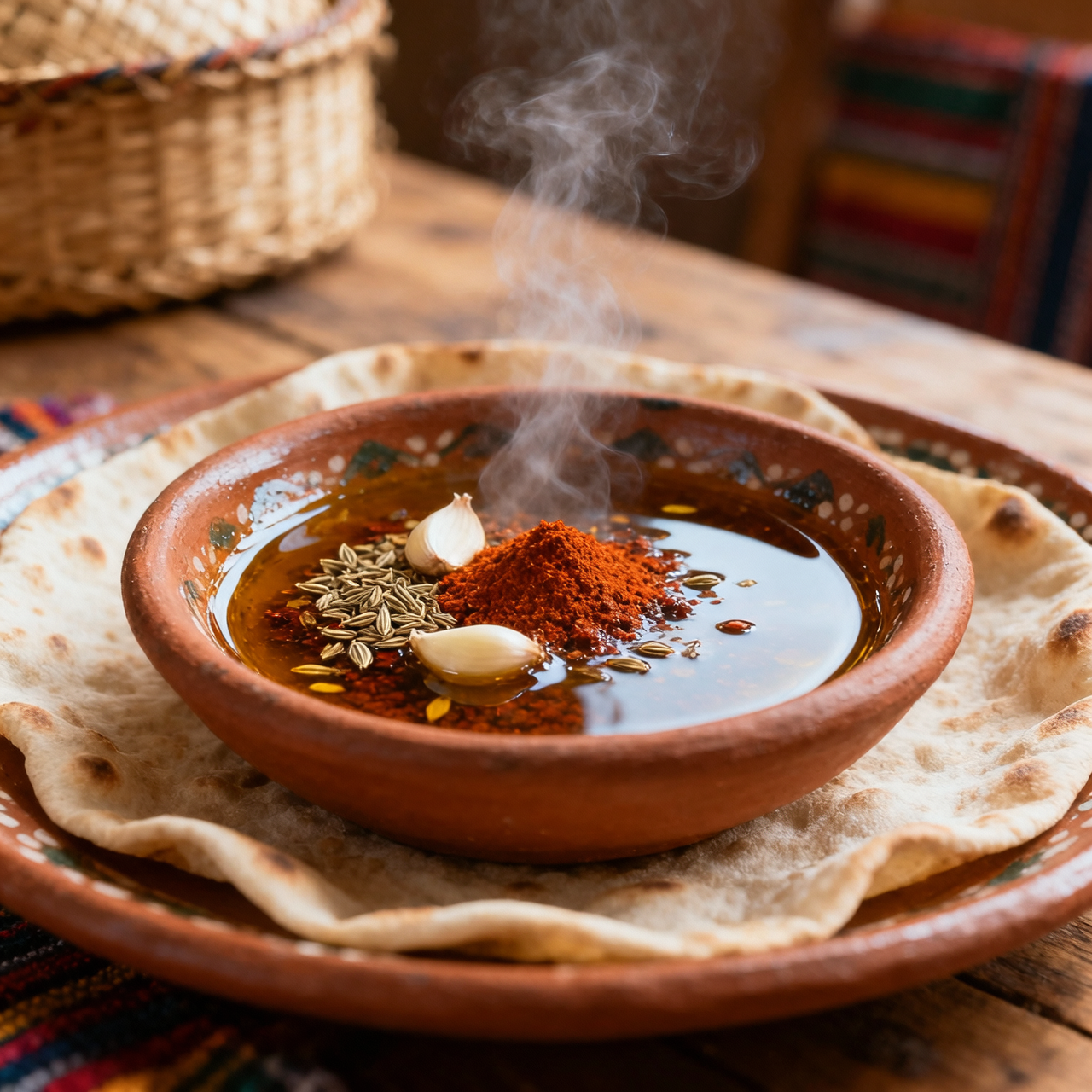
Ye'qimem zeyizga (spiced oil)
When I first learned to make ye’qimem zeyizga, I was struck by how something so simple could carry the entire soul of Ethiopian fasting cuisine. Born from the strict observances of the Orthodox Tewahedo Church, this spiced oil emerged as a practical and deeply flavorful substitute for niter kibbeh during tsom, or fasting periods. For centuries, Ethiopian home cooks have relied on it to transform humble vegetables, lentils, and grains into deeply aromatic dishes without breaking religious dietary laws. To me, it is less of a condiment and more of a culinary bridge—connecting the earthy warmth of berbere, the bright heat of ginger and garlic, and the herbal whispers of rue and basil into a single, shimmering infusion. What makes it matter today is its versatility and its quiet insistence that restriction can breed creativity. Yet, it is remarkably easy to mishandle. The most common pitfall I see is impatience; rushing the infusion over high heat scorches the delicate spices, leaving behind a harsh, acrid bitterness instead of the rounded, toasted depth it should have. Another mistake is adding raw moisture-heavy aromatics directly to the oil without gently sweating them first, which causes dangerous splattering and dilutes the infusion. You must let the spices bloom slowly in neutral oil, coaxing out their essential oils rather than frying them into submission. When done right, this golden elixir becomes a pantry staple that elevates everything from misir wot to simple steamed greens, proving that fasting food need never be flavorless.
Nutrition
| Per serving | Calories | Protein | Carbs | Fat | Sat fat | Fibre | Sugar | Sodium |
|---|---|---|---|---|---|---|---|---|
| beginner | 490kcal | 0g | 1g | 54g | 7g | 0g | 0g | 10mg |
| intermediate | 470kcal | 0g | 1g | 54g | 6g | 0g | 0g | 1mg |
| expert | 460kcal | 0g | 1g | 52g | 5g | 0g | 0g | 0mg |
Per serving · Ava-estimated — a guide, not a clinical figure.
- 500 mlVegetable oil— Neutral oil like sunflower or canola works best
- 30 gGarlic— Peeled and lightly crushed
- 20 gGinger— Fresh, peeled and sliced
- 150 gOnion— Finely chopped red or yellow onion
- 15 gNigella seed— Whole seeds
- 10 gFenugreek seed— Whole seeds
- 10 gCoriander seed— Lightly crushed
- 10 gCumin seed— Whole seeds
- 15 gTurmeric powder— Ground
- 5 podsKorerima— Ethiopian cardamom, lightly cracked
- 5 gSalt— Fine sea salt
This beginner-friendly approach to Ye’qimem zeyizga prioritizes accessibility and confidence over traditional spice grinding. Instead of toasting and milling whole seeds, you’ll rely on high-quality pre-ground spices and convenient jarred aromatics, which drastically reduces prep time while preserving the foundational flavor profile. The key to success at this level is strict heat control. Spices burn easily, turning your oil bitter and acrid. We’ll gently warm the oil over low heat, letting the aromatics bloom slowly rather than sizzling aggressively. Watch closely for the moment the mixture stops bubbling and the spices just begin to darken at the edges—that’s your visual cue to remove it from the heat immediately. Once strained through a fine mesh sieve or cheesecloth, you’ll have a brilliantly colored, deeply fragrant oil ready for fasting-season stews, lentil dishes, or sautéed greens. Store it in a clean glass jar, and don’t rush the infusion process. This forgiving method guarantees a reliable, versatile base every time, even on your first attempt.
Equipment
- Heavy-bottomed saucepan— Stainless steel or non-stick works well for even low-heat distribution
- Fine-mesh strainer— Line with a coffee filter if you want crystal-clear oil
- Heatproof glass jar— Ensure lid is airtight for long-term storage
Method
- 1
Place your heavy-bottomed saucepan on the stove and add the neutral oil along with all your pre-ground spices and jarred aromatics.
Start with a cold pan and oil to prevent instant scorching.
cold-start blooming~ 1 min - 2
Turn the burner to low and gently stir the mixture every minute until the oil turns vibrant yellow-orange and smells deeply aromatic.
Keep heat strictly low; if spices sizzle loudly or smoke, lower the flame immediately.
infusing~ 10 minTricky bit - 3
Turn off the heat and let the pan sit undisturbed for ten minutes to allow residual warmth to fully extract the flavors.
Cover loosely with a lid to trap heat without trapping moisture.
off-heat steeping~ 10 min - 4
Pour the cooled oil through a fine-mesh strainer into a clean glass jar, pressing lightly on the solids before discarding them.
Avoid squeezing the spice paste too hard, as it can cloud the finished oil.
straining~ 3 min
Cooking from frozen
Thaw overnight in the refrigerator and shake vigorously to restore a smooth, pourable consistency before use.
Storage times are a guide — always use your judgement and store food safely.