
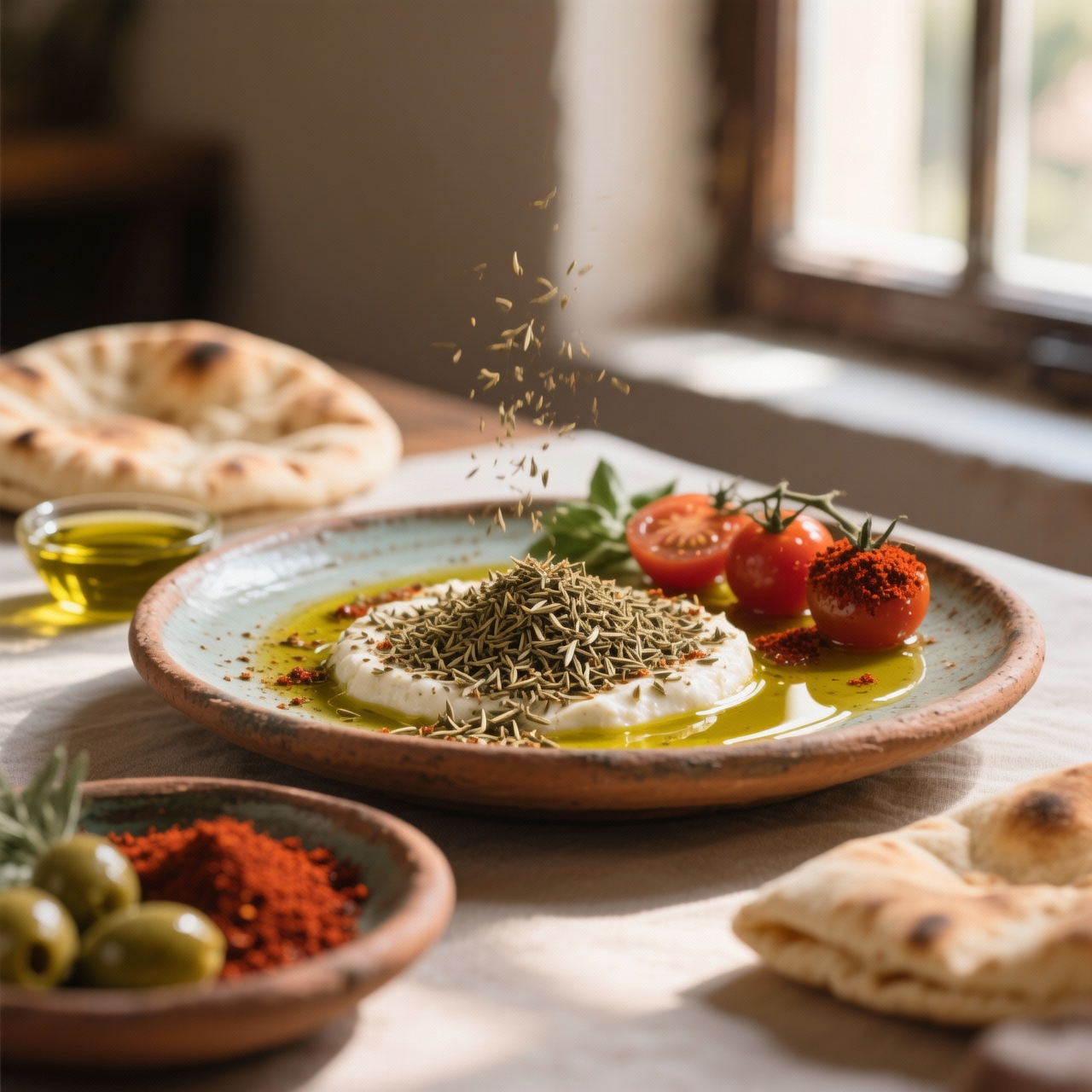
Za'atar blend
I’ve always believed that a kitchen’s true heartbeat lives in its spice jars, and za’atar sits at the very center of mine. This Lebanese blend isn’t just a seasoning; it’s a cultural anchor, carrying the sun-warmed hills of the Levant right into your pantry. At its core, za’atar marries wild thyme, sumac, and toasted sesame seeds with coarse salt, creating a tangy, nutty, and deeply aromatic mixture that transforms flatbread, roasted vegetables, or simple yogurt into something extraordinary. When I first learned to blend it properly, I realized how easily it can be ruined by shortcuts. The most common pitfall I see is using stale or pre-ground herbs that have lost their essential oils, which leaves the final mix tasting dusty rather than vibrant. Another frequent mistake is toasting the sesame seeds too aggressively; they burn in seconds and impart a bitter edge that ruins the delicate balance. I always recommend sourcing high-quality dried thyme, preferably wild-harvested or labeled specifically for za’atar, and toasting the sesame seeds in a dry pan until they just turn golden and fragrant. Let everything cool completely before grinding and mixing, because residual heat will cause the oils to clump and spoil the texture prematurely. Why does this matter so much to me? Because making your own blend honors the slow, intentional craft of Lebanese home cooking. It connects you to generations who foraged the hillsides and preserved the seasons in glass jars. Once you master the ratio, you’ll never return to commercial packets, which are often diluted with fillers. This dry blend is a batch hero—scoop it, jar it, and let it mature. Over weeks, the flavors meld into a cohesive, earthy symphony that only improves with time.
Nutrition
| Per serving | Calories | Protein | Carbs | Fat | Sat fat | Fibre | Sugar | Sodium |
|---|---|---|---|---|---|---|---|---|
| beginner | 85kcal | 2g | 5g | 5g | 1g | 2g | 0g | 380mg |
| intermediate | 45kcal | 1g | 3g | 2g | 0g | 1g | 0g | 500mg |
| expert | 28kcal | 1g | 2g | 2g | 0g | 1g | 0g | 185mg |
Per serving · Ava-estimated — a guide, not a clinical figure.
- 100 gdried thyme— Use fully dehydrated leaves, preferably wild thyme or oregano for authentic flavor
- 80 gground sumac— Ensure it is pure, food-grade sumac without added salt or preservatives
- 60 gsesame seed— Lightly toast until golden and fragrant, then cool completely before use
- 15 gfine sea salt— Non-iodized salt preferred for long shelf life and clean taste
This beginner-friendly za’atar blend skips the traditional toasting and grinding steps, relying instead on high-quality pre-dried herbs, pre-ground sumac, and pre-toasted sesame seeds you can easily find in the spice aisle. The goal here is confidence and consistency without the risk of burning delicate seeds or over-processing tart sumac into a paste. Simply measure out your ingredients, combine them in a dry bowl, and whisk until the color is uniform. Because store-bought dried thyme and oregano vary wildly in moisture content, keep an eye out for clumping; a quick whisk or fork mash will break them apart before they mix. Taste a pinch before jarring—if it leans too sharp from the sumac, balance it with a quarter teaspoon of fine sea salt. Once combined, transfer immediately to a completely dry, airtight glass jar and store it in a cool, dark pantry. The blend will stay potent for up to six months, but freshness peaks in the first eight weeks. Use it as a confident first step into Lebanese pantry staples, sprinkling it over roasted vegetables, flatbreads, or mixing with olive oil for a quick dip. Watch for stale aromas; if the sumac smells flat, your blend will too.
Equipment
- Medium mixing bowl— glass or ceramic prevents static cling
- Airtight glass jar— must be completely dry before filling
Method
- 1
Measure all dried thyme, ground sumac, and pre-toasted sesame seeds into a medium mixing bowl.
Use level measuring spoons to keep ratios consistent.
measuring~ 2 min - 2
Whisk the dry ingredients together until the color and texture appear completely uniform.
Break up any stubborn herb clumps with a fork before whisking.
combining~ 2 min - 3
Taste a small pinch and adjust fine sea salt if the sumac feels too sharp.
Add salt in quarter-teaspoon increments to avoid over-salting.
seasoning~ 1 minTricky bit - 4
Transfer the finished blend to a clean, dry glass jar and seal tightly.
Store away from direct heat and sunlight to preserve volatile oils.
jarring~ 1 min
Cooking from frozen
Not recommended; store in an airtight jar at room temperature to preserve the toasted sesame oils and prevent moisture clumping.
Storage times are a guide — always use your judgement and store food safely.