
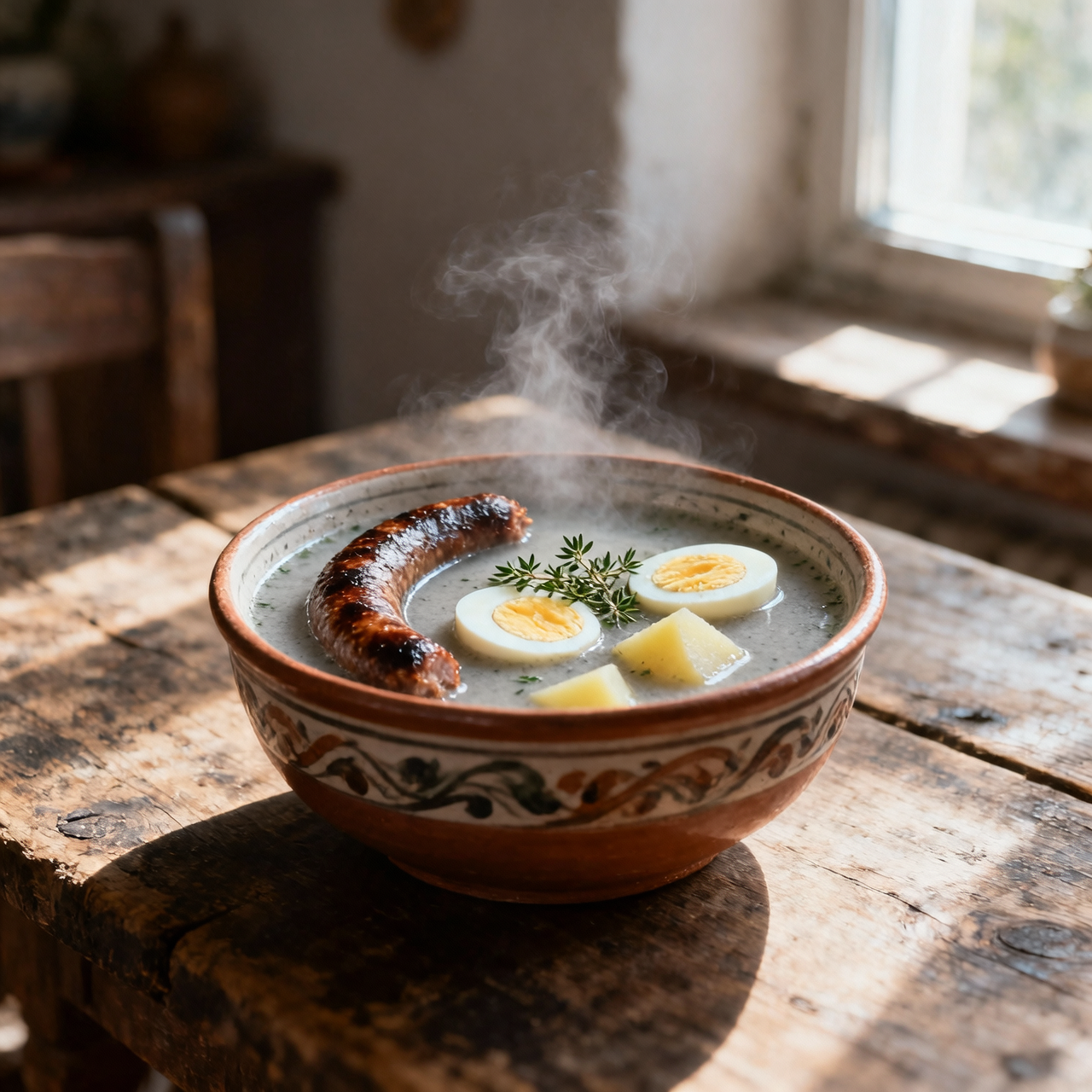
Zurek
When I first encountered żurek in a damp Polish kitchen, I didn’t realize I was tasting centuries of preservation wisdom. Born in medieval times when winter stores dwindled, this sour rye soup emerged from necessity rather than luxury. Peasant cooks would mix rye flour with water, letting it ferment into a tangy zakwas starter that transformed humble ingredients into something deeply restorative. To me, żurek is more than a starter course; it is a liquid archive of Polish resilience, especially cherished during Easter when it’s poured over hard-boiled eggs and sliced kielbasa. The magic lies entirely in the fermentation, yet this is exactly where most modern cooks stumble. I’ve seen too many rush the zakwas, substituting vinegar for patience and losing the complex, earthy lactic notes that define the dish. Others boil the soup aggressively after adding the starter, which instantly kills the delicate cultures and leaves a flat, metallic aftertaste. The balance is delicate. You must temper the sourness with a gentle simmer, enrich it with proper smoked meats, and never shy away from the natural cloudiness that signals a well-fermented base. When done right, żurek doesn’t just warm the stomach—it anchors you to generations who understood that true flavor requires time, trust, and a willingness to let things sour before they become beautiful.
Nutrition
| Per serving | Calories | Protein | Carbs | Fat | Sat fat | Fibre | Sugar | Sodium |
|---|---|---|---|---|---|---|---|---|
| beginner | 540kcal | 27g | 55g | 24g | 8g | 9g | 5g | 2250mg |
| intermediate | 540kcal | 27g | 55g | 24g | 8g | 9g | 5g | 2250mg |
| expert | 540kcal | 27g | 55g | 24g | 8g | 9g | 5g | 2250mg |
Per serving · Ava-estimated — a guide, not a clinical figure.
- 150 gRye flour— medium grind, preferably stone-milled
- 200 mlWarm water— filtered, roughly 30°C
- 1500 mlVegetable broth— unsalted, low sodium
- 300 gSmoked kielbasa— traditional Polish pork sausage
- 400 gYukon Gold potato— peeled and cubed
- 4 wholeLarge egg— hard-boiled, peeled
- 6 wholeGarlic clove— peeled, lightly crushed
- 20 gDried porcini mushroom— soaked and chopped
- 3 wholeBay leaf— dried
- 5 wholeAllspice berry— lightly toasted
- 15 gFresh marjoram— finely chopped
- 10 gFine sea salt— adjust to taste
- 2 gBlack pepper— freshly cracked
This version strips away the fermentation wait times while preserving the soul of the dish. You will bypass the multi-day zakwas cultivation by relying on a high-quality, commercially prepared zurek base or jarred sourdough starter, which provides immediate tang and viscosity. The focus shifts entirely to timing and temperature control, as the shortcut base is highly sensitive to heat. Watch closely when incorporating the starter; a gentle simmer is non-negotiable, and any vigorous boiling will cause the rye proteins to separate and the soup to turn grainy. We hand-hold you through the sausage rendering process, ensuring the rendered fat properly emulsifies into the broth instead of pooling on the surface. The potatoes are quickly boiled in the microwave or on the stovetop to save active time, and the mushrooms are rapidly rehydrated in hot tap water rather than simmered for an hour. Your goal here is a confident, repeatable weeknight result that still delivers that characteristic Polish sourness. Pay strict attention to the seasoning balance at the end, as commercial bases often carry hidden salt levels that require careful adjustment.
Equipment
- Heavy-bottomed saucepan— non-stick is acceptable
- Balloon whisk— essential for emulsifying
- Chef knife— sharp edge preferred
- Wooden cutting board— stable surface
Method
- 1
Combine the vegetable broth and prepared rye starter or commercial paste equivalent in a heavy pot over medium heat.
Stir constantly to prevent scorching.
simmering~ 3 min - 2
Add the cubed potatoes, bay leaves, and allspice berries to the simmering liquid.
Maintain a bare bubble.
poaching~ 8 min - 3
Sear the sliced kielbasa in a dry skillet until deeply browned and slightly crisp.
Reserve rendered fat.
searing~ 4 min - 4
Stir the crushed garlic, soaked mushrooms, and marjoram into the pot.
Strain soaking liquid before adding.
infusing~ 2 min - 5
Fold in the cooked sausage, quartered eggs, and season with salt and pepper.
Remove from heat immediately to prevent curdling.
tempering~ 1 minTricky bit