
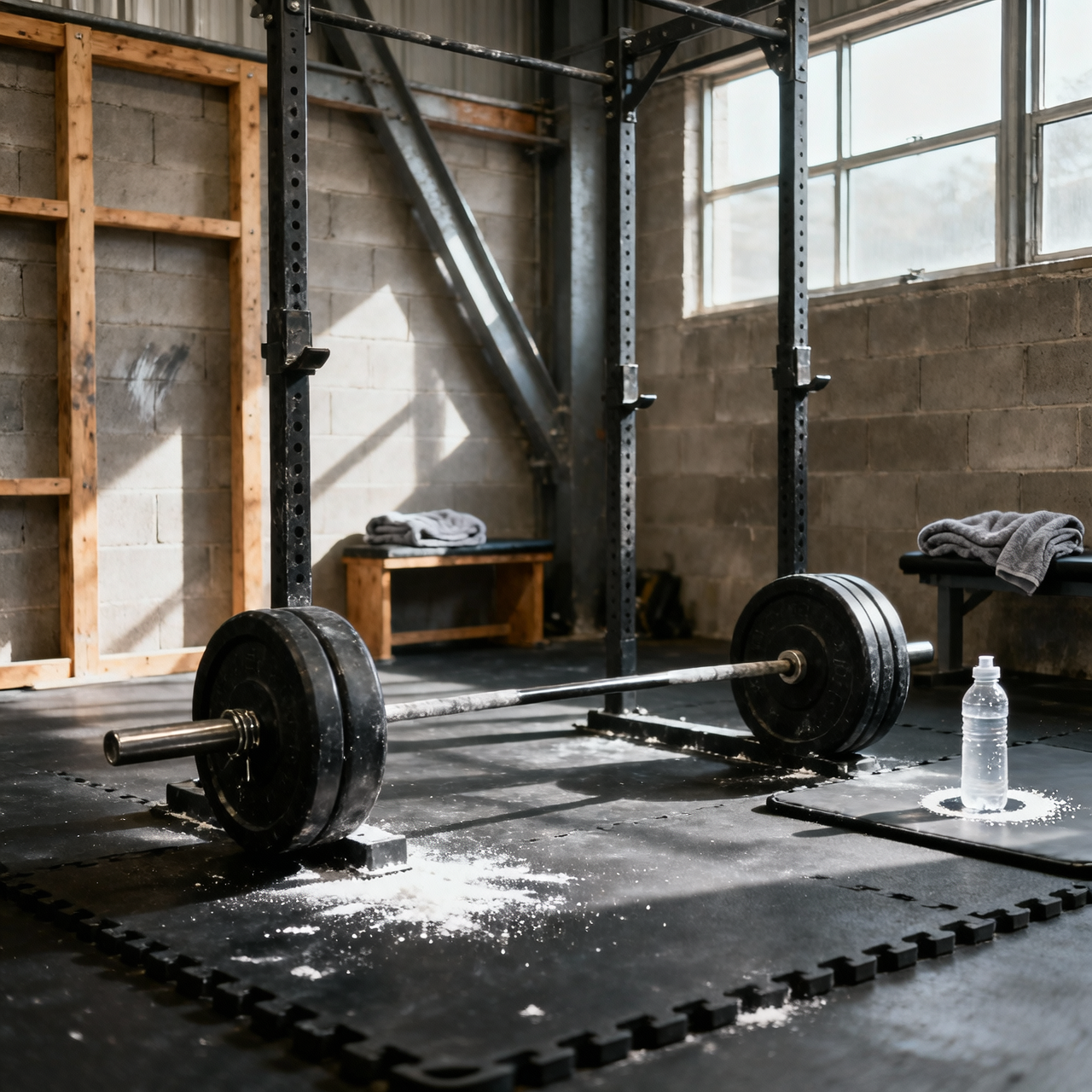
Barbell Back Squat
barbell-back-squat
When you settle under the bar, I want you to feel grounded and braced, not crushed. A great back squat rep moves like a single, fluid piston: tight through your midline, knees tracking smoothly over your toes, and hips driving straight back before powering up through the floor. Focus on owning the bottom position, breathing into your belly, and pushing the earth away with equal force from both feet.
If you're new to this
Start light and treat the first few weeks as a skill-building phase. Keep your chest proud and your elbows pointed down to create a stable shelf for the barbell. Your knees should naturally track in line with your second toe; never let them cave inward. If you feel sharp pain in your knees or lower back, stop immediately and reassess your stance or load. True muscular fatigue will feel like a deep, heavy burn in your thighs and glutes, while form breakdown usually shows up as your heels lifting, your torso collapsing forward, or your breath escaping too early. Use a mirror or record yourself to check depth and alignment. Consistency beats intensity every single time, so prioritize smooth, controlled movement patterns over heavy weight. As your confidence grows, the squat will begin to feel like a natural, powerful hinge rather than a struggle. Trust the process and respect the mechanics.
Common mistakes
The most frequent error is allowing the knees to cave inward during the ascent, which places dangerous shear stress on the joints and disengages the glutes. Lifters also tend to drop their chest too early, shifting the load forward onto the lower back instead of driving through the heels. Another common issue is rushing the descent without maintaining intra-abdominal pressure, causing the torso to fold and the bar to drift away from the midline. Finally, many people cut their depth short by stopping above parallel, which limits full muscle recruitment and reduces the exercise’s overall effectiveness. Correct these by bracing deliberately, keeping your gaze fixed on a steady point ahead, and descending under complete control until your hips fully break parallel.
Routine
- Sets
- 3
- Reps
- 8-12
- Rest
- 90s
- Tempo
- 2-0-2-0
- Frequency
- 2-3x/week
Add 2.5kg to the bar once you can complete all prescribed reps with perfect form across every set.
Muscles
- Quadriceps
- Glutes
- Hamstrings
- Lower back
- Abs
Equipment
- Squat rack
- Barbell
- 1
Step under the bar and position it across your upper traps, keeping your elbows tucked and chest tall.
- 2
Brace your core by taking a deep breath into your belly and holding it tight.
- 3
Unrack the weight by driving through your heels and stepping back exactly two paces.
- 4
Initiate the descent by simultaneously pushing your hips back and bending your knees.
- 5
Lower yourself until your hip crease breaks parallel with the top of your knees.
- 6
Reverse the motion by driving your feet into the floor and pushing your hips upward.
- 7
Exhale forcefully as you pass the hardest part of the ascent to maintain intra-abdominal pressure.
- 8
Stand completely upright, lock out your hips, and reset your breath before the next repetition.