
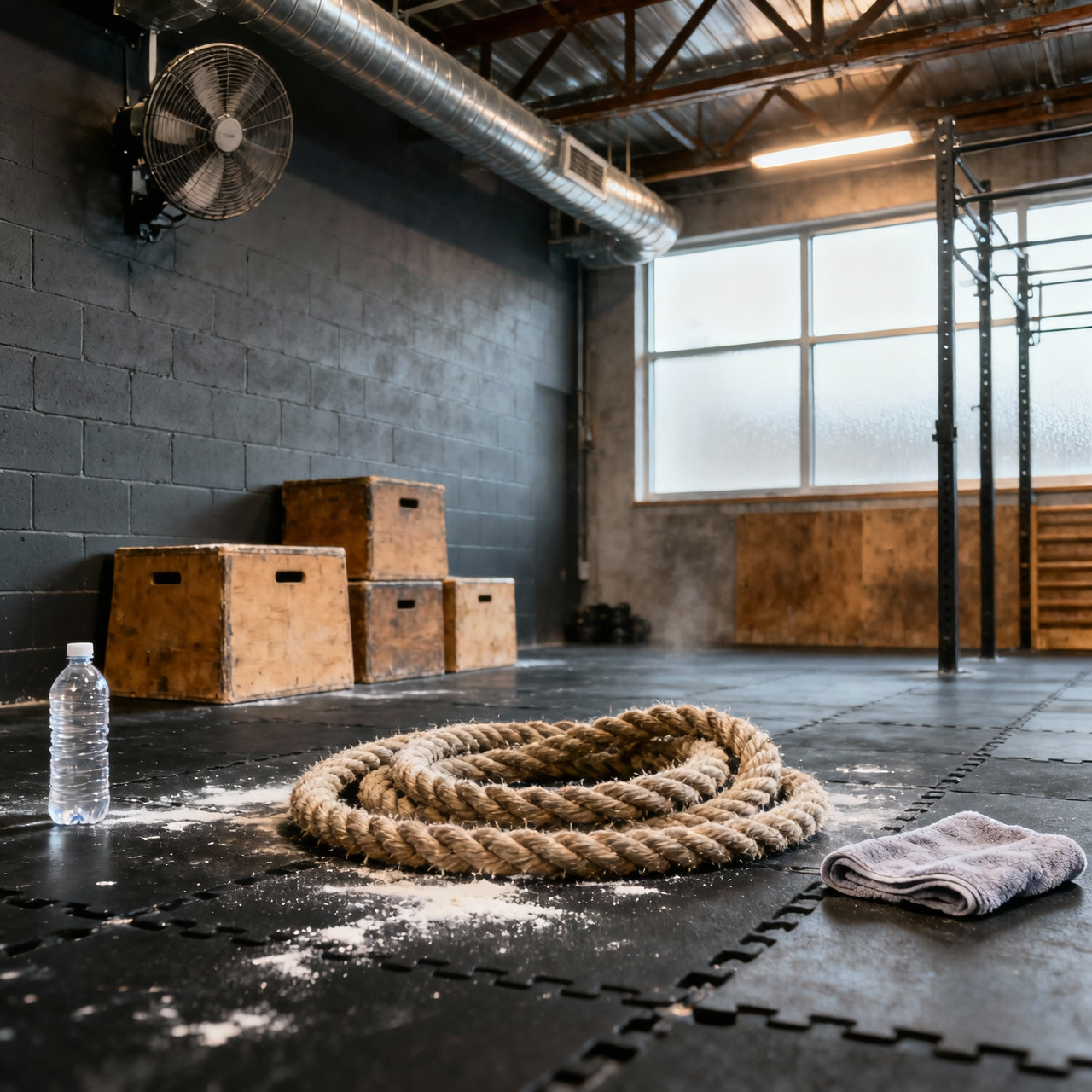
Battle Ropes
battle-ropes
When I hit the groove, it feels rhythmic and relentless, like a steady drumbeat pulling oxygen into my lungs while my shoulders burn in the best way. The ropes snap against the floor with a satisfying crack, and each wave flows seamlessly into the next without breaking my core’s tension. It’s a full-body pulse that leaves me breathless but grounded, turning raw effort into a smooth, hypnotic rhythm. I feel completely locked into the flow.
If you're new to this
Focus on establishing a smooth, controlled rhythm before chasing speed or wave size. Keep your shoulders packed away from your ears and maintain a soft bend in your elbows to protect your joints. You will feel a deep burn across your shoulders and forearms, which is normal, but sharp pain in your wrists or lower back means you are overcompensating. Stop immediately if your posture rounds, your knees cave inward, or your breathing becomes erratic and shallow. Beginners often try to muscle the ropes with isolated arm swings, which quickly drains your energy and disrupts the wave pattern. Instead, let your core and hips stabilize the movement while your upper body acts as a conduit for the energy. Start with shorter intervals of twenty to thirty seconds, focusing on consistent amplitude and a steady exhale. When you feel your grip slipping or your torso twisting excessively, reset your stance, take two deliberate breaths, and resume with a lighter, more controlled pulse. Consistency beats intensity every single time.
Common mistakes
Most people initiate the movement with their wrists instead of their shoulders, which creates choppy, inefficient waves and strains the carpal joints. Another frequent error is standing completely upright with locked knees, which transfers the rope’s impact directly into the lower back and compromises core stability. I also see athletes gripping the ropes too tightly, causing premature forearm fatigue and restricting the natural flow of the exercise. Finally, many lose their rhythmic breathing pattern and begin holding their breath as intensity climbs, which rapidly spikes heart rate and forces early termination. Keep your grip relaxed, hinge slightly at the hips, drive from the shoulders, and synchronize your exhalations with every downward strike.
Routine
- Sets
- 3
- Reps
- 30-45 seconds
- Rest
- 45s
- Frequency
- 2-3x/week
Increase work interval duration by 5-10 seconds or reduce rest time while maintaining wave intensity.
Muscles
- Shoulders
- Forearms
- Abs
- Upper back
- Cardiovascular
Equipment
- Battle ropes
- 1
Anchor the ropes securely to a heavy base or fixed post at ground level.
- 2
Stand facing the anchor point with feet shoulder-width apart and knees softly bent.
- 3
Grip one rope handle in each hand with palms facing your thighs.
- 4
Hinge forward slightly at the hips and exhale sharply to brace your core.
- 5
Drive your right arm upward to shoulder height while keeping a slight elbow bend.
- 6
Lower the right arm to hip level as you immediately drive the left arm upward.
- 7
Inhale steadily through your nose as both arms return toward hip height.
- 8
Maintain a steady rhythm that keeps constant tension on both ropes without slack.
- 9
Gradually reduce the arm speed until the ropes stop moving completely.
- 10
Place both rope ends flat on the ground and step backward to safely release tension.
- 11
Stand fully upright, relax your shoulders, and take three deep breaths to recover.