
Broad Jump
broad-jump
I want you to feel explosive yet controlled when you launch forward. Good reps feel like a sudden, powerful coil and release through your hips and ankles, followed by a soft, quiet landing that absorbs the impact smoothly. You should feel your core braced and your momentum carrying you forward, not down. When you nail it, the movement feels light on your toes, heavy on your intent, and completely grounded the moment you stick the finish.
If you're new to this
Start by practicing the hip hinge and arm swing without leaving the ground until the movement feels automatic. Focus on pushing your weight back through your heels, keeping your knees tracking in line with your second toe. When you first attempt the full jump, aim for controlled height and distance rather than maximum effort. You will know you are fatiguing when your landings grow heavy, your knees cave inward, or your lower back arches excessively upon impact. Stop immediately if you feel sharp pain in your shins, knees, or lower back, and switch to low-impact variations until your tendons adapt. Beginners often rush the loading phase or swing their arms too late, which robs the jump of power. Take your time, reset completely between reps, and prioritize a soft, balanced landing every single time. Quality builds the foundation for distance, and your nervous system will quickly learn the rhythm with consistent, mindful practice.
Common mistakes
Most lifters lose distance by failing to coordinate their arm swing with their leg drive, which disrupts the kinetic chain and leaves power untapped. Another frequent error is taking off from the toes instead of driving through the midfoot, causing premature calf fatigue and unstable takeoffs. Many also neglect the landing mechanics entirely, allowing the knees to buckle inward or the feet to slap the ground with excessive force. Finally, rushing the reset between attempts turns a true power movement into sloppy, fatigued conditioning. Treat every repetition as a fresh, maximal effort with full recovery in between.
Routine
- Sets
- 3
- Reps
- 3-5
- Rest
- 120s
- Frequency
- 1-2x/week
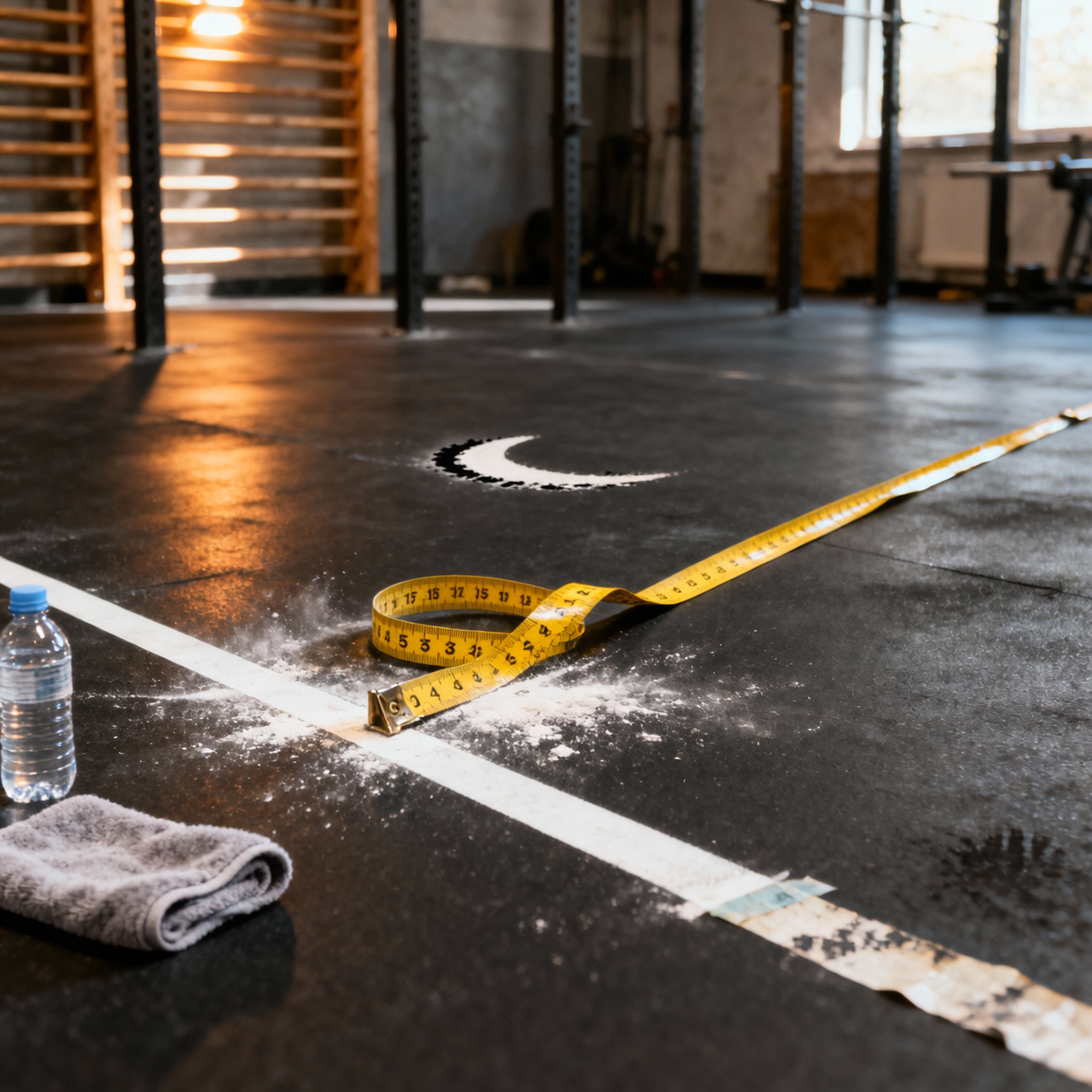
Increase measured jump distance or progress to single-leg variations once consistent landing mechanics are established.
Muscles
- Glutes
- Quadriceps
- Calves
- Hamstrings
- Abs
Equipment
- Bodyweight
- 1
Stand tall with feet shoulder-width apart and weight evenly distributed across both soles.
- 2
Bend knees slightly and push hips back into a shallow squat while swinging both arms straight behind you.
- 3
Inhale deeply through the nose to brace the core and load the posterior chain.
- 4
Explode upward and forward by driving arms overhead while fully extending hips, knees, and ankles.
- 5
Exhale forcefully through the mouth at the peak of the jump to maintain core tension.
- 6
Extend legs forward in midair and prepare for ground contact by pointing toes slightly upward.
- 7
Land softly on the midfoot with knees bent and aligned directly over the second toes.
- 8
Absorb impact by sinking into a controlled squat while keeping the chest lifted and back straight.
- 9
Hold the landing for a full second to verify stability before stepping back to the start line.
- 10
Reset posture to a tall standing position and prepare for the next repetition.